

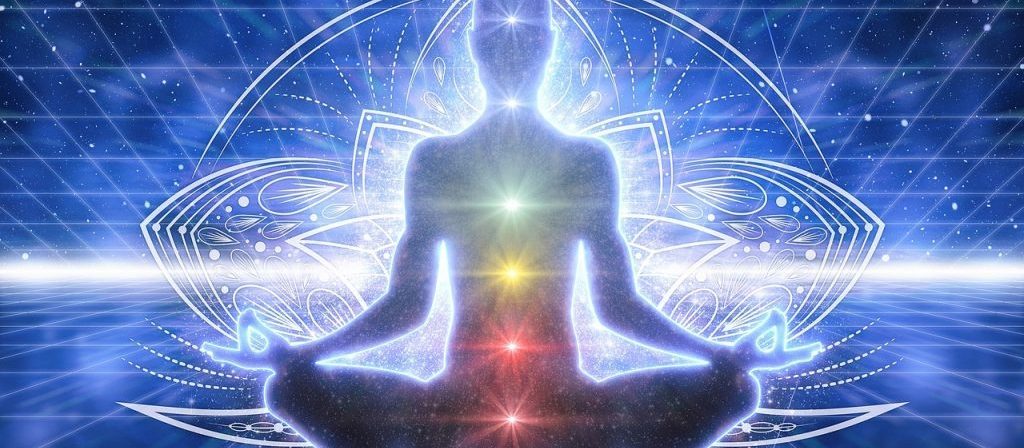
Quick answer: Chakras are centres of the subtle body described in several Indian religious and yogic traditions. The familiar modern system of seven chakras links symbolic centres from the base of the spine to the crown of the head, usually with seven colours and themes such as stability, compassion and communication. People often say they want to “unblock chakras” when they mean meditation or spiritual reflection. However, chakras are not medically established anatomical structures, and there is no reliable clinical test for an actual chakra blockage.
Affiliate disclosure: Some links below are affiliate or referral links. Mystic Realm Blog may earn a commission if you purchase through them, at no extra cost to you.
A colourful chakra illustration is easy to recognise, but there is much more to its history than a simple seven-colour chart. This guide explains what chakras mean, where the modern system came from, what each centre represents and how you can explore the symbolism gently. It also explains what scientific evidence can and cannot tell us, so spiritual beliefs are not confused with medical advice.
What are chakras?
The Sanskrit term cakra commonly means “wheel”. In Hindu and Buddhist tantric traditions, chakras can refer to centres within a subtle-body model used in ritual, meditation and spiritual practice. There is no single universal chakra map across all traditions. Historical teachings differ in the number of centres, their deities, images, bodily locations and what practitioners are instructed to do with them.
The subtle-body framework belongs to religious and philosophical traditions and should be understood in that context. It does not mean that a doctor can locate a chakra on an X-ray or that a painful sensation proves a physical blockage. Appreciating a traditional map is different from declaring its supernatural claims scientifically established.
Where did the seven-chakra system come from?
Several Indian texts describe arrangements of chakras, sometimes four, five, six or more. A model of six centres with an additional crown became particularly influential in later interpretations. During the nineteenth and twentieth centuries, Western esoteric writers adapted these ideas and introduced new links to psychology, coloured light, glands and wellness terminology.
The familiar rainbow arrangement is a modern synthesis rather than an unchanged diagram from every ancient tradition. Kurt Leland’s historical article The Rainbow Body explains how that model developed. The British Museum’s Tantra exhibition guide also describes historical chakra imagery associated with yogic practice.
The seven chakras at a glance
| Chakra | Sanskrit name | Typical modern colour | Common symbolic theme |
|---|---|---|---|
| Root | Muladhara | Red | Stability |
| Sacral | Svadhisthana | Orange | Creativity |
| Solar plexus | Manipura | Yellow | Confidence |
| Heart | Anahata | Green | Compassion |
| Throat | Vishuddha | Blue | Communication |
| Third eye | Ajna | Indigo | Insight |
| Crown | Sahasrara | Violet / white | Spiritual meaning |
This table reflects a common modern Western interpretation. The Sanskrit names are traditional, but the colour sequence and psychological keywords are not timeless facts applying to every historic system. A reader should ask which lineage, text or contemporary teacher a description follows before concluding that one diagram represents all chakra traditions.
1. Root chakra (Muladhara): stability and grounding
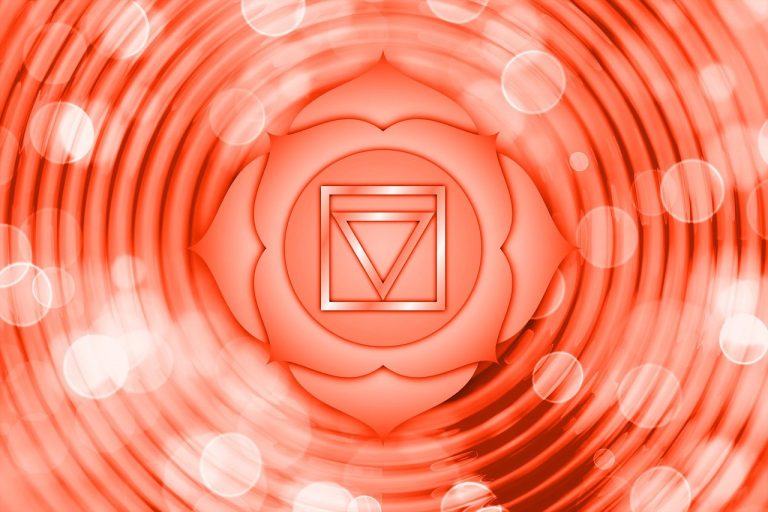
Muladhara is usually shown near the base of the spine in popular chakra diagrams, associated with the colour red and themes of security, belonging and stability. Those are useful questions for reflection, but having a stressful week or struggling with housing does not demonstrate that a literal root chakra has become blocked.
Reflective idea: Sit comfortably and notice where your feet meet the floor. Think about one practical thing that supports your wellbeing, such as a regular routine or asking someone for help. Choose an achievable step rather than seeking an invisible “energy correction”. Physical or financial problems need real-world support.
2. Sacral chakra (Svadhisthana): creativity and feelings
The sacral chakra is commonly represented in the lower abdomen with an orange colour. Many contemporary guides associate it with creativity, emotional expression and enjoyment. These are symbolic themes; abdominal pain, reproductive problems or persistent changes in mood should not be explained away as a sacral blockage.
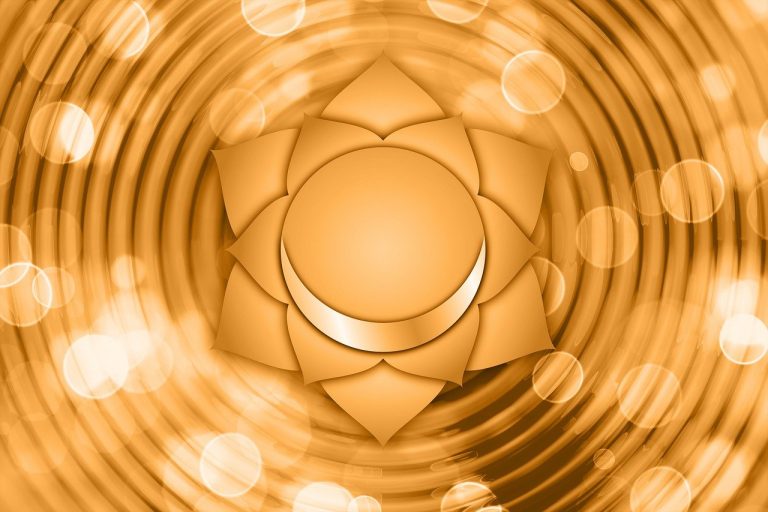
Reflective idea: Spend ten minutes writing, drawing or listening closely to music. Notice what feels interesting and what does not. Let creativity be enjoyable rather than another task you must perfect. There is no evidence that this exercise unblocks a literal energy centre, although you may find the pause personally useful.
3. Solar plexus chakra (Manipura): confidence and choices
Manipura is usually shown around the upper abdomen and coloured yellow in the modern model. It is often linked with initiative, confidence, independence and the ability to make decisions. Those themes can suggest useful questions about personal boundaries or motivation, but they are not a diagnosis for physical symptoms or low self-esteem.
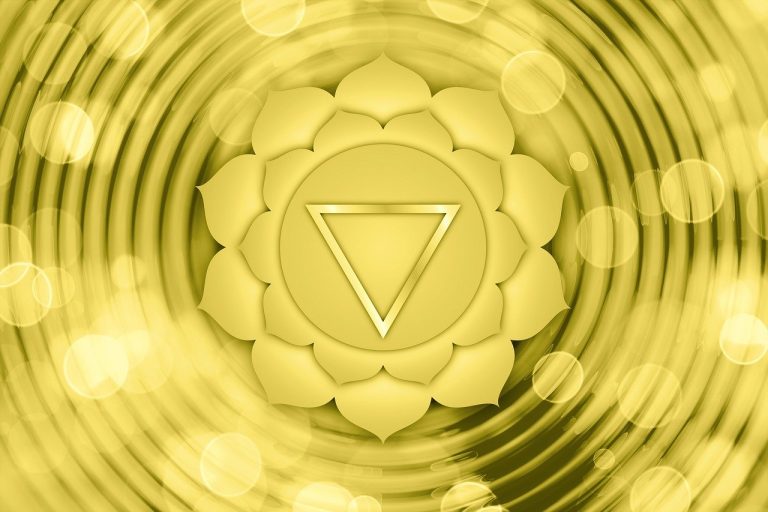
Reflective idea: Choose one achievable goal for the week and write down the first action needed. If you’re undecided, list the information you need before acting. The outcome depends on your circumstances and decisions rather than an assumed movement of supernatural energy.
4. Heart chakra (Anahata): compassion and care
The heart chakra is usually located symbolically around the centre of the chest and coloured green in modern wellness diagrams. Its familiar themes are compassion, relationships and concern for others. It should never be equated with the physical heart or used to explain chest discomfort, breathing difficulties or other health symptoms.
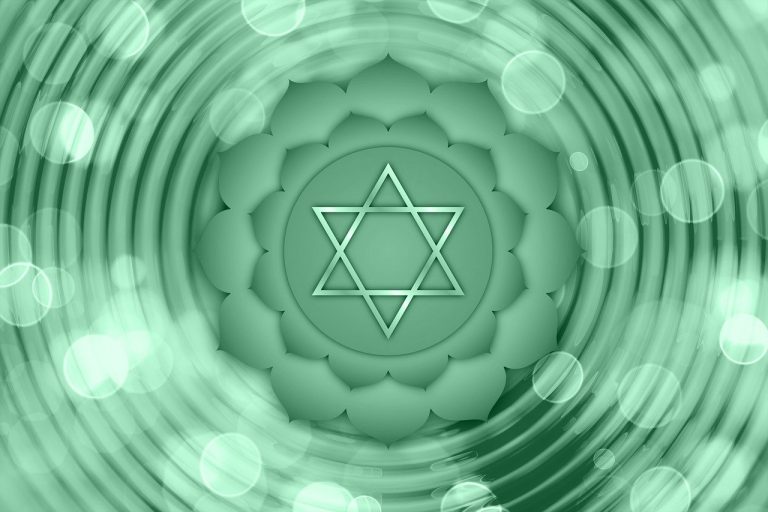
Reflective idea: Think of a person you appreciate and a kind action you could realistically take. Compassion also includes maintaining appropriate boundaries. If you have chest pain or other worrying symptoms, seek appropriate medical help; chakra work is not a treatment.
5. Throat chakra (Vishuddha): honest communication
Vishuddha is commonly shown at the throat and associated with blue. Contemporary writing links it to communication, listening, truthfulness and being heard. A sore throat or difficulty speaking can have many ordinary causes and must not be diagnosed as an energy blockage by an online article or practitioner.
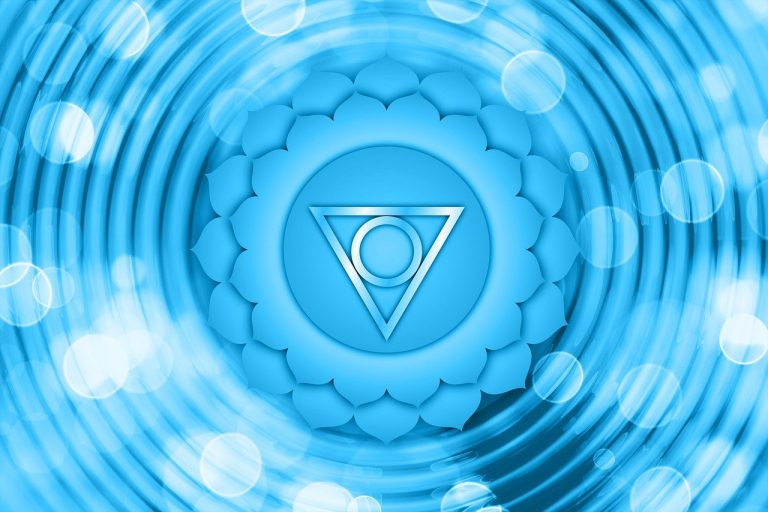
Reflective idea: Write a respectful sentence about a need or boundary you want to communicate. Then consider whether you can listen to the other person’s perspective. You may find this practical communication exercise useful regardless of how you interpret chakra imagery.
6. Third eye chakra (Ajna): attention and insight
Ajna is commonly associated with the area between the eyebrows and the modern colour indigo. You may see it described as the “third eye” linked with intuition or clairvoyance. No evidence establishes that a chakra in this location gives someone the ability to see hidden events or predict the future.
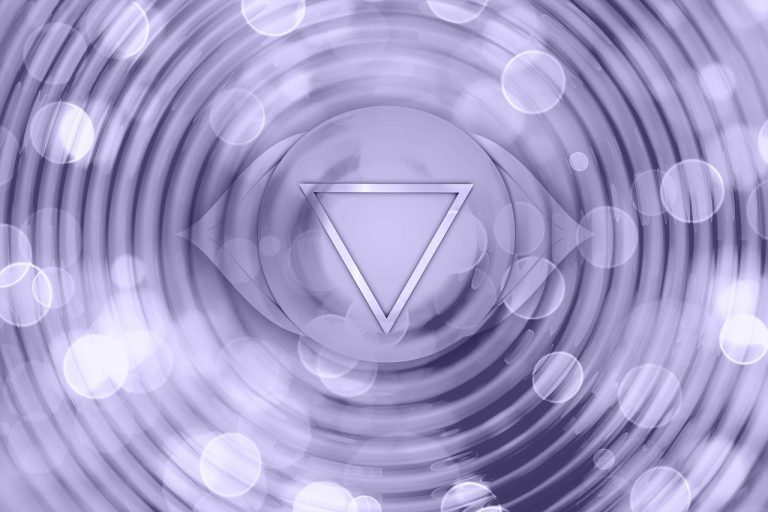
Reflective idea: Spend a short time noticing thoughts without treating them as supernatural messages. Write down an impression and a possible ordinary explanation. Our guide to exploring psychic abilities describes why recording both accurate and inaccurate guesses is useful.
7. Crown chakra (Sahasrara): spiritual meaning
Sahasrara is associated in modern diagrams with the crown of the head and coloured violet or white. It is often interpreted as symbolising spiritual connection, contemplation or the search for meaning. Historical accounts differ in how the crown is described and whether it is counted alongside the other centres, so modern depictions should be labelled accordingly.
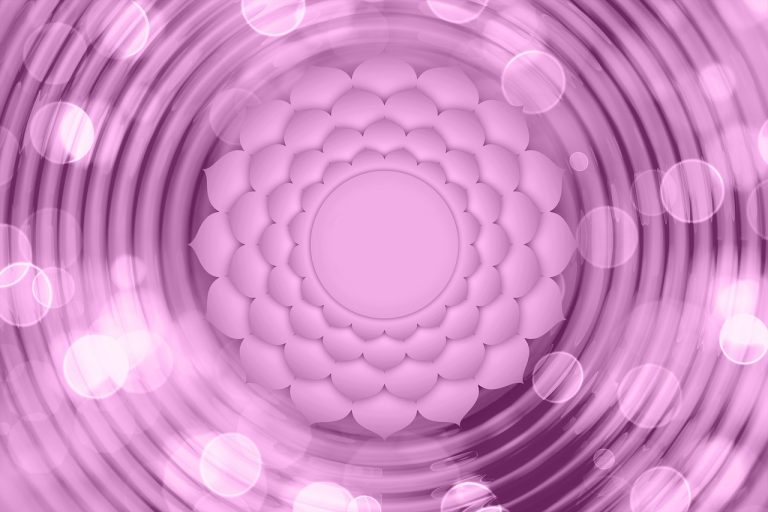
Reflective idea: Consider what gives you a sense of meaning—family, learning, nature, creativity, faith or community. You could write a paragraph about something that matters to you. There is no need to force a dramatic sensation or continue an exercise that leaves you distressed.
How do you “unblock” chakras safely?
In popular wellness language, an “unbalanced” chakra may mean that somebody feels troubled by an issue associated with a particular centre. The wording is symbolic or spiritual, not a medically measurable condition. There is no validated test demonstrating that a chakra is physically blocked, and no reliable scientific evidence that a ritual clears one in the way a medical treatment addresses disease.
A low-risk approach is to use the seven modern themes as prompts for gentle reflection. Choose one centre, consider the area of life it symbolises, notice your ordinary feelings and identify a practical action. You don’t need an expensive crystal set, incense, prolonged breath-holding or fasting. The outcome can be personal reflection without any claim of measurable “energy flow”.
- Sit or stand in a comfortable position with normal breathing and no pressure to achieve an altered state.
- Choose a theme such as communication, confidence or self-care rather than trying to diagnose a hidden problem.
- Spend three to five minutes noticing your thoughts and surroundings, stopping if you become uncomfortable.
- Write down one question the exercise raises and a realistic action you could take this week.
- Return to your normal routine. If the practice increases anxiety or becomes compulsive, take a break.
The NHS mindfulness guidance explains possible benefits and limitations of attention exercises; mindfulness does not suit everybody. The chakra imagery can be meaningful for people following a spiritual path without making every exercise a promise of medical benefit.
Are crystals, colours and chakra frequencies scientifically proven?
Some wellness businesses sell stones in seven colours, recordings labelled with frequencies or products said to cleanse the aura. Colours and sound waves have physical properties that can be measured, but that does not prove each chakra is a physical organ or that a frequency can repair it. The rainbow-to-chakra mapping is part of modern symbolism, not a validated biological mechanism.
You may enjoy looking at a colourful crystal or listening to calming music. That is different from asserting that a gemstone treats depression, a headache or a heart condition. Our crystal healing article and A–Z crystal guide provide related context without turning spiritual associations into medical claims.
Is chakra healing a replacement for healthcare?
No. A chakra explanation should never be used to diagnose illness or discourage someone from receiving medical care. Persistent pain, severe changes in mood or other symptoms require an appropriate assessment. Be wary of anyone who says that a problem can only be cured by paying for repeated energy sessions or that treatment will fail unless your chakras are balanced.
People can practise prayer, meditation or other symbolic activities alongside appropriate care if these are comfortable and safe. But the spiritual meaning they attach to the activity is not evidence of a clinical effect. Respect the individual and the religious traditions involved without accepting unsupported promises.
How to choose chakra books or related services
Decide whether you’re looking for the history of Indian spiritual traditions, a contemporary meditation workbook or an overview of modern energy-healing beliefs. These are not equivalent. Check an author’s background, the original sources they cite and whether the book makes medical claims. A balanced historical introduction can be more helpful than buying products marketed as essential for “unblocking”.
The old article linked to a chakra-related product listing, a Step-by-Step Chakra Healing for Beginners listing and Spiritual Blossom. These optional destinations are retained without the original external advertising banner and tracking pixel. Verify current product and service details before paying, and treat promises of health cures critically.
Chakras: frequently asked questions
What are the seven chakras in order?
The familiar modern order is root, sacral, solar plexus, heart, throat, third eye and crown. Sanskrit names commonly used include Muladhara, Svadhisthana, Manipura, Anahata, Vishuddha, Ajna and Sahasrara.
Can you tell whether a chakra is blocked?
No validated medical test detects a literal blockage. Some practitioners use the term as a spiritual metaphor for feeling out of balance, but that should not be confused with a clinical diagnosis.
Are all chakra systems based on seven centres?
No. Historical tantric traditions include other numbers and arrangements. The familiar seven-colour model is an influential modern synthesis.
Do you need crystals to unblock your chakras?
No. Crystals are optional spiritual objects, and their supposed effects on energy centres have not been scientifically established. You can explore a reflective theme with no equipment.
Can chakra balancing cure health conditions?
There is no reliable clinical evidence that manipulating chakras cures illness. Use suitable medical care for physical or mental-health concerns, and treat spiritual activity as an optional personal practice.
What is a good beginner chakra meditation?
Choose one theme, sit comfortably for a few minutes and reflect on a question connected to it. Keep breathing normal, stop if you become distressed and identify a useful real-world action.
Final verdict: a symbolic tradition, not a medical diagnosis
Chakra teachings are part of a rich and varied history of spiritual practice. The familiar seven-centre rainbow chart can be a framework for personal reflection, but it is not the only traditional system and does not demonstrate literal energy blockages. Learn the cultural context, explore safely and prioritise ordinary evidence and appropriate care for health questions. For related reading, see crystal healing, psychic abilities and witchcraft for beginners.