

Motion sensors are one of those ghost hunting tools that sound simple, but they can be surprisingly useful when they are set up properly. If you have ever investigated a room where people report footsteps, doors opening, objects moving, or activity around a trigger object, a motion sensor can help you monitor that space without constantly standing over it.
They do not prove a haunting on their own, and they can absolutely be triggered by normal things like draughts, floor vibration, insects, pets, or someone walking too close. But that is also why they are useful. A motion sensor gives you something to test, document, and compare with your camera footage, EVP recorder, EMF meter, REM Pod, or notes from the investigation.
In this guide, we’ll look at the best motion sensors for ghost hunting, how paranormal investigators use them, where to place them, how to avoid false positives, and whether they are worth adding to your ghost hunting kit.
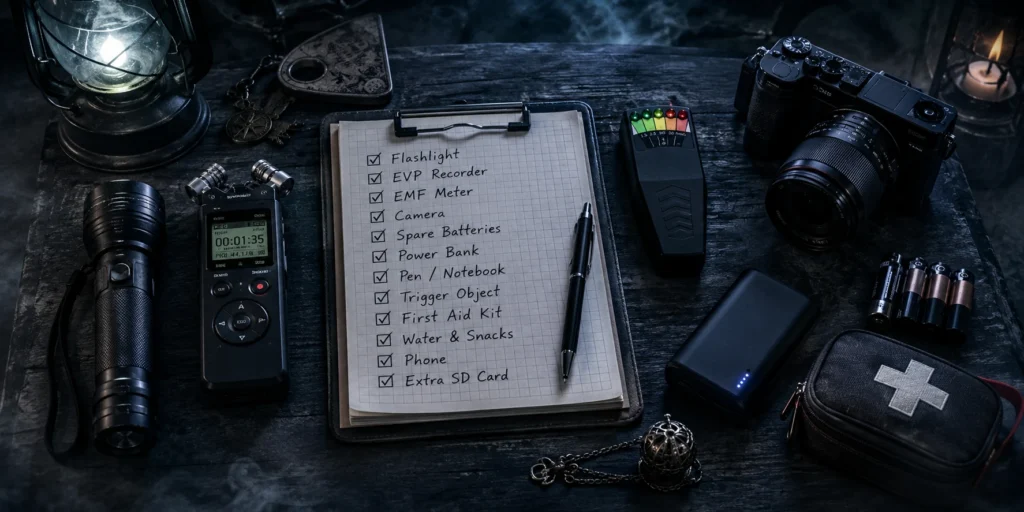
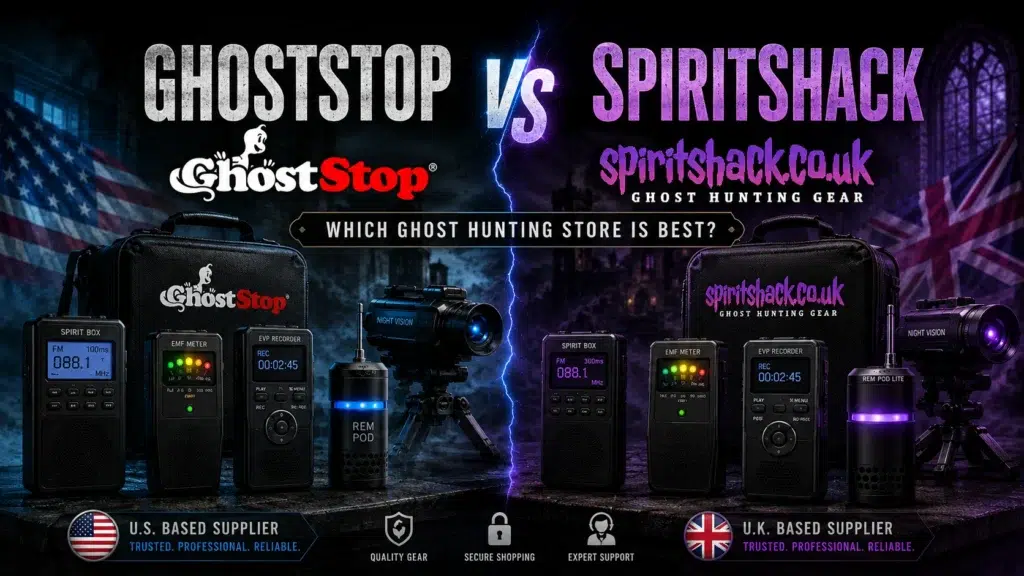
If you are building your kit, you may also want to read my guides to Best Ghost Hunting Equipment, Best EMF Meters for Ghost Hunting, Best EVP Recorders for Ghost Hunting, Best Spirit Boxes, Best REM Pod for Ghost Hunting, and GhostStop vs SpiritShack.
What Are Motion Sensors Used for in Ghost Hunting?
In normal life, motion sensors are used for security lights, alarms, cameras and automatic doors. In ghost hunting, they are used a little differently.
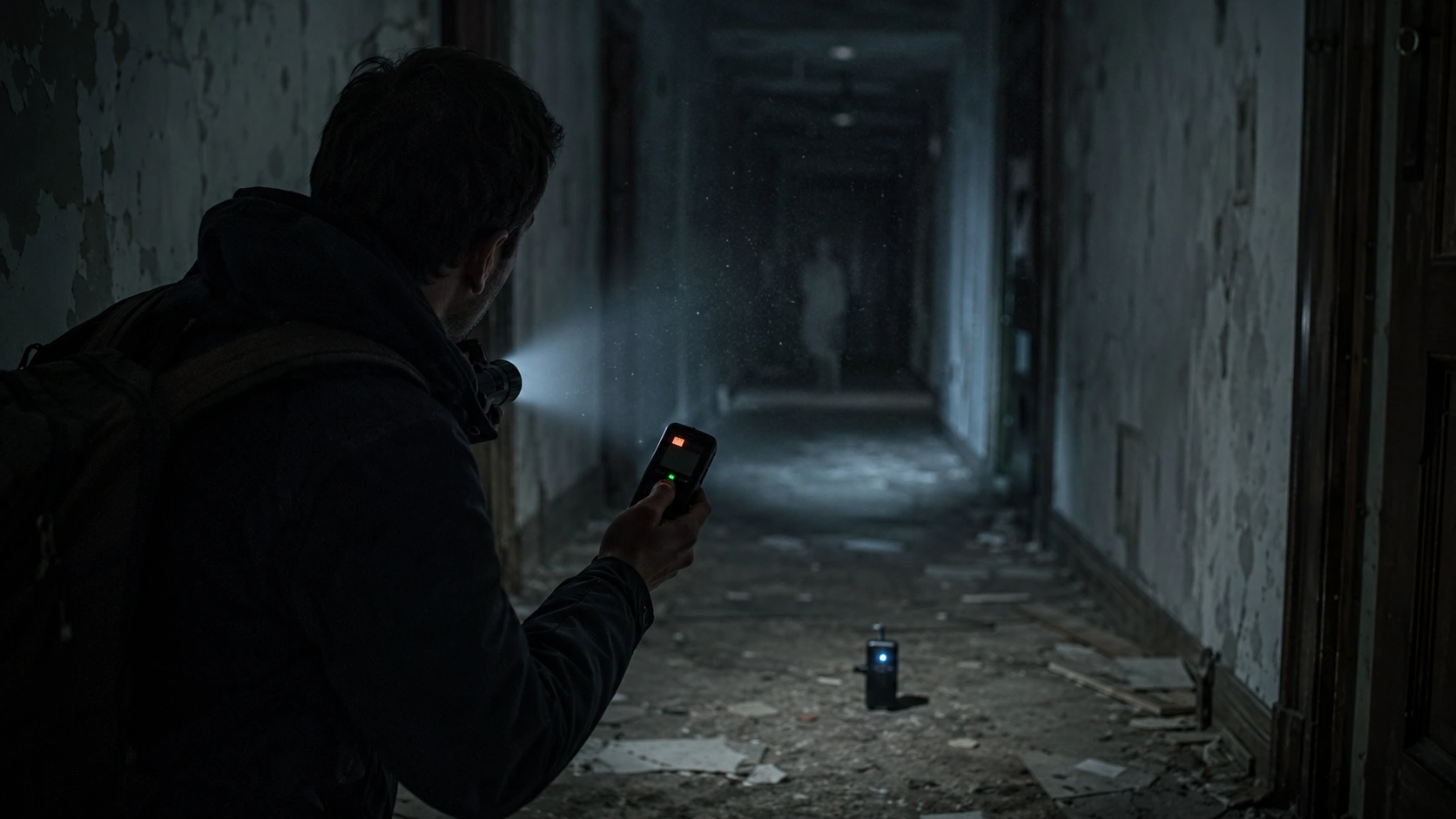
Paranormal investigators place motion sensors in areas where movement has been reported. That might be a doorway, a staircase, a hallway, an empty room, or around a trigger object. If the sensor activates when nobody is supposed to be nearby, it gives the team something to investigate.
That does not mean a ghost has walked past it. It simply means something may have disturbed the area.
This is why motion sensors are best used as part of a wider investigation. If a motion sensor activates at the same time as an unexplained knock, an EVP, a camera anomaly, a vibration, or a REM Pod response, the moment becomes more interesting. If it goes off once while someone is walking around nearby, it probably means very little.
Good ghost hunting is not about chasing every beep. It is about looking for patterns.

Can a Ghost Trigger a Motion Sensor?
Possibly, depending on what you believe is happening during paranormal activity. If a haunting involves physical movement, vibration, footsteps, object disturbance, or energy affecting the environment, then a motion sensor may react.
But motion sensors do not detect “ghosts” directly. They detect movement, vibration, distance changes, pressure, or environmental disturbance depending on the device.
A motion sensor can be triggered by perfectly normal things, including floorboards moving, heating pipes, a loose door, draughts, insects, camera operators, traffic vibration, or pets. That is why placement matters so much.
The best way to use a motion sensor is to treat it as a monitoring tool, not proof. If it goes off, mark the time, check the camera footage, ask who was nearby, and compare it with any other equipment running at the same time.
Why Motion Sensors Are Useful During Investigations
Motion sensors are useful because they let you monitor quiet spaces while you focus elsewhere.
For example, you might be conducting an EVP session in one room while a motion sensor is watching the hallway outside. If it activates, you can check the time and compare it with your audio recording or camera footage.
They are also useful when investigating claims of footsteps. If people keep reporting movement on a staircase, landing, or empty corridor, a motion sensor can help you monitor that space more objectively.
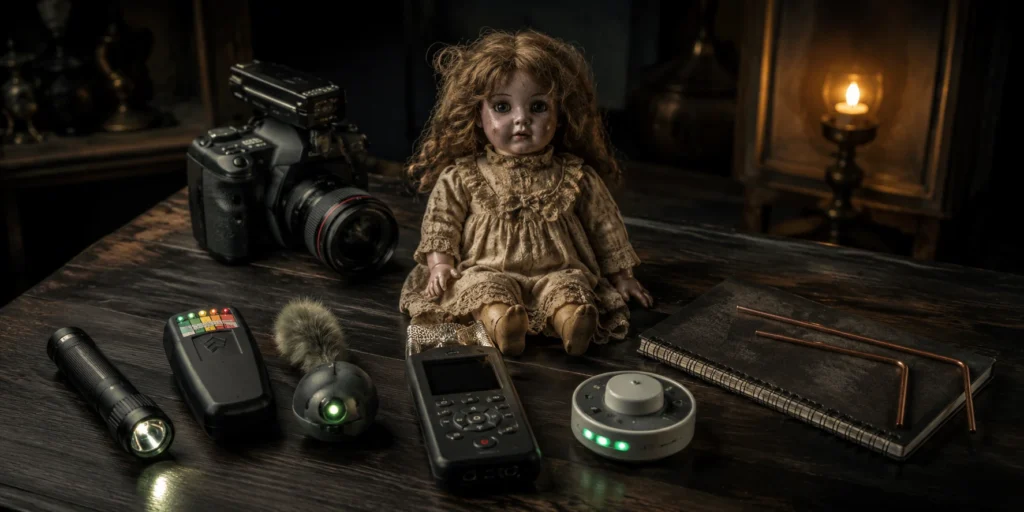
I also think they work well around trigger objects. If you are using a doll, coin, toy, antique, box, or personal item as a trigger object, placing a motion sensor or light-up motion ball nearby gives you a simple way to see whether anything physically disturbs the area.
This can also tie into investigations around Haunted Objects, Dybbuk Boxes, or rooms where people report poltergeist-style movement.

Best Types of Motion Sensors for Ghost Hunting
There are a few different types of motion sensors and movement detectors used in ghost hunting. Some are simple and budget-friendly, while others are more advanced and designed specifically for paranormal investigation.
Motion Sensor Alarms
A motion sensor alarm is probably the simplest starting point. These are usually small devices that detect movement and alert you with a sound, light, chime or alarm.
They are useful because they are easy to understand. You place one in a doorway, hallway, staircase, or empty room, then keep people away from it. If it activates, you check what may have caused it.
For beginners, this is one of the easiest ways to start experimenting with motion detection without spending too much money. It is not glamorous, but it can be practical.
A basic motion sensor alarm is best for:
- empty rooms
- doorways
- staircases
- corridors
- simple movement monitoring
- beginner ghost hunting kits
View Motion Detectors at SpiritShack
View Motion Sensors at GhostStop
Motion Activated Light Balls
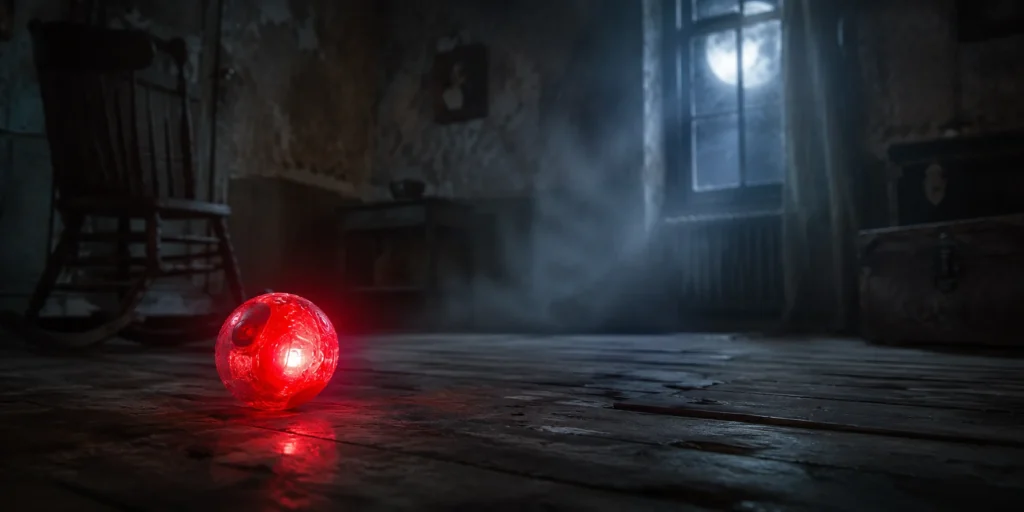
Motion activated light balls have become popular in paranormal investigations because they are simple, visual, and easy to film. They are often placed on the floor, on a table, or near a trigger object.
If the ball is touched, moved, or disturbed, it lights up.
These are often used in simple communication experiments. An investigator might say, “Can you touch the ball?” or “Can you make the light come on?” If the ball lights up in a controlled room with no one nearby, it can make an interesting moment on camera.
Of course, you still have to be careful. A light ball can move if the floor is uneven, if someone knocks the table, or if vibration travels through the room. But when used properly, they are a good low-cost tool for trigger object sessions.
They work especially well with:
- haunted dolls
- child spirit experiments
- trigger objects
- quiet rooms
- table sessions
- video recording
Vibration Sensors and Geophones
Vibration sensors are slightly different because they are not just watching for movement in the air. They are looking for movement through a surface.
This makes them useful when people report footsteps, tapping, knocking, floor movement, or objects shifting.
For example, if a team is investigating an old building where footsteps are heard upstairs, a vibration sensor or geophone can help monitor whether the floor is physically reacting. If you hear a knock and the sensor reacts at the same time, that is more useful than simply hearing a sound with no supporting data.
Vibration sensors can be useful for:
- footsteps
- knocks
- floor vibrations
- staircases
- tables
- old buildings
- poltergeist-style claims
- object movement reports
If you are investigating movement, thrown objects, knocking, or physical disturbance, you may also want to read my guide to What Is a Poltergeist?
REM Pod Style Devices
A REM Pod is not exactly the same as a motion sensor, but it is often used in a similar way during investigations. Instead of detecting normal movement, a REM Pod creates an electromagnetic field around its antenna and reacts when something comes close enough to disturb that field.
Investigators often use REM Pods during EVP sessions, spirit communication experiments, and trigger object work. The appeal is that the response is clear: lights, sound, and proximity changes.
A REM Pod-style device is best when the room is controlled. Phones, radios, people standing too close, and electrical interference can affect results, so you need to be careful with setup.
A good setup might involve placing a REM Pod in the middle of a room, keeping the team at a distance, and filming it continuously while running an EVP recorder.
You may also want to read my full guide to Best REM Pod for Ghost Hunting.
Laser Motion and Grid Systems
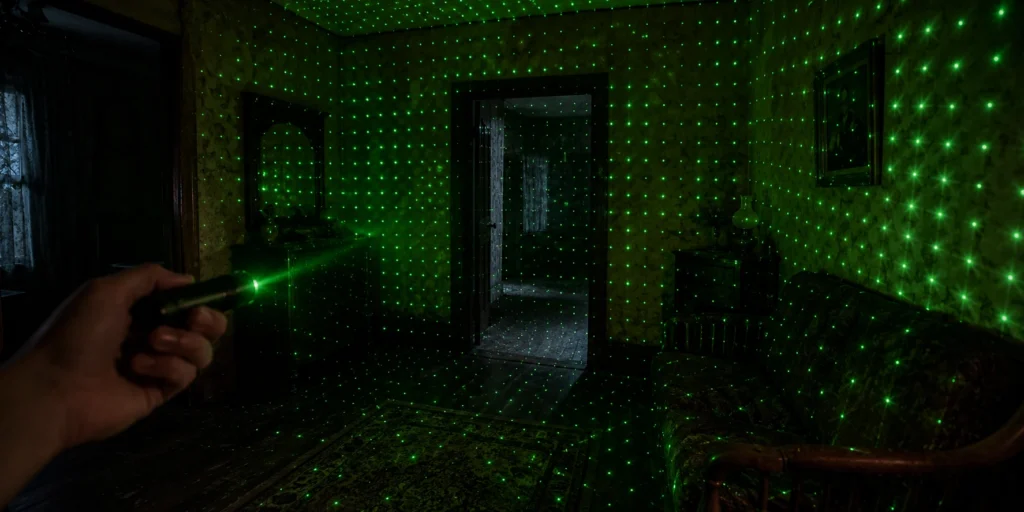
Laser grids and laser motion systems are more visual. They are often used in dark rooms, corridors, basements, or hallways where investigators want to see whether a shape or shadow interrupts the light pattern.
A laser grid projects points or lines of light across a space. If something moves through the grid, you may be able to see the pattern break or shift on camera.
These systems work best with a night vision camera, full spectrum camera, or fixed video setup. They are not always essential for beginners, but they can be useful in locations where shadow movement is reported.
Laser systems can be useful for:
- dark rooms
- hallways
- shadow movement
- visual evidence
- camera-based investigations
- larger rooms
- advanced setups
For a deeper look at visual monitoring tools, read my guide to Best Laser Grids for Ghost Hunting, as they work especially well with motion sensors, night vision cameras and shadow movement investigations.
Multi-Sensor Paranormal Devices
Some modern paranormal devices combine several sensors in one tool. These may include motion, vibration, EMF, temperature, sound, distance, light response, or data logging.
These are usually more expensive, but they can be useful for serious investigators because they give more context.
Instead of only knowing that something moved, a multi-sensor device may help show whether there was also a temperature change, EMF spike, vibration, or sound response at the same time.
For beginners, I would not start here unless you have the budget. Simple tools used properly are better than expensive tools you do not fully understand.
For experienced teams, multi-sensor devices can be useful when investigating active locations over longer sessions.
How I Would Use Motion Sensors on a Ghost Hunt
If I were setting up motion sensors during a paranormal investigation, I would not scatter them randomly everywhere. I would start with the claims.
If people report footsteps in a hallway, I would place a motion sensor or vibration sensor there and film the area. If people report a doll moving, I would place a motion light ball or vibration sensor near the doll and keep a camera on it. If a doorway is said to open or close on its own, I would monitor that doorway and make sure nobody walks through it.
The important thing is to keep the setup controlled.
I would make a note of:
- where the sensor was placed
- what time it was activated
- who was nearby
- whether the room was filmed
- whether another device reacted
- whether there was a normal explanation
- whether it happened more than once
That kind of note-taking might sound boring, but it is what makes the evidence more useful later.
A sensor going off is interesting. A sensor going off repeatedly in a controlled room, on camera, alongside other activity, is much more interesting.
Where Should You Place Motion Sensors?
Motion sensors work best when they are placed somewhere stable, quiet and controlled.
Good places include doorways, staircases, hallways, empty rooms, beside trigger objects, near haunted objects, or on stable surfaces where movement has been reported.
Avoid placing them near open windows, curtains, heaters, fans, loose floorboards, pets, or areas where the team keeps walking through. These are the kinds of things that create false positives and make the evidence harder to trust.
Before you start the session, test the sensor. Walk past it, tap the table, open and close the door, and check whether the floor vibrates when someone walks nearby. This helps you understand what can set it off before anything unusual happens.
Motion Sensors and Trigger Objects
Motion sensors work really well with trigger objects.
A trigger object is something placed in a room to encourage interaction. This might be a toy, coin, doll, antique, religious item, box, piece of jewellery, or something connected to the reported haunting.
For example, if a haunted doll is said to move, you could place a light-up motion ball or vibration sensor next to it and record the area. If the sensor reacts, you can check the footage and see whether anything physically changed.
This works well with:
- haunted dolls
- haunted objects
- Dybbuk box stories
- child spirit experiments
- table sessions
- poltergeist claims
- object movement reports
Interactive trigger devices such as the BooBuddy can also fit into this kind of setup. While BooBuddy is not simply a motion sensor, it is often used during paranormal investigations to encourage responses, monitor interaction and create a more controlled trigger-object experiment. Pairing a device like this with a motion sensor, camera or EVP recorder can give you more context if activity is reported around the object.

Motion Sensors vs EMF Meters
Motion sensors and EMF meters are often used together, but they do different jobs.
An EMF meter detects electromagnetic field changes. A motion sensor detects movement, vibration or disturbance.
If you are investigating an electrical reading, use an EMF meter. If you are investigating footsteps, movement or a trigger object, use a motion sensor.
Used together, they can give you better context.
For example, if a motion sensor activates and the EMF meter spikes at the same time, it may be worth looking at more closely. If the motion sensor activates but nothing else changes, it could still be interesting, but you would want more evidence before making any claims.
Motion Sensors vs REM Pods
Motion sensors and REM Pods can look similar during an investigation because both may light up or alert the team. But they are not detecting the same thing.
A motion sensor reacts to movement or vibration. A REM Pod reacts to disturbance around its electromagnetic field.
A simple way to use them together is to place a REM Pod in the centre of a room and a motion sensor near the doorway. If the REM Pod reacts, you know the response is near the device. If the motion sensor reacts, you know something may have disturbed the doorway area.
That gives you a better idea of where activity may be happening.
Are Motion Sensors Worth It for Beginner Ghost Hunters?
Yes, I think they are worth having, especially if you are building a practical beginner kit.
You do not need to start with the most expensive sensor system. A basic motion alarm, light-up motion ball, or simple vibration sensor can still be useful if you use it properly.
The real value is not the price of the device. It is how you set it up.
A cheap motion sensor placed carefully in a controlled room is more useful than an expensive device placed badly next to a draughty window.
For beginners, I would start with something simple, learn how it reacts, test it properly, and use a camera to record it.
If you are just starting out, a motion sensor can fit nicely into a simple beginner ghost hunting kit alongside an EMF meter, EVP recorder, torch and camera.
Best Places to Buy Motion Sensors for Ghost Hunting
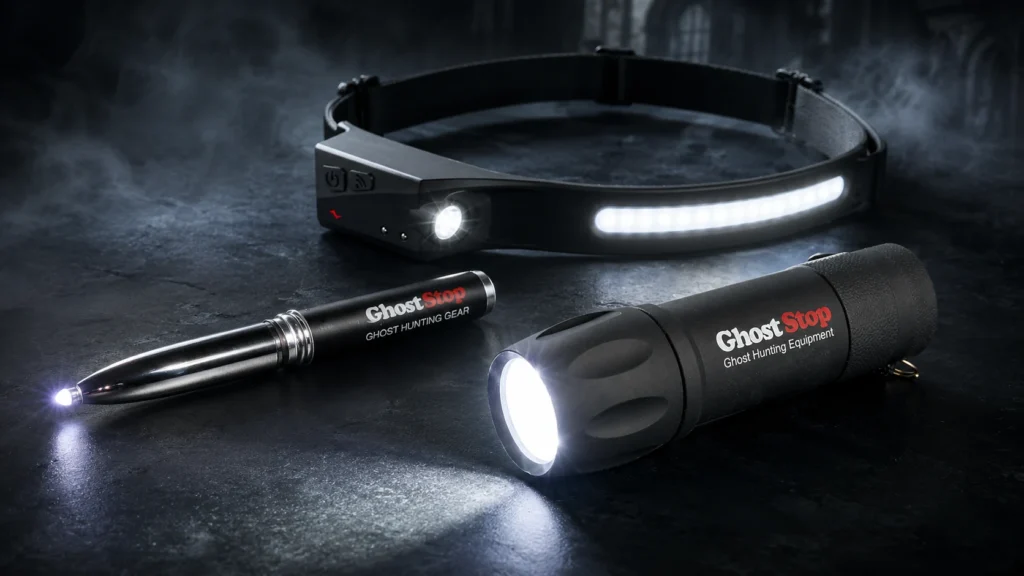
For dedicated ghost hunting motion detectors, the two main places I would look at are SpiritShack and GhostStop.
SpiritShack is useful for UK buyers because they stock ghost hunting motion detectors and paranormal investigation equipment.
GhostStop is a strong option for US buyers and has a wide range of motion, vibration, light, laser and sensor-based ghost hunting tools.
You can also use Amazon for simple motion alarms, cat balls, light balls and budget accessories, but dedicated paranormal suppliers usually offer more specialist investigation gear.
View Motion Detectors at SpiritShack
View Motion Sensors at GhostStop
FAQs About Ghost Hunting Motion Sensors
Do motion sensors detect ghosts?
Motion sensors do not detect ghosts directly. They detect movement, vibration, pressure, or environmental changes depending on the type of device. In ghost hunting, they are useful because they can alert investigators to movement in a controlled area, but any activation still needs to be checked against normal causes.
Can a motion sensor go off by itself?
Yes. Motion sensors can be triggered by draughts, insects, pets, vibration, loose floorboards, passing traffic, heating systems, doors moving, or team members walking too close. That is why placement and control are important during paranormal investigations.
Are motion sensors good for beginner ghost hunters?
Yes, motion sensors can be a good beginner tool because they are simple to use and easy to understand. A basic motion alarm or light-up motion ball can help you monitor a room, doorway, staircase, or trigger object without needing complicated equipment.
Where should I place a motion sensor during a ghost hunt?
Good places include quiet hallways, doorways, staircases, empty rooms, near trigger objects, or beside items reported to move. Avoid placing them near windows, curtains, heaters, fans, pets, loose wires, or areas where investigators keep walking.
What is the best motion sensor for ghost hunting?
The best option depends on your investigation style. Beginners may prefer a simple motion alarm or light-up ball, while experienced investigators may use vibration sensors, geophones, REM Pods, laser grids, or specialist paranormal motion devices.
Are motion sensors better than EMF meters?
No, they do different jobs. A motion sensor detects movement or vibration, while an EMF meter detects electromagnetic field changes. They work best together because they can help you compare physical movement with environmental changes.
Can motion sensors be used with trigger objects?
Yes. Motion sensors work well with trigger objects such as dolls, coins, toys, antiques, boxes, or personal items. If something is believed to move or attract activity, a motion sensor can help monitor the area while a camera records the session.
Do I need expensive motion sensors for ghost hunting?
No. You can start with affordable motion alarms, motion light balls, or simple vibration sensors. More advanced tools are useful later, but good placement, controlled conditions and careful notes matter more than buying the most expensive device straight away.
Final Thoughts
Motion sensors are one of the most underrated pieces of ghost hunting equipment. They are not as dramatic as a spirit box and not as instantly recognisable as an EMF meter, but they can be very useful during real investigations.
They help you monitor empty rooms, staircases, hallways, doors and trigger objects without constantly watching them. They also give you something practical to compare against your EVP recorder, camera footage, EMF meter or REM Pod.
The main thing is to use them carefully. Do not treat every beep or flash as paranormal. Test the room, control the environment, film the device, and look for patterns.
For beginners, a simple motion alarm or light-up ball is enough to start with. For more experienced teams, vibration sensors, geophones, laser grids and multi-sensor devices can add another layer of useful data.
If you are building a ghost hunting kit, a motion sensor is a sensible next step after the basics. Used properly, it can make your investigations more controlled, more organised and more interesting.
You may also want to read:
- Best Ghost Hunting Equipment
- What Is the BooBuddy Interactive Bear?
- GhostStop vs SpiritShack
- Best EMF Meters for Ghost Hunting
- Best EVP Recorders for Ghost Hunting
- Best REM Pod for Ghost Hunting
- Best Spirit Boxes for Ghost Hunting
- Best Night Vision Cameras for Ghost Hunting
- GhostStop Phasm Cam Review
- Best Trigger Objects for Ghost Hunting
- Is My House Haunted?
- What Is a Poltergeist?
- Residual Hauntings
- Haunted Objects