


Affiliate disclosure. Mystic Realm Blog may earn a commission if you buy through links on this page.
A trigger object is an item you place in a monitored spot during a paranormal investigation. Start with a stable surface, a fixed camera and a short baseline recording. Note who enters the room and what could move the object before you interpret a change.
Choose an object that fits the location or the report you’re investigating. A plain object makes movement easier to review. A device such as BooBuddy can also alert to changes its own sensors detect.
Record what happened first, including the time and location. Keep your interpretation separate from that observation in the session notes.
Try a short control run with no questions. If the object moves or a device activates, check the surface, vibration, airflow and anyone nearby.
This guide explains how to pick and set up a trigger object. If you’re monitoring an item with a reported history, see the haunted object investigation setup for equipment choices.
What Are Trigger Objects in Ghost Hunting?
Trigger objects (sometimes called interaction objects) are physical items placed during an investigation with the intention of encouraging a spirit to engage, communicate, or manipulate their environment. These items are carefully chosen because they:
- Reflect nostalgia or personal history
- Spark emotional recognition
- Create curiosity or familiarity
- Provide a physical medium for interaction
- Help investigators measure intelligent response patterns
Unlike EVP-based communication or real-time audio responses, trigger objects offer visual or environmental evidence, something you can potentially capture on camera, thermal devices, motion sensors, or EMF spikes.
Why Investigators Use Trigger Objects
The effectiveness of trigger objects comes down to three key theories within paranormal research:
1. The Psychological Response Theory
A spirit with residual or intelligent awareness may respond more strongly to objects tied to identity, emotion, or time period.
2. The Energy Transfer Theory
Some investigators believe spirits require an external energy source or physical anchor to interact; objects, especially metallic or electronic ones, may act as conduits.
3. The Familiarity Principle
If an object matches the era, personality, or emotional energy of a location, interaction increases dramatically.
For example:
- A teddy bear in a location linked to children
- A music box in a Victorian household
- Coins or war memorabilia in tunnel or military sites
- Personal items on a memorial or burial ground
It’s never random…. context is everything.
The Difference Between a Prop and a Trigger Object
| Prop | Trigger Object |
|---|---|
| Used for visuals or atmosphere | Used with intent to communicate or provoke interaction |
| No emotional or historical relevance | Tied to location, era, or entity |
| Not monitored for activity | Paired with equipment to validate responses |
| Superficial | Strategic and measurable |
| Passive | Interactive |
Most paranormal investigators start with props.
Professionals use intent-driven trigger objects.

The Best Types of Trigger Objects (And Why They Work)
Toys – Great for locations linked to children or family homes; often generate strong REM or motion activity.
Jewellery & Watches – Emotionally charged, personal, conductive, often sparks EMF fluctuations.
Coins – Great for historic locations; associated with offerings, trade, identity.
Music Boxes – Auditory trigger; nostalgia-based stimulus.
Photographs – Identity anchor; can trigger direct spoken responses or EVPs.
Mirrors – Energy reflection & manifestation theories; great for visual experiments.
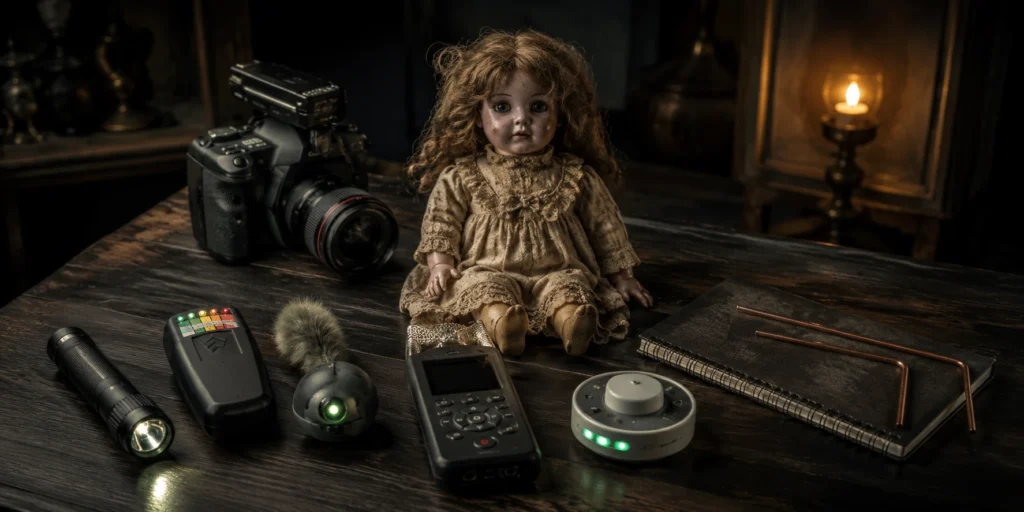
Pairing Trigger Objects with Paranormal Equipment (For Real Evidence)
Trigger objects alone are interesting.
Trigger objects + equipment = evidence.
Here are the strongest pairings:
REM Pods
Perfect for placing beside objects to detect proximity without touch. If you’re new to them, we’ve covered the best REM pods for ghost hunting in detail here: Best REM Pod for Ghost Hunting
Night Vision Cameras
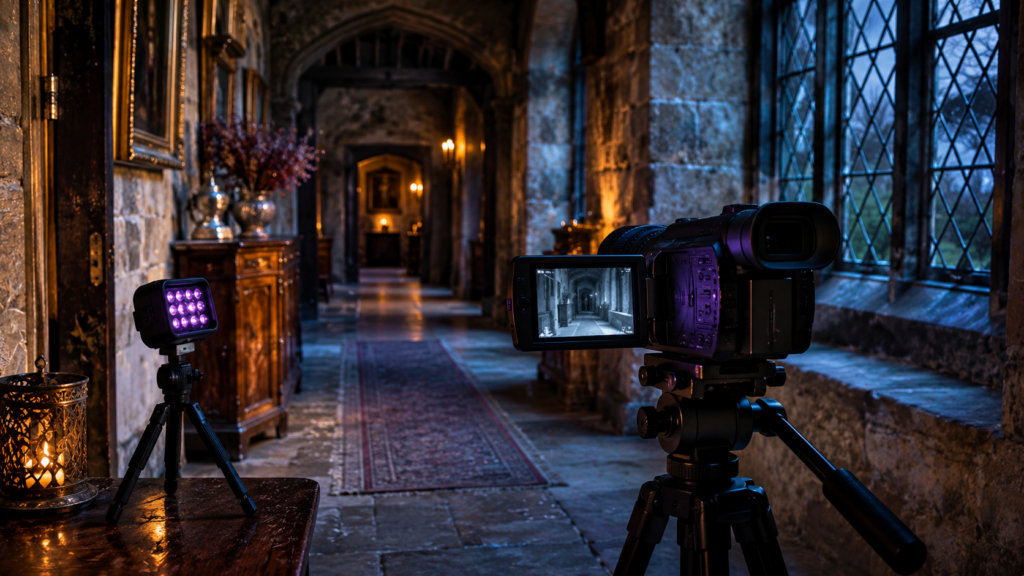
Essential for visually capturing object movement in the dark. We’ve reviewed several excellent models here: Best Night Vision Cameras for Ghost Hunting (Quick Guide)
Thermal Imaging
Great for validating whether something manipulating an object has a detectable heat signature. (Not all do!) Are All Ghosts Thermal Detectable?
Spirit Boxes
Place one near a trigger object, ask direct questions tied to the item, and you dramatically increase intelligent responses. Best spirit boxes for ghost hunting
Interactive Devices
Even motion-triggered or sensor-based paranormal gadgets like the BooBuddy can act as both trigger object and detector: What Is the BooBuddy Interactive Ghost Hunting Bear?
Affiliate Gear We Genuinely Recommend for Trigger Object Experiments
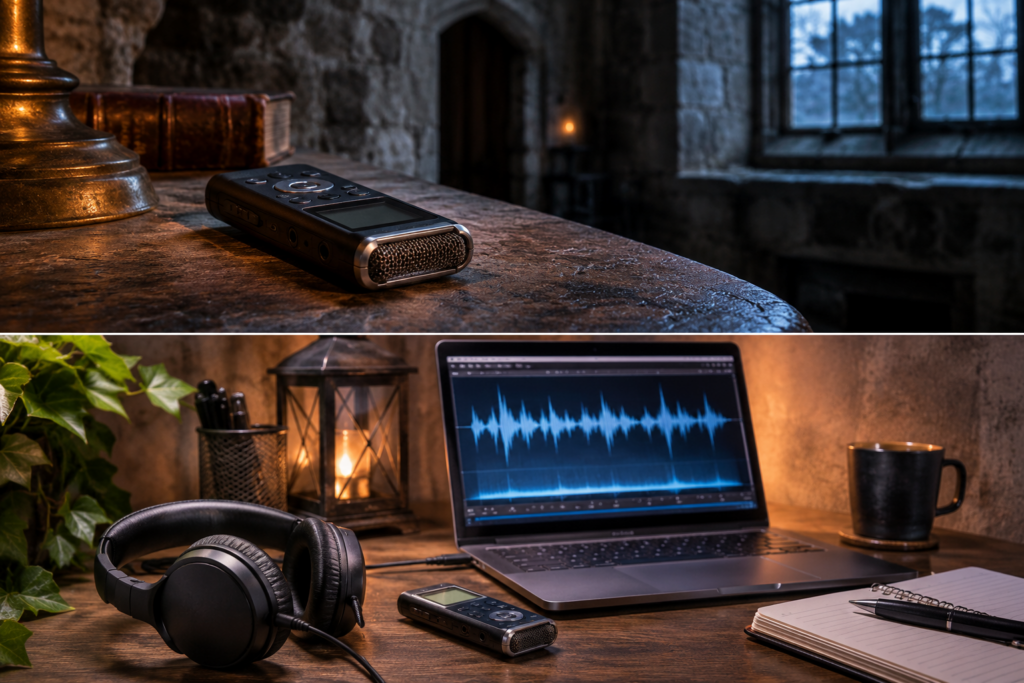
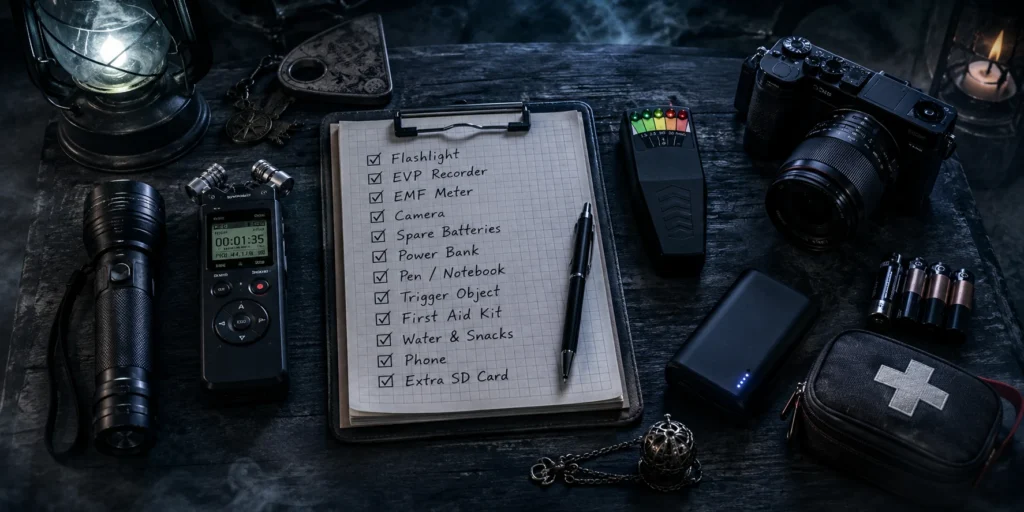
Recommended options include a K2 EMF meter, digital voice recorder, IR light, motion sensor kit, and relevant trigger objects such as coins, toys, photographs or music boxes.
For a coin-based setup, start with an ordinary coin you already have. Place it on a stable surface and take a reference photo so you can compare its position later.
If you’re comparing where to buy trigger objects, REM Pods, spirit boxes, EMF meters or wider paranormal investigation gear, I’ve also written a full GhostStop vs SpiritShack comparison to help you choose the right supplier.
How to Use Trigger Objects Correctly (Step-by-Step)
- Research the site first – match object to history
- Place objects with purpose – don’t scatter randomly
- Set up equipment coverage (night cam, REM, EVP, or thermal)
- Ask direct questions referencing the object
- Don’t touch or adjust once placed – avoid contamination
- Watch for patterned responses – not just one-off events
- Debunk everything before claiming anything
A Strong Investigation Script Example
Instead of this:
“If anyone is here, move something.”
Try:
“We brought this toy car because children used to live here. If you recognise it, can you touch it or come close? We have a device next to it that will let us know you’re here.”
The second method creates identity, intention, and instruction. Spirits respond to structure more than randomness.
Common Mistakes Investigators Still Make
- Using objects with no relevance
- Not monitoring them properly
- Expecting instant or dramatic results
- Talking over equipment or contaminating audio
- Ignoring environmental causes first
Ghost hunting is 70% patience, 30% method, 10% luck… and 100% documentation.
Trigger Object Experiment Comparison Chart
| Method | Equipment Used | Response Type | Evidence Potential | Success Rate |
|---|---|---|---|---|
| Toy + REM Pod | REM Pod, IR Camera | Proximity alerts, motion | High if monitored on camera | 8/10 |
| Coin + EMF Meter | EMF reader, EVP | EMF spikes, voice responses | Medium-high | 6.5/10 |
| Music Box + EVP | Audio recorder | Intelligent verbal replies | Very high for communication | 7/10 |
| Doll + Motion Sensor | Motion alarms, camera | Physical movement detection | High if movement visible | 7.5/10 |
| Photo + Spirit Box | Spirit box, audio recorder | Direct name or conversation replies | Very high | 8.5/10 |
Do Trigger Objects Always Work?
No.
Nothing in the paranormal is guaranteed.
But they increase the odds of interaction more than almost any passive method.
They give spirits:
- Something to relate to
- Something to manipulate
- Something to respond to
- Something measurable
And that’s the real difference between hoping for evidence… and capturing it.
Before buying your trigger-object setup, you may also want to read my GhostStop vs SpiritShack guide for a wider comparison of ghost hunting suppliers, shipping and equipment options.
Final Thoughts
Using trigger objects for ghost hunting isn’t about theatrics or drama, it’s strategy, connection, psychology, and energy work.
When your object is relevant, your questions are intentional, and your equipment is watching, you create the perfect conditions for interaction.
The paranormal doesn’t always show itself on command, but give it something familiar, and suddenly, you’re no longer searching in the dark… you’re providing a doorway.
You may also want to read: