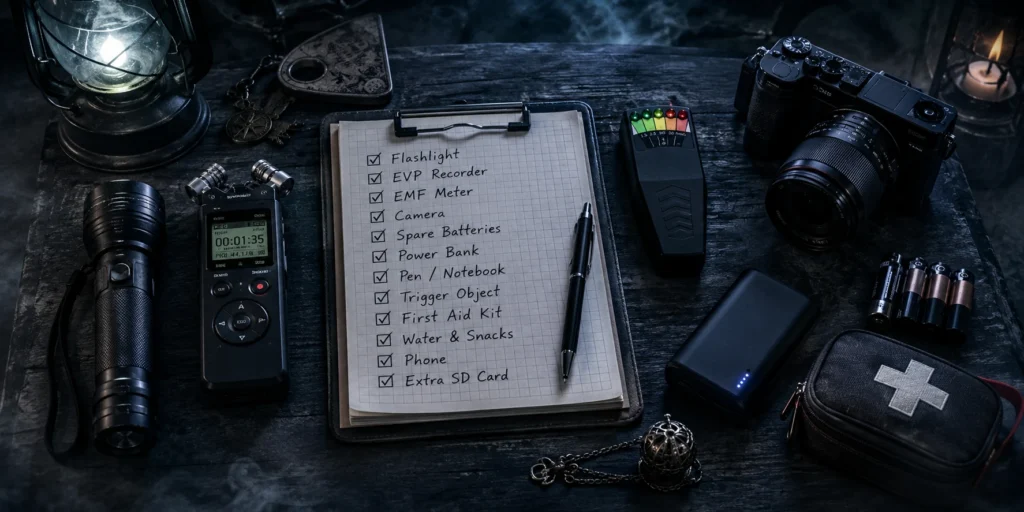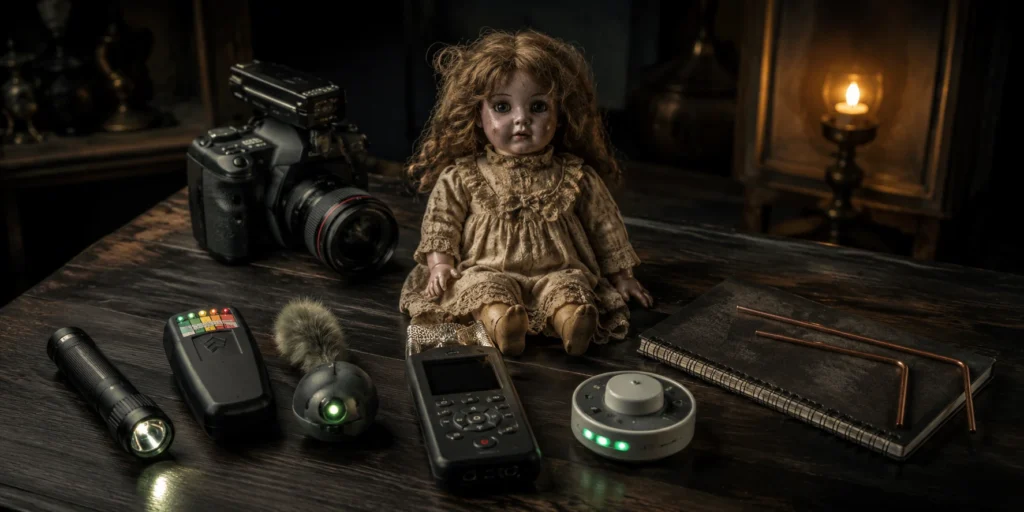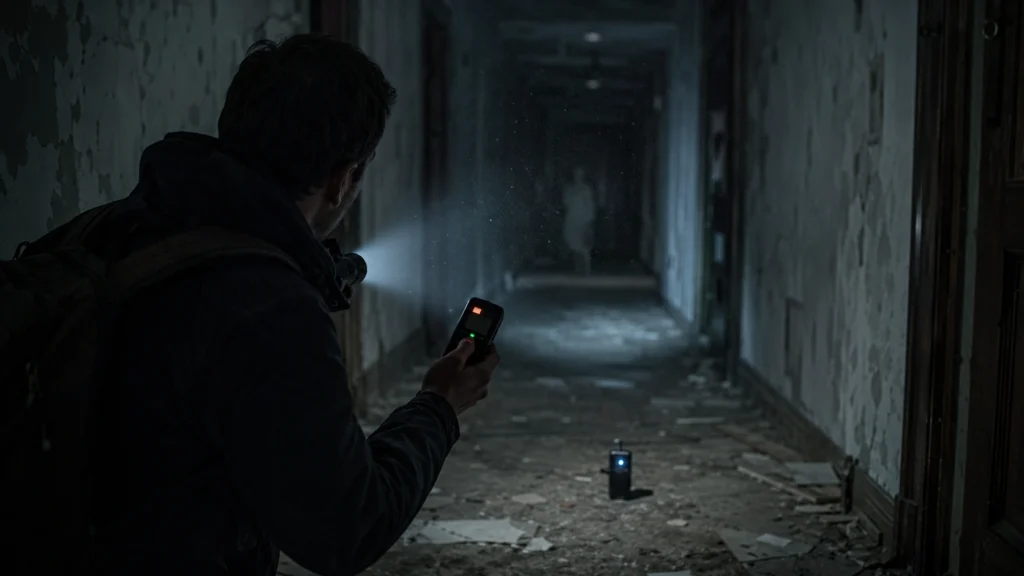

When people think of the best flashlights for ghost hunting, they might not seem as exciting as spirit boxes, EMF meters, REM Pods, EVP recorders, motion sensors, cat balls and night vision cameras.
But one of the most useful tools you can take on any paranormal investigation is also one of the simplest: a reliable flashlight.
A flashlight will not prove a haunting on its own, and it should never be treated as a ghost detector. What it can do is help you move safely through dark locations, check shadows and reflections, set up equipment, document rooms properly, and avoid mistaking poor visibility for paranormal activity.
Some paranormal investigators also use flashlights in communication experiments. This usually involves placing a torch on a flat surface, adjusting it so the light is close to switching on or off, then asking questions to see whether the light appears to respond.
It can be an interesting experiment, but it needs a careful approach. Loose battery contacts, temperature changes, vibration, switch sensitivity and simple chance can all affect a flashlight. For that reason, I would always treat flashlight responses as something to document, not as proof on their own.
In this guide, we’ll look at the best flashlights for ghost hunting, what features to look for, how investigators use them, and why a simple torch can still be one of the most important pieces of kit in your bag.
If you’re still building your full investigation setup, you may also want to read my guide to the Best Ghost Hunting Equipment.
Quick Verdict: Best Flashlights for Ghost Hunting
If you just want a simple answer, I would start with a reliable LED flashlight, a hands-free headlamp and a small backup torch.
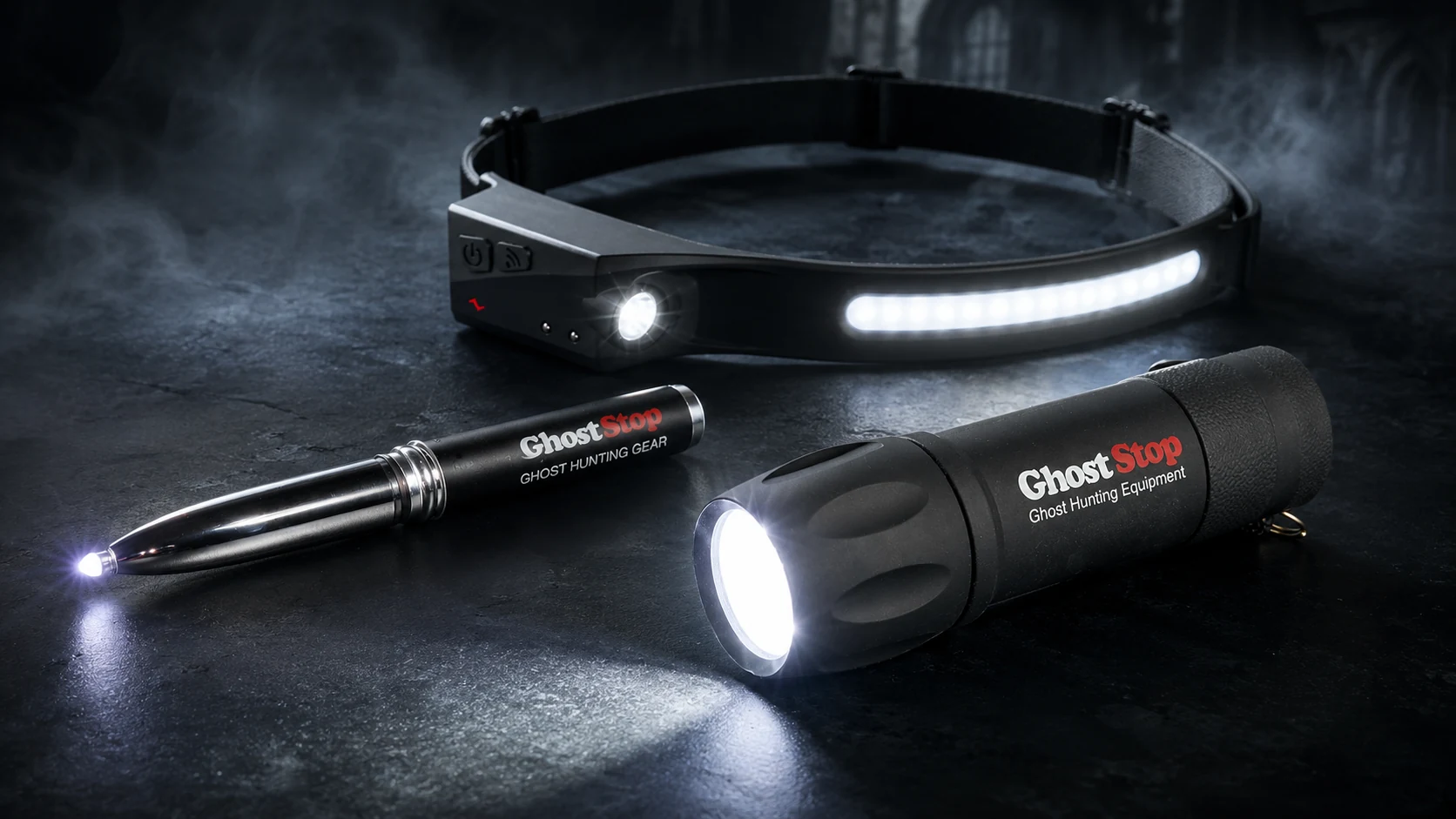
For paranormal-focused flashlight experiments, the GS Flashlight from GhostStop is a good option because it is compact, easy to carry and designed with a twist-lens setup that can be used for flashlight experiments. GhostStop lists it as a compact flashlight with a rubberised grip, simple click on/off button, carry strap, included batteries and a twist-lens design for flashlight experiment use.
For quick checks and note-taking, the GhostStop Flashlight Pen is a handy accessory rather than a main torch. It combines a writing pen, stylus and small LED flashlight, although the battery is preinstalled and not replaceable.
For UK buyers who want a hands-free option, the Hands-Free LED Headlamp Torch from SpiritShack is worth considering. It is designed for paranormal investigators who need lighting while carrying other equipment, and it includes multiple lighting modes, USB-C charging and a rechargeable battery. SpiritShack says the battery can last around 5–12 hours depending on the mode used.
For general investigation use, Amazon is useful for rechargeable flashlights, headlamps, spare backup torches and budget multi-packs.
I would save ultraviolet and infrared torches for more specialist setups. UV lights are mainly used for inspecting surfaces, markings and objects, while infrared lights are mainly used with night vision cameras. They can both be useful, but they work differently enough that it is better to look at them separately.

Why Flashlights Matter During Ghost Hunts
A good flashlight is not just about making a dark room brighter. During a ghost hunt, lighting can affect safety, filming, evidence review and how well you can rule out normal explanations.
Many paranormal investigations take place in low-light conditions. You might be walking through an old house, a cellar, a historic building, a garden, a graveyard, a derelict-style location, or simply a room where the lights have been turned off during an EVP session.
In those situations, a flashlight helps you:
Move around safely
Check stairs, floors and uneven surfaces
Avoid tripping over bags, wires and equipment
Inspect mirrors, glass, windows and reflective objects
Set up cameras, trigger objects and motion sensors
Check whether a noise came from something normal
Pack away safely at the end of the investigation
A flashlight can also help with debunking. In the dark, ordinary things can look strange. Shadows can move when someone walks past a light source. Dust, insects, car headlights, reflective picture frames, door handles and glass cabinets can all create odd effects on camera.
Before assuming something is paranormal, it is worth checking the area with a torch. Sometimes a quick look with a flashlight explains what seemed mysterious a few seconds earlier.
That is why I would always include at least one good flashlight in a ghost hunting kit. It might not feel as exciting as a spirit box or EMF meter, but it is one of the most practical tools you can carry.
Flashlights also work well alongside tools like motion sensors, laser grids and trigger objects, especially when you are trying to monitor a dark room safely.
Can Flashlights Detect Ghosts?
No, flashlights do not detect ghosts by themselves.
Some investigators use flashlights during communication experiments, where the torch is placed on a surface and adjusted so it is close to turning on or off. Questions are then asked to see whether the light appears to respond.
For example, an investigator might ask:
“Can you turn the light on for yes?”
Or:
“Can you turn the light off if you are here?”
Some people believe this can be a form of spirit communication. Others argue that the results can be caused by normal factors, especially if the flashlight has been loosened or adjusted.
Possible normal explanations include:
Loose battery contact
Weak batteries
A sensitive switch
Temperature changes
Vibration from footsteps
Movement on the table or floor
The torch settling after being adjusted
This does not mean every flashlight experiment should be dismissed. It just means the method needs to be controlled properly.
If a flashlight appears to respond during an investigation, I would want to check the batteries, film the full setup, make sure nobody is touching the table, repeat the test, move the torch to another position and see whether the same thing happens when no questions are being asked.
A flashlight response can be interesting, especially if it happens alongside other activity, but it should never be treated as proof on its own.
If you prefer using dedicated interaction tools, you may find devices like a REM Pod, BooBuddy or cat balls more useful than relying on a flashlight experiment alone.
Best Types of Flashlights for Ghost Hunting
There are several types of flashlights and lighting tools that can be useful during ghost hunts. For this article, we are mainly focusing on standard investigation torches, headlamps, pocket lights and flashlight experiments.
Infrared and ultraviolet torches can also be useful, but they work differently from normal flashlights.
Infrared lights are mainly used with night vision cameras. Ultraviolet torches are usually used for inspecting surfaces, markings, stains and objects.
Those deserve their own dedicated guides, so I will only touch on them briefly here.
Standard LED Flashlights
For most beginners, the best flashlights for ghost hunting are compact LED torches with reliable battery life and simple controls.
This is the light you reach for when you need to walk through a dark room, check a hallway, look behind furniture, inspect a noise or safely move from one area to another.
For most investigations, you do not need anything overly complicated. A compact LED flashlight with a comfortable grip, decent brightness and reliable battery life is usually enough.
The best ghost hunting flashlight should be:
Easy to carry
Simple to switch on and off
Bright enough for safety
Not too harsh for indoor filming
Reliable in dark conditions
Comfortable to hold for long periods
One paranormal-focused option is the GS Flashlight from GhostStop. This is a compact flashlight designed for ghost hunting use, with a rubberised grip, carry strap and twist-lens style setup that can also be used for flashlight experiments.

That makes it useful as both a normal investigation torch and a possible experiment light.
You can also find plenty of general LED flashlights on Amazon. These are useful if you want a budget option, a rechargeable torch, a backup light or a multi-pack for group investigations.
Headlamps
A headlamp is one of the most useful lighting tools you can take on a ghost hunt.
The main benefit is simple: it keeps your hands free.
That might not sound exciting, but it makes a big difference when you are setting up cameras, placing trigger objects, checking batteries, carrying bags, holding an EVP recorder or moving carefully through a dark area.
A headlamp is especially useful for:
Outdoor investigations
Large buildings
Cellars, lofts and basements
Setting up equipment
Packing away at the end of the night
Changing batteries
Checking camera screens
Walking safely while carrying gear

For UK buyers, the Hands-Free LED Headlamp Torch from SpiritShack is a good fit for this section. SpiritShack describes it as a hands-free headlight for paranormal investigators, designed to help when you need light but also need your hands free for equipment. It has dim and bright spotlight modes, dim and bright wide-angle modes, USB-C charging, a built-in rechargeable battery and a hand-activation feature so you can turn it on or off by swiping your hand near your ear.
That hand-activation feature could be especially useful in dark locations where you do not want to keep fumbling for a power button while carrying equipment.
Pocket Flashlights and Pen Lights
A small pocket flashlight or pen light is useful as a backup.
You probably would not use one as your main light source, but it can be handy to keep in your pocket, bag or equipment case.
A pocket light can help when you need to:
Check a camera setting
Look inside a bag
Read notes in the dark
Inspect an EMF meter or recorder
Find spare batteries
Move around without using a large torch

GhostStop also has a Flashlight Pen, which combines a pen, stylus and small LED flashlight. I would treat this more as a handy investigation accessory than a main torch, but it could be useful for note-taking, quick checks and keeping a small light nearby.
For most people, a small pocket light is best used as a backup rather than your main flashlight. Your main torch should still be more reliable and powerful.
Red Light Flashlights
Red light flashlights are useful when you want low-level visibility without using harsh white light.
Many investigators prefer red light during quieter parts of an investigation because it is less disruptive. It can help you move around, check equipment or write notes without completely changing the lighting conditions in the room.
A red light can be useful during:
EVP sessions
Trigger object experiments
Night-time walkthroughs
Static camera filming
Group investigations
Quiet observation sessions
It is important to remember that a red light is still just a light. It does not detect spirits and does not make evidence stronger by itself.
Its value is practical. It gives you visibility while keeping the room darker and less disturbed.
Flashlights for Trigger Object Experiments
Flashlights are sometimes used as trigger objects during ghost hunts.
A trigger object is an item placed in a controlled area to see whether anything appears to interact with it. This could be a toy, ball, doll, cat ball, motion sensor, REM Pod, music box, BooBuddy or flashlight.
With a flashlight experiment, investigators usually place the torch on a table or floor, adjust it to a sensitive position, then ask questions and watch to see whether the light turns on or off.
If you try this, it is important to set it up carefully.
I would suggest:
Use a flat, stable surface
Film the flashlight from start to finish
Check the batteries before and after
Avoid touching the table during the session
Keep people from walking too close to the setup
Note any temperature changes or vibrations
Repeat the test more than once
Try a control period where no questions are asked
The more controlled the experiment, the more useful the result becomes.
If a flashlight turns on once after a question, that may be interesting. But if it keeps flickering randomly, turns on when nobody is asking anything, or behaves the same way in a control test, then there may be a normal explanation.
A flashlight experiment can be part of a ghost hunt, but it should not replace careful observation and critical thinking.

What to Look for in the Best Flashlights for Ghost Hunting
A flashlight for ghost hunting does not need to be complicated. In fact, simple is often better.
Here are the main features I would look for.
Good Brightness
You want a torch that is bright enough to help you move safely, but not so powerful that it blinds people or ruins every camera shot.
For indoor investigations, a compact LED flashlight is usually enough. For outdoor locations, larger properties or long corridors, you may want something stronger.
Adjustable brightness can be useful because you can use a lower setting during quiet sessions and a brighter setting when checking rooms or walking outside.
Reliable Battery Life
Battery life matters a lot during paranormal investigations.
Ghost hunts can last several hours, and the last thing you want is your main torch dying halfway through the night.
Rechargeable flashlights can be useful, but I would still carry a backup light. If your torch uses AA or AAA batteries, take spares with you.
A dead flashlight is not just inconvenient. In a dark location, it can become a safety issue.
Comfortable Grip
A flashlight with a textured or rubberised grip is useful, especially if you are investigating somewhere cold, damp or outdoors.
You may be holding other equipment, walking carefully or filming at the same time. A torch that feels secure in your hand is always better than one that is slippery or awkward.
Simple Controls
Avoid torches that are too fiddly.
Some flashlights have lots of modes, including low beam, high beam, strobe, SOS, zoom and flashing settings. Those features can be useful in some situations, but during a ghost hunt, simple controls are often better.
You do not want to accidentally trigger a strobe during an EVP session or spend ages clicking through different settings in the dark.
Compact Size
A smaller flashlight is easier to carry.
Ideally, you want something that can fit in your pocket, clip onto your bag or sit in your equipment case without taking up too much room.
A large torch can be useful outdoors, but for most indoor investigations, compact and reliable is better than bulky and awkward.
Wrist Strap or Clip
A wrist strap or clip is a small feature, but it can be very useful.
It reduces the chance of dropping the torch, especially in dark buildings, outdoor areas or locations where you are carrying other equipment.
Red Light Mode
A red light mode is not essential, but it is useful.
It gives you a low-light option when you do not want to use bright white light. This can be helpful during EVP sessions, filming or quiet parts of an investigation.
Backup Light
I would always bring more than one light.
At minimum, take one main flashlight and one backup. For longer investigations, I would also bring a headlamp.
It is better to have a spare and not need it than end up in a dark location with no working torch.

Flashlights vs UV Lights vs Infrared Lights
Normal flashlights, UV lights and infrared lights are often grouped together, but they do different jobs.
A standard flashlight is mainly for safety, movement, setup and checking your surroundings.
A UV torch uses ultraviolet light and is usually used for inspecting surfaces, stains, markings and objects. It can reveal things that are harder to see under normal light, but that does not automatically mean anything paranormal is happening.
An infrared light is mainly used with compatible night vision cameras. It helps the camera see in dark environments, but it does not detect ghosts by itself.
Here is a simple way to separate them:
| Light Type | Best For | Does It Detect Ghosts? |
|---|---|---|
| Standard flashlight | Safety, movement, setup and debunking | No |
| Headlamp | Hands-free investigating | No |
| Pocket light | Quick checks and backup use | No |
| Red light | Low-light movement and quiet sessions | No |
| UV torch | Inspecting surfaces, stains and objects | No |
| Infrared light | Helping night vision cameras see in darkness | No |
For this reason, I would treat standard flashlights, UV torches and IR lights as separate parts of your ghost hunting setup.
If you are just starting out, begin with a normal flashlight and headlamp. Later, you can add UV or infrared lighting depending on the type of investigations you are doing.
If your main focus is filming in the dark, my guide to Best Night Vision Cameras for Ghost Hunting will be more useful than a standard flashlight guide.
How I Would Use Flashlights on a Ghost Hunt
If I were setting up a small ghost hunt, I would bring at least three lighting options:
A main flashlight
A headlamp
A small backup torch
I would use the main flashlight for safety checks, walking through the location, checking noises and looking for normal explanations.
I would use the headlamp when setting up equipment, checking batteries, placing trigger objects or carrying gear.
I would keep the small pocket torch as a backup in case my main light stopped working.
If I wanted to try a flashlight experiment, I would use a separate torch for that. I would not use my main safety light as the experiment light because I would still want a reliable torch available if I needed to move around.
If I were filming with a night vision camera, I would use an infrared light rather than relying on a normal flashlight. If I were inspecting an old object, doll, box or unusual marking, I might use a UV torch as an inspection tool.
Different lights have different jobs. The key is knowing why you are using each one.

Common Flashlight Mistakes During Paranormal Investigations
Flashlights are simple tools, but they can still cause problems during an investigation if they are used carelessly.
Treating Flickering as Proof
A flickering flashlight is not automatically paranormal.
It could be caused by weak batteries, a loose cap, a worn switch, temperature changes, vibration or poor battery contact.
If a flashlight flickers during an investigation, document it, but check the normal explanations first.
Using a Torch That Is Too Bright
Very bright torches can create harsh reflections, wash out camera footage and distract other investigators.
Sometimes a medium-brightness torch is more useful than the brightest one you can buy.
Shining Lights Into Cameras
This is a common issue during ghost hunts.
If someone shines a flashlight into a camera, it can create glare, lens flare, strange reflections or overexposed footage.
Before starting an investigation, it is worth making sure everyone knows where the cameras are positioned.
Forgetting Spare Batteries
A flashlight is only useful if it works.
Always bring spare batteries, a power bank or a backup light. This is especially important if you are investigating a large location, outdoor area or somewhere with no easy access to power.
Using One Light for Everything
Your main safety torch should not also be your trigger object, experiment light, camera light and backup light.
If you want to try a flashlight experiment, use a separate torch. Keep your main flashlight available for safety.
Walking Around in Complete Darkness
It might feel more atmospheric, but walking around in total darkness is not worth the risk.
Old buildings, outdoor spaces and unfamiliar rooms can have trip hazards, loose flooring, steps, cables, furniture and sharp objects.
A ghost hunt should still be safe.
Best Places to Buy Flashlights for Ghost Hunting
You can buy flashlights from many places, but the best option depends on what you need.
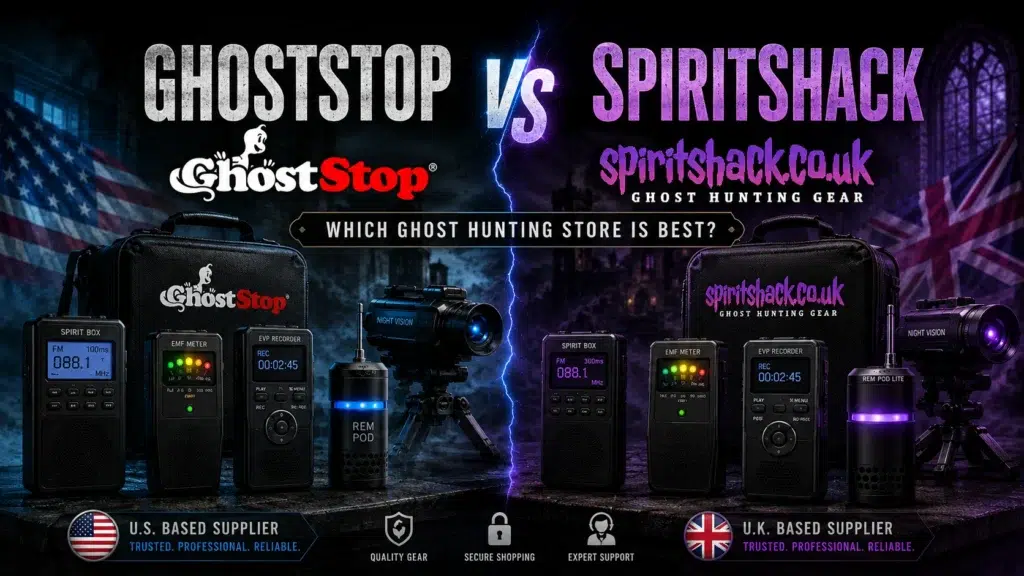
If you’re comparing paranormal suppliers before buying, read my GhostStop vs SpiritShack comparison first.
GhostStop
GhostStop is a good option if you want paranormal-focused accessories rather than just a generic torch.
The GS Flashlight is a compact ghost hunting flashlight that can be used as a standard torch and also for flashlight experiments.
The Flashlight Pen is more of a handy accessory. It combines a pen, stylus and small LED light, which could be useful for note-taking or quick checks during an investigation.
SpiritShack
SpiritShack is a good option for UK buyers who want a hands-free headlamp designed with paranormal investigators in mind.
Its Hands-Free LED Headlamp Torch is useful if you need light while setting up cameras, checking equipment, carrying bags or moving through dark locations. The hand-activation feature is also handy because it lets you turn the light on or off without searching for the button in the dark.
Amazon
Amazon is useful for general flashlights, rechargeable torches, headlamps, red light torches, spare batteries and budget multi-packs.
This is probably the best place to look if you want cheap backup lights or want to compare lots of everyday torch options.
Are Flashlight Experiments Reliable?
Flashlight experiments are popular in the paranormal field, but they are not foolproof.
The basic idea is that a flashlight is adjusted so it is close to switching on or off. Investigators then ask questions and watch for responses.
The issue is that flashlights are physical objects. Batteries, springs, switches and metal contacts can behave unpredictably, especially if the torch has been loosened or adjusted.
Temperature changes, vibration, pressure, weak batteries and movement can all affect the connection.
That does not mean every flashlight experiment is worthless. It just means the results should be treated carefully.
Before taking a flashlight response seriously, I would ask:
Was the flashlight stable?
Were the batteries checked?
Was anyone touching the table?
Could footsteps have caused vibration?
Did the light respond only after questions?
Did it behave the same way during a control test?
Was the whole session filmed clearly?
Did anything else happen at the same time?
The more controlled the experiment, the more interesting the result becomes. But even then, it should be considered part of the wider investigation, not proof by itself.
Best Flashlights for Ghost Hunting: Beginner Setup
For beginners, I would keep things simple.
You do not need an expensive lighting setup to start ghost hunting. A basic flashlight setup could include:
One reliable LED flashlight
One headlamp
One small backup torch
Spare batteries
Optional red light mode
Optional separate flashlight for experiments
That is enough for most beginner investigations.
Later, you can add more specialist lighting depending on how you investigate.
If you start filming with night vision cameras, look at infrared lighting. If you investigate haunted objects, old dolls, boxes or unusual markings, consider a UV torch. If you do more outdoor investigations, you may want a stronger torch or longer-lasting headlamp.
Start practical, then build from there.
FAQs About Flashlights for Ghost Hunting
Do flashlights detect ghosts?
No, flashlights do not detect ghosts by themselves. Some investigators use them during communication experiments, but loose battery connections, switch sensitivity, temperature changes and vibration can all affect the result.
Why do ghost hunters use flashlights?
Ghost hunters use flashlights for safety, visibility, setting up equipment, checking shadows and reflections, and sometimes for controlled flashlight experiments.
What is a flashlight experiment in ghost hunting?
A flashlight experiment is when investigators place a flashlight in a controlled position and ask questions to see whether the light appears to turn on or off. It is a popular method, but results should be treated carefully and checked against normal explanations.
What type of flashlight is best for ghost hunting?
A compact LED flashlight is usually best for general ghost hunting. A headlamp is also useful because it keeps your hands free. For experiments, some investigators prefer a twist-style flashlight.
Should I use a headlamp on a ghost hunt?
Yes, a headlamp can be very useful during a ghost hunt. It helps you set up equipment, carry bags, check cameras and move safely while keeping your hands free.
Are red lights useful for ghost hunting?
Red lights can be useful during low-light investigations, but only if the torch or headlamp you buy specifically includes a red-light mode. The flashlights covered in this guide are mainly standard white-light tools, so check the product details carefully before buying.
Are UV torches the same as normal flashlights?
No. UV torches use ultraviolet light and are mainly used for inspecting surfaces, stains, markings and objects. They should be treated as inspection tools, not ghost detectors.
Are infrared lights the same as flashlights?
No. Infrared lights are mainly used with compatible night vision cameras. They help cameras see in darkness, but they do not detect paranormal activity by themselves.
Should I use a flashlight during EVP sessions?
You can, but use it carefully. A low light or red light can help you move around without disturbing the session too much. Avoid clicking torches on and off constantly during EVP recording because the sound may contaminate the audio.
How many flashlights should I take on a ghost hunt?
I would take at least two: one main flashlight and one backup. For longer investigations, I would also bring a headlamp and spare batteries.
Final Verdict: What Is the Best Flashlight for Ghost Hunting?
The best flashlight for ghost hunting is one that is reliable, easy to carry, bright enough for safety and simple to use in the dark.
For most people, I would start with a compact LED flashlight, a headlamp and a small backup torch. That gives you a practical setup for moving around safely, setting up equipment and checking your surroundings.
If you want to try flashlight experiments, use a separate twist-style flashlight rather than your main safety torch. That way, you can keep your experiment controlled while still having a reliable light available if you need to move around.
The GS Flashlight from GhostStop is a good paranormal-focused option because it works as a compact torch and can also be used for flashlight experiments.
For everyday investigation use, Amazon is useful for rechargeable flashlights and backup lights, while SpiritShack is worth checking for a paranormal-focused hands-free headlamp.
A flashlight might not be the most mysterious piece of ghost hunting equipment, but it is one of the most important. It helps you stay safe, avoid false positives, check the environment and keep your investigation under control.
Used properly, a good flashlight is not just a torch. It is part of a sensible ghost hunting setup.
You May Also Want to Read
- Best Ghost Hunting Equipment
- Best Motion Sensors for Ghost Hunting
- Best Laser Grids for Ghost Hunting
- Best Trigger Objects for Ghost Hunting
- What Is the BooBuddy Interactive Bear?
- Best REM Pod for Ghost Hunting
- Best EMF Meters for Ghost Hunting
- Best EVP Recorders for Ghost Hunting
- Best Night Vision Cameras for Ghost Hunting
- GhostStop vs SpiritShack
- Haunted Objects
- Is My House Haunted?