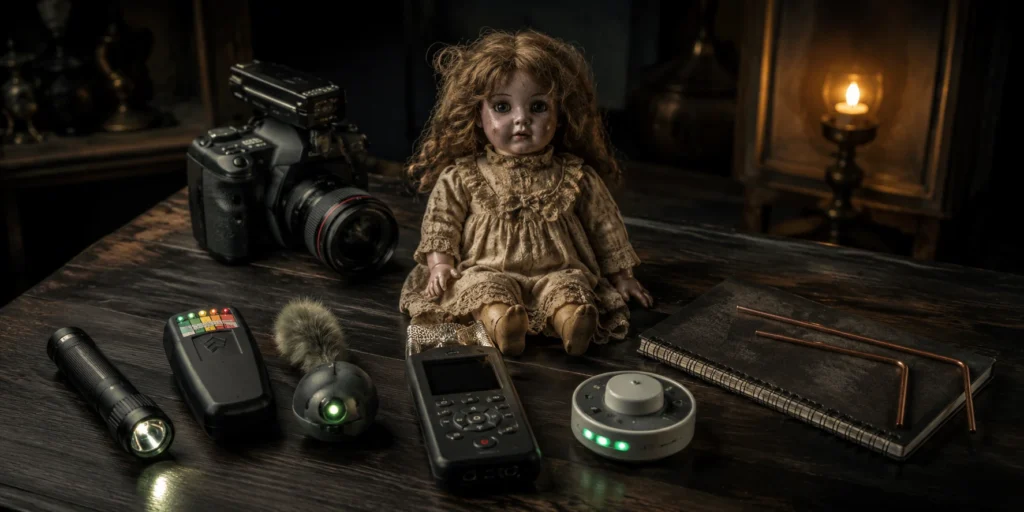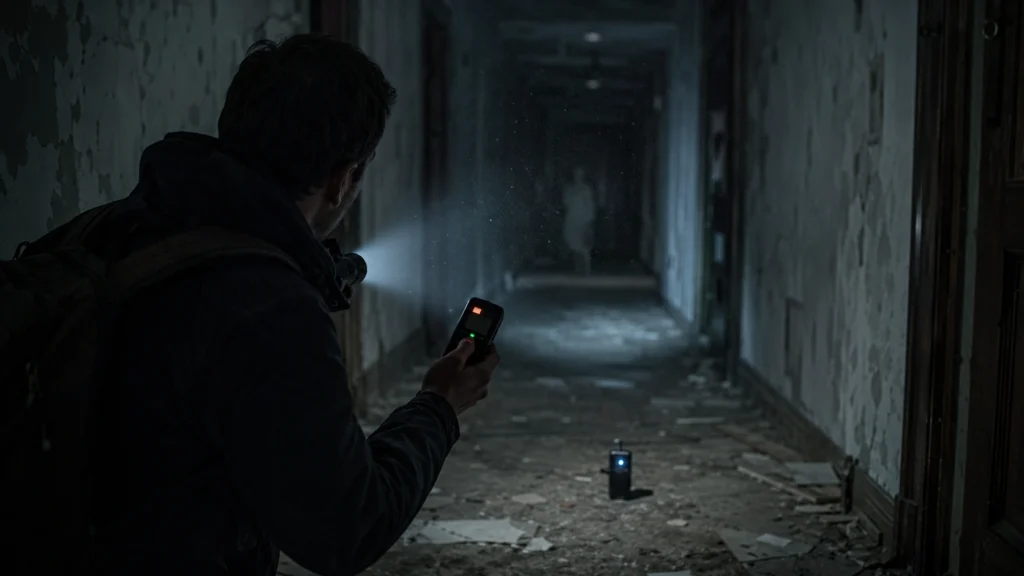


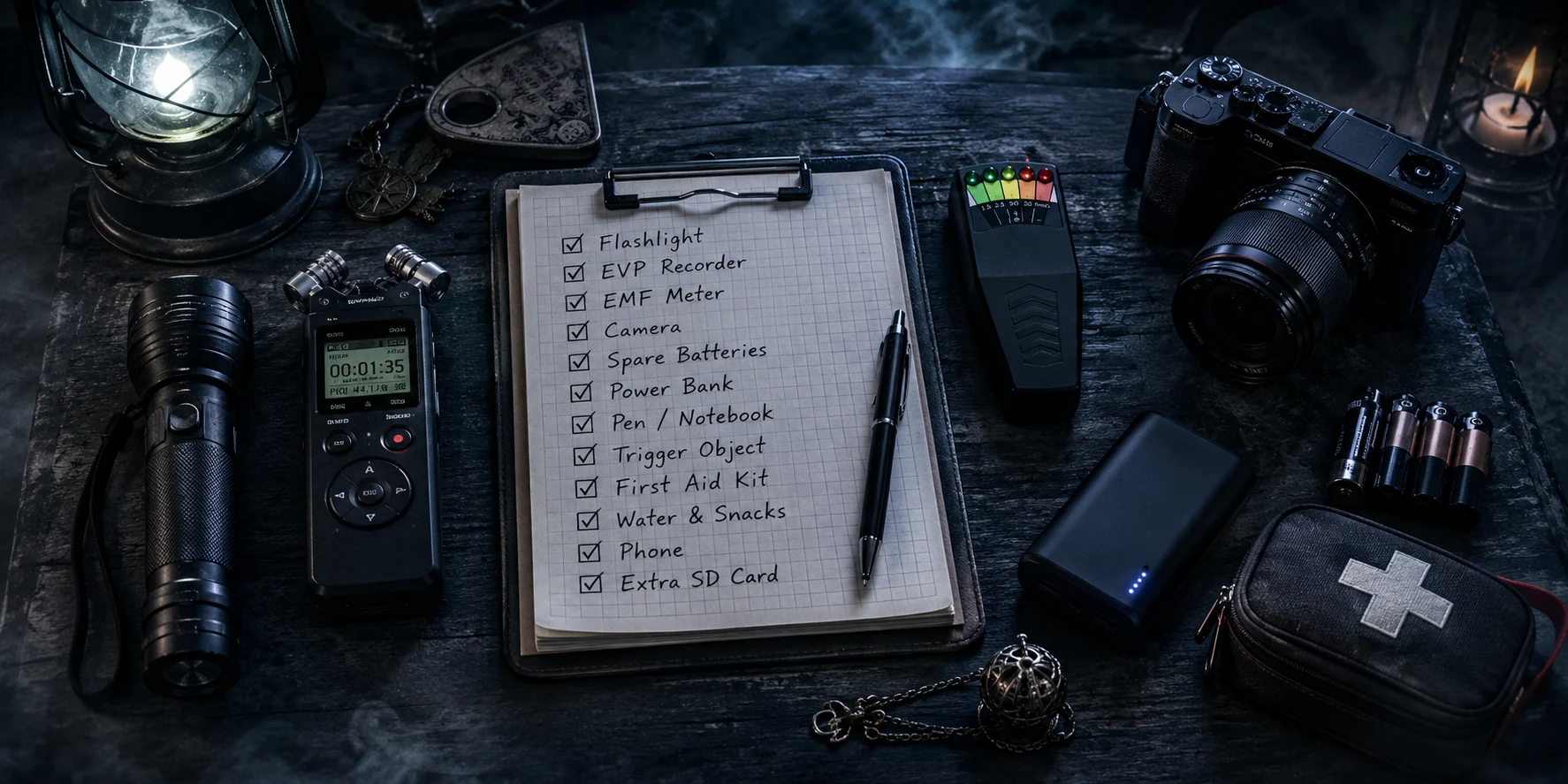
A good ghost hunting equipment checklist should include a flashlight, EVP recorder, EMF meter, camera, notebook, spare batteries, power bank, trigger objects and basic safety gear. You do not need expensive equipment to start ghost hunting, but you do need reliable tools, a clear plan and a sensible way to record what happens.
This checklist is designed to help you pack for a ghost hunt, not explain every device in detail. For a deeper breakdown of what each tool does, read my full guide to Best Ghost Hunting Equipment.
Whether you are investigating a haunted house, visiting a historic location, joining a ghost tour or setting up a quiet session around a haunted object, the right checklist helps you stay organised, reduce false positives and avoid forgetting important equipment.
Quick Answer: What Equipment Do You Need for Ghost Hunting?
For ghost hunting, you should pack a flashlight, EVP recorder, EMF meter, camera or night vision camera, notebook, spare batteries, power bank, trigger objects, first aid kit and weather-appropriate clothing. Beginners can start with a simple kit, while more advanced investigators may add spirit boxes, REM Pods, motion sensors, laser grids, cat balls, dowsing rods and thermal cameras.
The best ghost hunting equipment checklist is not about taking every gadget you own. It is about taking the right tools for the location, the type of investigation and the questions you want to answer.
Quick Verdict: Essential Ghost Hunting Equipment Checklist
If you are packing for your first ghost hunt, start with a simple setup: flashlight, phone, camera, voice recorder, notebook, spare batteries, power bank and one basic investigation tool such as an EMF meter or cat ball.
For a more complete investigation kit, you can add an EVP recorder, spirit box, REM Pod, motion sensors, laser grid, dowsing rods, night vision camera and a proper equipment case.

Why Use a Ghost Hunting Equipment Checklist?
A ghost hunting equipment checklist helps you avoid turning up at a location and realising you have forgotten batteries, lights, memory cards, chargers, notebooks or safety gear.
It also helps keep the investigation calmer and more controlled. If something unusual happens, you want to know your camera was recording, your audio was clear, your notes were accurate and your equipment was working properly.
| Checklist Benefit | Why It Matters |
|---|---|
| Pack the right tools | Stops you forgetting essential equipment before leaving. |
| Check batteries and storage | Reduces the chance of missing useful footage or audio. |
| Plan the session | Helps you decide which tools suit the location. |
| Reduce false positives | Makes it easier to rule out normal causes. |
| Stay safer | Keeps practical items like torches, first aid and warm clothing in mind. |
| Review evidence properly | Notes, recordings and video give you something to compare later. |
The goal is not to take everything. The goal is to take the right equipment for the investigation.
Beginner Ghost Hunting Equipment Checklist
If you are new to ghost hunting, keep your kit simple. You do not need a table full of expensive devices to begin.
A beginner ghost hunting kit should help you move safely, record clearly and take proper notes.
| Equipment | Why You Need It |
|---|---|
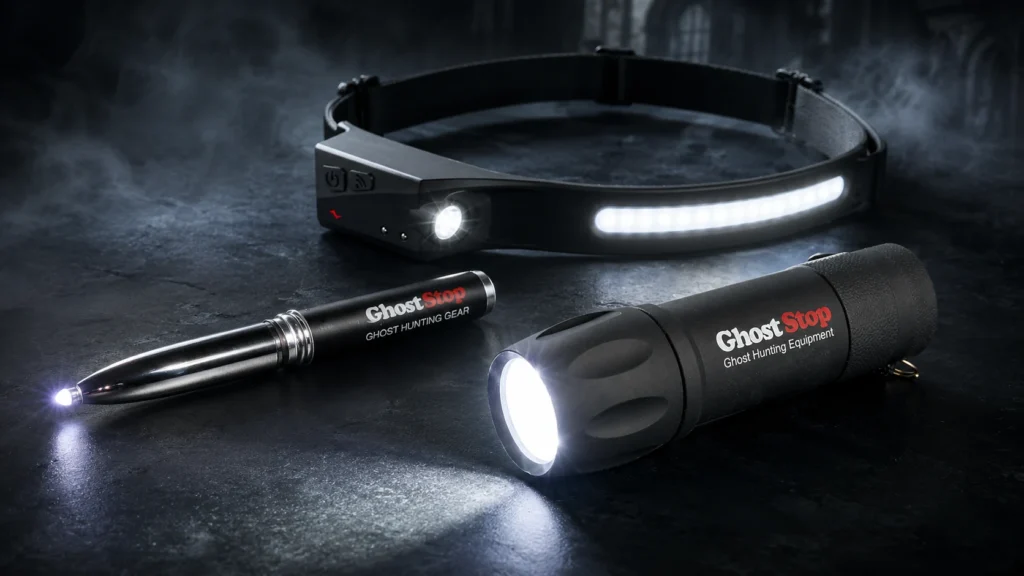
| Flashlight or headlamp | Helps you move safely, check dark rooms and set up equipment. |
| Phone | Useful for emergency contact, photos, video, notes and maps. |
| EVP recorder or phone recorder | Records audio sessions for possible EVP review. |
| Camera or phone camera | Captures visual activity, equipment reactions and the investigation setup. |
| Notebook and pen | Lets you record times, readings, questions, noises and possible explanations. |
| EMF meter | Helps check electromagnetic fields, but should not be treated as a ghost detector. |
| Spare batteries | Keeps flashlights, recorders, cameras and small devices running. |
| Power bank | Keeps your phone and USB-powered equipment charged. |
| One trigger object | Gives the session a simple focus point for possible interaction. |
| First aid kit | Useful for safety, especially in dark or unfamiliar locations. |
| Warm clothing and sensible shoes | Helps you stay comfortable and safe in cold, old or uneven locations. |
This is enough for a basic ghost hunt.
For deeper beginner buying advice, read my guides to Best Ghost Hunting Equipment, Best Flashlights for Ghost Hunting and Best EVP Recorders for Ghost Hunting.
Essential Ghost Hunting Equipment Checklist
This is the basic equipment I would consider for most paranormal investigations.
| Equipment | Best Used For | Full Guide |
|---|---|---|
| Flashlight or headlamp | Safety, visibility, checking shadows and setting up equipment. | Best Flashlights for Ghost Hunting |
| EVP recorder | Recording audio sessions and reviewing possible responses. | Best EVP Recorders for Ghost Hunting |
| EMF meter | Checking electromagnetic fields and taking baseline readings. | Best EMF Meters for Ghost Hunting |
| Camera or night vision camera | Recording rooms, objects, equipment reactions and movement. | Best Night Vision Cameras for Ghost Hunting |
| Notebook and pen | Recording times, questions, readings, noises and possible explanations. | Best Ghost Hunting Equipment |
| Spare batteries | Keeping torches, cameras, recorders and small devices running. | Best Ghost Hunting Equipment |
| Power bank | Charging phones, cameras and USB-powered devices. | Best Ghost Hunting Equipment |
| Trigger object | Creating a focus point for interaction experiments. | Trigger Objects for Ghost Hunting |
| First aid kit | Basic safety during dark, old or unfamiliar locations. | Best Ghost Hunting Equipment |
This section keeps the checklist simple. If you want a full explanation of each tool, use the linked guides above.
Advanced Ghost Hunting Equipment Checklist
Once you understand the basics, you can start adding more specialist equipment.
Advanced gear is useful when you know why you are using it and how false positives can happen.
| Equipment | Best Used For | Full Guide |
|---|---|---|
| Spirit box | Live audio communication experiments. | Best Spirit Boxes for Ghost Hunting |
| REM Pod | Interactive sessions, trigger object setups and visible or audible alerts. | Best REM Pod for Ghost Hunting |
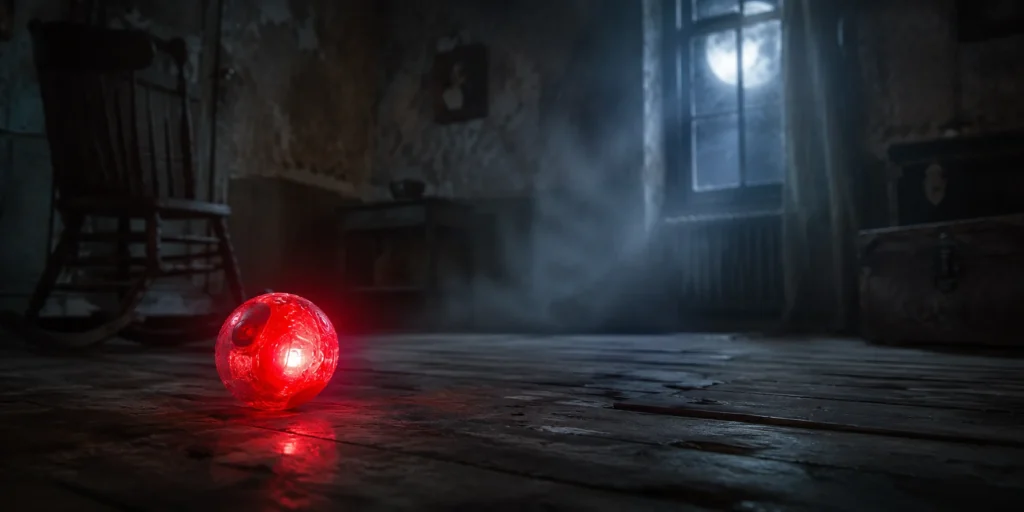
| Cat balls | Simple motion-based trigger experiments. | Best Cat Balls for Ghost Hunting |
| Motion sensors | Monitoring movement in rooms, doorways or around objects. | Best Motion Sensors for Ghost Hunting |
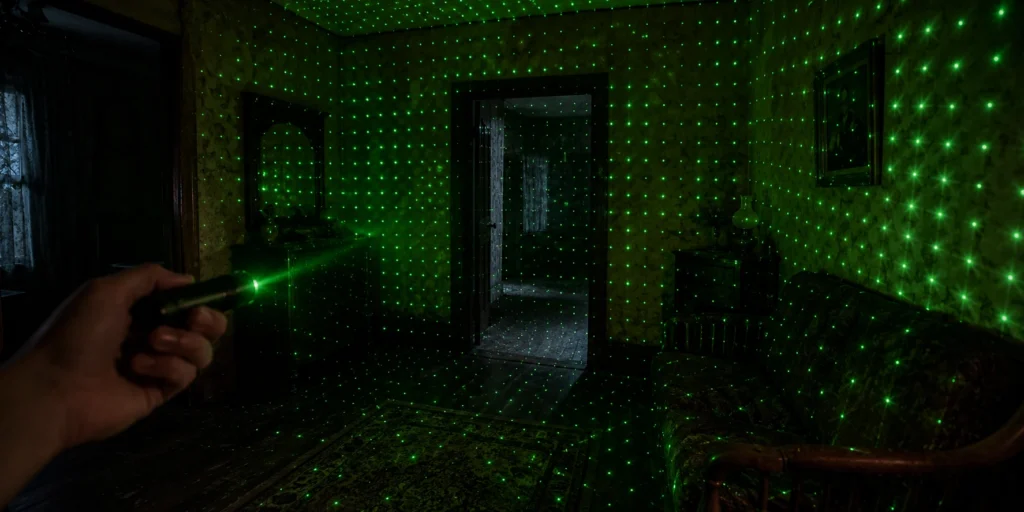
| Laser grid | Watching for movement, shadows or disruptions in dark spaces. | Best Laser Grids for Ghost Hunting |
| Night vision camera | Recording in low-light or dark investigation areas. | Best Night Vision Cameras for Ghost Hunting |
| Thermal camera | Checking temperature differences and possible normal heat sources. | Are Ghosts Thermal Detectable? |
| Dowsing rods | Yes/no questions, direction finding and spiritual experiments. | Best Dowsing Rods for Ghost Hunting |
| BooBuddy | Interactive trigger object sessions, especially around child-related hauntings. | What Is the BooBuddy Interactive Ghost Hunting Bear? |
| Full spectrum camera | Experimental visual investigation work. | GhostStop Phasm Cam Review |
| Equipment case | Protecting and organising your kit. | Best Ghost Hunting Equipment |
You do not need all of this for every investigation. Choose the tools that match the location, the claims and the type of session you want to run.
For more detailed buying advice, see Best Spirit Boxes for Ghost Hunting, Best REM Pod for Ghost Hunting, Best Cat Balls for Ghost Hunting, Best Laser Grids for Ghost Hunting and Best Dowsing Rods for Ghost Hunting.
Ghost Hunting Equipment Checklist for Haunted Houses
A haunted house investigation needs a balanced setup because houses can have lots of normal explanations for strange activity.
Pipes, heating, neighbours, traffic, pets, creaky floors, loose doors and electrical wiring can all create false positives.
| Equipment | Why It Helps |
|---|---|
| Flashlight | Helps with safety and checking shadows, corners and reflective surfaces. |
| EVP recorder | Useful for quiet question sessions and audio review. |
| EMF meter | Helps check wiring, plug sockets and electromagnetic changes. |
| Camera | Records rooms, equipment and possible movement. |
| Notebook | Keeps track of times, questions and reported activity. |
| Cat balls | Useful near doorways, furniture or trigger objects. |
| Motion sensor | Helps monitor empty rooms or hallways. |
| REM Pod | Can be used during controlled interaction sessions. |
| Spirit box | Useful for live audio experiments if the environment is quiet enough. |
| Power bank and batteries | Keeps devices running during longer home investigations. |
Check normal explanations before assuming anything is paranormal.
If you are dealing with activity at home, my guide Is My House Haunted? may also be useful.
What to Take to Haunted Locations
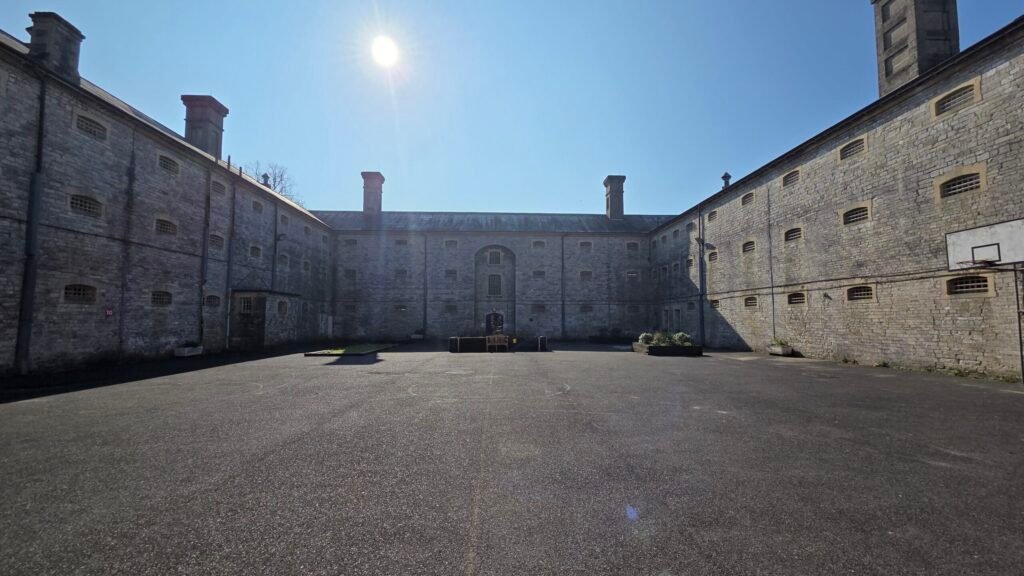
For haunted locations such as prisons, castles, hotels, pubs, theatres or historic buildings, you may need a slightly larger kit.
Large locations can be dark, cold and easy to get turned around in, so safety and communication are important.
| Equipment | Why It Helps |
|---|---|
| Flashlight or headlamp | Essential for dark prisons, castles, hotels, pubs and historic buildings. |
| EVP recorder | Helps capture audio sessions in specific rooms or areas. |
| Camera or night vision camera | Records the investigation and helps review movement or equipment reactions. |
| EMF meter | Useful for baseline readings and checking normal electrical sources. |
| Spirit box | Can be used for controlled communication sessions where allowed. |
| REM Pod | Useful for larger rooms, trigger objects or doorway experiments. |
| Motion sensors | Helps monitor empty areas, corridors or staircases. |
| Laser grid | Useful in long corridors, basements and dark open rooms. |
| Notebook | Keeps track of rooms, times, readings and experiences. |
| Permission details | Important for safety and legal access. |
| Warm clothing and sensible shoes | Essential for cold, old or uneven locations. |
This is where your haunted locations cluster can naturally link into the gear cluster. If you are visiting a haunted prison, castle or historic building, this checklist can help you decide what to take.
For haunted location visits, useful next reads include Best Flashlights for Ghost Hunting, Best Night Vision Cameras for Ghost Hunting and Best EVP Recorders for Ghost Hunting.
What to Pack for Haunted Object Investigations
For haunted objects, your checklist should focus on filming, note-taking and monitoring the object carefully.
The aim is to make sure the object, table, equipment and surrounding area are visible on camera.
| Equipment | Why It Helps |
|---|---|
| Camera | Films the object, table, equipment and surrounding area. |
| EVP recorder | Records questions and possible audio responses near the object. |
| EMF meter | Helps check electromagnetic changes and nearby normal sources. |
| Flashlight | Helps inspect the object, shadows, reflections and surfaces. |
| Cat ball | Can be placed near the object as a simple trigger tool. |
| REM Pod | Can monitor interaction near the object. |
| Motion sensor | Helps detect movement near dolls, boxes or antiques. |
| Dowsing rods | Sometimes used for yes/no or direction-based experiments. |
| Notebook | Records the object history, questions, results and possible explanations. |
| Gloves | Useful if the object is fragile, dusty, sharp or privately owned. |
Haunted object investigations should be calm, controlled and clearly filmed.
For a deeper breakdown, read Best Haunted Object Investigation Tools, Trigger Objects for Ghost Hunting and Haunted Objects.
Outdoor Ghost Hunt Packing List
Outdoor investigations need extra preparation because the environment is harder to control.
Wind, animals, trees, distant voices, traffic, water and weather can all affect what you hear or record.
| Equipment | Why It Helps |
|---|---|
| Flashlight | Essential for safety and visibility outdoors. |
| Headlamp | Keeps your hands free while walking or setting up equipment. |
| Camera | Records the area, team movement and equipment reactions. |
| EVP recorder | Useful, but outdoor audio needs careful review. |
| Power bank | Keeps phones and USB devices charged. |
| Spare batteries | Important because cold outdoor conditions can drain devices faster. |
| Weatherproof clothing | Helps with rain, wind, cold and long sessions. |
| Strong footwear | Useful for uneven ground, mud, paths or woodland areas. |
| First aid kit | Important for outdoor safety. |
| Water and snacks | Useful for longer investigations. |
| Phone, map or GPS | Helps with navigation and emergency contact. |
| Permission details | Important if the location is private, restricted or ticketed. |
Audio evidence outdoors can be tricky, so always note conditions carefully.
Outdoor investigations especially need reliable lighting and practical safety gear, so Best Flashlights for Ghost Hunting is worth reading before you go.
What to Take on a Ghost Tour
If you are going on a public ghost tour, you usually need less equipment than a full investigation.
Many tours are walking tours or guided experiences, so keep your kit light and respectful.
| Equipment | Why It Helps |
|---|---|
| Phone | Useful for photos, notes, maps and emergency contact. |
| Small flashlight | Helps with dark paths, steps and low-light areas. |
| Power bank | Keeps your phone charged during the tour. |
| Comfortable shoes | Important for walking tours and historic streets. |
| Weather-appropriate clothing | Useful for outdoor tours, rain, wind or cold evenings. |
| Small notebook | Lets you record names, places, stories and experiences. |
| Compact camera | Optional if photos are allowed. |
| Tour confirmation | Important for check-in and timing. |
If you are building a haunted locations or ghost tours plan, this checklist can work well alongside GetYourGuide or Ghost Adventures experiences.
Ghost Hunting Equipment Checklist for Spirit Communication
Spirit communication sessions should be quiet, controlled and easy to review afterwards.
This checklist is useful for EVP sessions, spirit box experiments, dowsing rod work or quieter question sessions.
| Equipment | Why It Helps |
|---|---|
| EVP recorder | Records questions, pauses and possible audio responses. |
| Spirit box | Used for live audio communication experiments. |
| Notebook | Records questions, times and possible responses. |
| Camera | Films the session and shows who was present. |
| Flashlight | Helps with safe setup and visibility. |
| Dowsing rods | Sometimes used for yes/no or direction-based sessions. |
| REM Pod | Can provide visible or audible interaction during questions. |
| Quiet room | Reduces background noise and confusion. |
For deeper guidance, read Best Spirit Boxes for Ghost Hunting, Best EVP Recorders for Ghost Hunting and Best Dowsing Rods for Ghost Hunting.

Final Pre-Investigation Checklist
Before leaving, do one final check.
This is where a lot of equipment problems happen. Something is not charged, not packed, not switched on or not tested before leaving the house.
| Final Check | Why It Matters |
|---|---|
| Batteries are charged | Stops equipment dying during the session. |
| Memory cards are empty | Makes sure cameras and recorders have storage space. |
| Audio recorder has storage | Avoids missing EVP sessions. |
| Phone is charged | Useful for maps, emergency contact, photos and notes. |
| Power bank is charged | Keeps devices running during longer investigations. |
| Flashlights work | Essential for safety and visibility. |
| Camera settings are correct | Avoids unusable footage. |
| Tripods are packed | Keeps cameras and lights stable. |
| Location permission is confirmed | Avoids trespassing or access issues. |
| Weather is checked | Helps you dress and pack properly. |
| Emergency contact knows where you are | Important for safety, especially outdoors or at night. |
Most equipment problems happen because something was not charged, not packed or tested beforehand.
Safety Checklist for Ghost Hunting
Safety should always come before evidence.
Many haunted locations are old, dark, uneven, cold or unfamiliar. Some may have loose flooring, low ceilings, damp, broken steps, sharp objects, poor lighting or restricted areas.
| Safety Item | Why It Matters |
|---|---|
| First aid kit | Helps with minor injuries or accidents. |
| Phone | Essential for emergency contact. |
| Power bank | Keeps your phone charged. |
| Flashlight or headlamp | Helps prevent trips and falls. |
| Sensible shoes | Important for uneven floors, stairs or outdoor paths. |
| Warm clothing | Useful in cold buildings or outdoor locations. |
| Water and snacks | Helpful for longer sessions. |
| Gloves | Useful in dusty, dirty or rough areas. |
| Face mask | Helpful if there is dust, mould or poor air quality. |
| Permission details | Keeps the investigation legal and respectful. |
Never risk your safety for content, footage or evidence.
How to Avoid False Positives During a Ghost Hunt
Good ghost hunting is not just about collecting strange moments. It is about checking whether those moments have normal explanations.
| False Positive Check | Why It Helps |
|---|---|
| Take baseline readings | Gives you something to compare later EMF or environmental changes against. |
| Film equipment clearly | Helps you review whether movement, touch or vibration caused a reaction. |
| Avoid whispering during EVP | Stops normal voices being mistaken for unexplained audio. |
| Note outside noises | Helps identify traffic, people, animals, weather or plumbing. |
| Check for drafts | Helps explain doors, curtains, cold spots or moving objects. |
| Check wiring and electronics | Helps explain EMF spikes. |
| Keep phones away from EMF meters | Reduces interference. |
| Use stable surfaces | Helps stop cat balls or objects moving from vibration. |
| Repeat questions | Helps check whether a response pattern repeats. |
| Review evidence carefully | Stops rushed conclusions in the moment. |
A strange event is more interesting when you can show you ruled out obvious explanations first.
How to Pack Your Ghost Hunting Equipment
Keep your kit organised so you can set up quickly and avoid losing small items.
| Packing Area | What to Store There |
|---|---|
| Audio section | EVP recorder, microphones, headphones and spare memory cards. |
| Camera section | Camera, phone mount, tripod, batteries and memory cards. |
| Lighting section | Flashlights, headlamps, spare batteries and chargers. |
| Trigger object section | Cat balls, small toys, coins or object-based tools. |
| Sensor section | EMF meter, motion sensors, REM Pod and laser grid. |
| Notes section | Notebook, pens, printed checklist and permission details. |
| Safety section | First aid kit, gloves, water, snacks and weather gear. |
Charge everything the night before.
After each investigation, repack your kit properly so it is ready for next time.
Should Beginners Buy a Full Ghost Hunting Kit?
A full ghost hunting kit can be useful, but only if it includes tools you will actually use.
Some kits are good value, while others are filled with cheap gadgets that look impressive but may not be very reliable.
For beginners, I would usually start with a simple setup and build from there.
| Starter Item | Why It Is Useful |
|---|---|
| Flashlight | Safety and visibility. |
| EVP recorder | Audio sessions and review. |
| EMF meter | Basic environmental checks. |
| Camera | Visual documentation. |
| Notebook | Session notes and evidence tracking. |
| Cat balls | Simple motion trigger experiments. |
| Spare batteries | Keeps the kit usable. |
Then add more specialist tools later.
Once live, my guide to Best Ghost Hunting Kits for Beginners will help you choose a starter kit without wasting money.
FAQs About Ghost Hunting Equipment Checklists
What equipment do I need for ghost hunting?
You need a flashlight, EVP recorder, camera, notebook, EMF meter, spare batteries, power bank and basic safety gear. You can add tools like spirit boxes, REM Pods, cat balls, motion sensors, laser grids and dowsing rods as your setup grows.
What should beginners take on a ghost hunt?
Beginners should take a flashlight, phone, camera, notebook, voice recorder, spare batteries, power bank and one simple tool such as an EMF meter or cat ball. Start simple and learn how each tool behaves before buying more equipment.
Do I need expensive equipment to go ghost hunting?
No, you do not need expensive equipment to start ghost hunting. A basic setup with a flashlight, recorder, camera and notebook is enough for a simple investigation. More advanced tools can be added later.
What is the most important ghost hunting tool?
The most important ghost hunting tool is usually a flashlight because it helps with safety, setup and visibility. After that, an EVP recorder, camera and notebook are some of the most useful tools.
Should I use my phone for ghost hunting?
Yes, your phone can be useful for photos, video, audio recording, maps, notes and emergency contact. However, phones can interfere with some equipment, especially EMF meters, so keep them away from sensitive devices during sessions.
What should I pack for a haunted location visit?
For a haunted location, pack a flashlight, camera, EVP recorder, EMF meter, notebook, spare batteries, power bank, warm clothing, comfortable shoes and any permission details. For bigger locations, add a REM Pod, motion sensor, laser grid or spirit box if allowed.
What should I pack for a haunted object investigation?
For a haunted object investigation, pack a camera, EVP recorder, EMF meter, flashlight, cat ball, REM Pod, motion sensor, dowsing rods and notebook. The object and equipment should be clearly filmed throughout the session.
Are ghost hunting apps worth adding to a checklist?
Ghost hunting apps can be fun and accessible, but they should not replace proper equipment or controlled investigation methods. They are best treated as experimental tools rather than proof.
How do I organise my ghost hunting equipment?
Use a bag or case with separate sections for lights, batteries, cameras, audio recorders, trigger objects, cables and safety gear. Check and recharge everything before each investigation.
Should I take all my ghost hunting equipment every time?
No. Take the equipment that matches the location and investigation plan. A small, controlled setup is often better than carrying too much equipment and making the session confusing.
Final Verdict: What Should Be on Your Ghost Hunting Equipment Checklist?
A good ghost hunting equipment checklist should help you investigate safely, record clearly and avoid common mistakes.
For beginners, the essentials are a flashlight, phone, EVP recorder or voice recorder app, camera, notebook, EMF meter, spare batteries, power bank and basic safety gear.
For a fuller investigation setup, you can add a spirit box, REM Pod, cat balls, motion sensors, laser grid, night vision camera, dowsing rods, trigger objects and haunted object investigation tools.
The most important thing is not owning every device. It is knowing what each tool does, using it properly and reviewing results carefully.
Good ghost hunting is about patience, control and documentation.
Pack well, stay safe, take notes, film clearly and always check normal explanations before calling something paranormal.
You May Also Want to Read
- Best Ghost Hunting Equipment
- Best Haunted Object Investigation Tools
- Best Flashlights for Ghost Hunting
- Best EVP Recorders for Ghost Hunting
- Best EMF Meters for Ghost Hunting
- Best Spirit Boxes for Ghost Hunting
- Best REM Pod for Ghost Hunting
- Best Cat Balls for Ghost Hunting
- Best Motion Sensors for Ghost Hunting
- Best Laser Grids for Ghost Hunting
- Best Dowsing Rods for Ghost Hunting
- Best Night Vision Cameras for Ghost Hunting
- Trigger Objects for Ghost Hunting
- Haunted Objects
- Is My House Haunted?