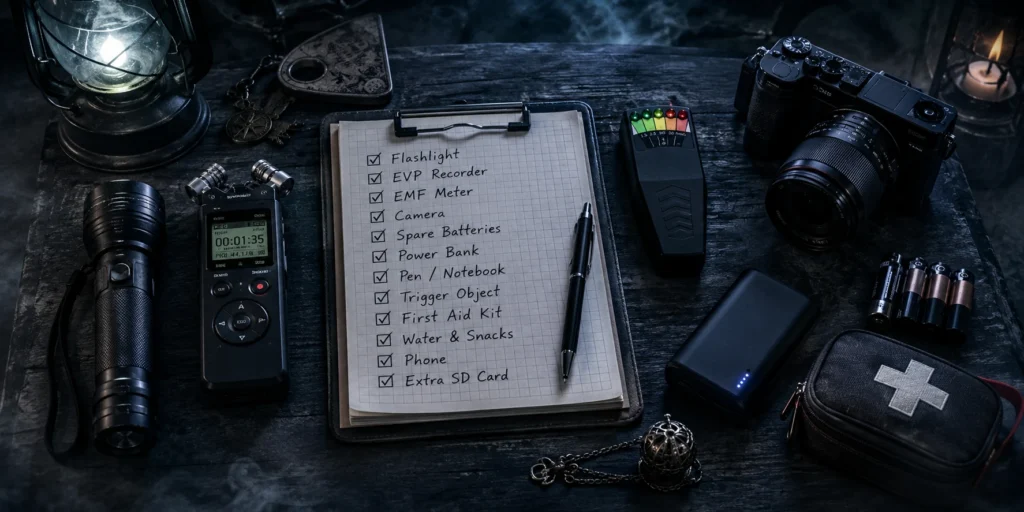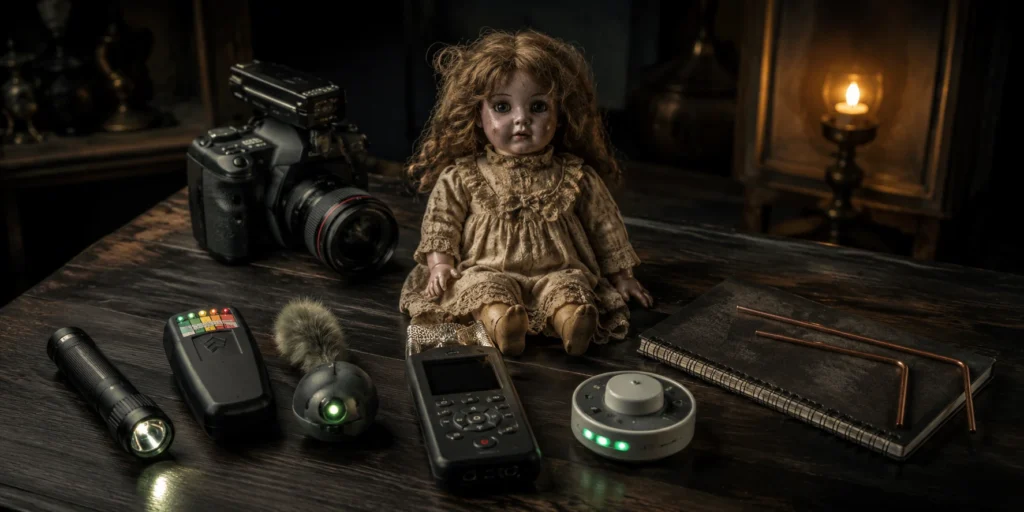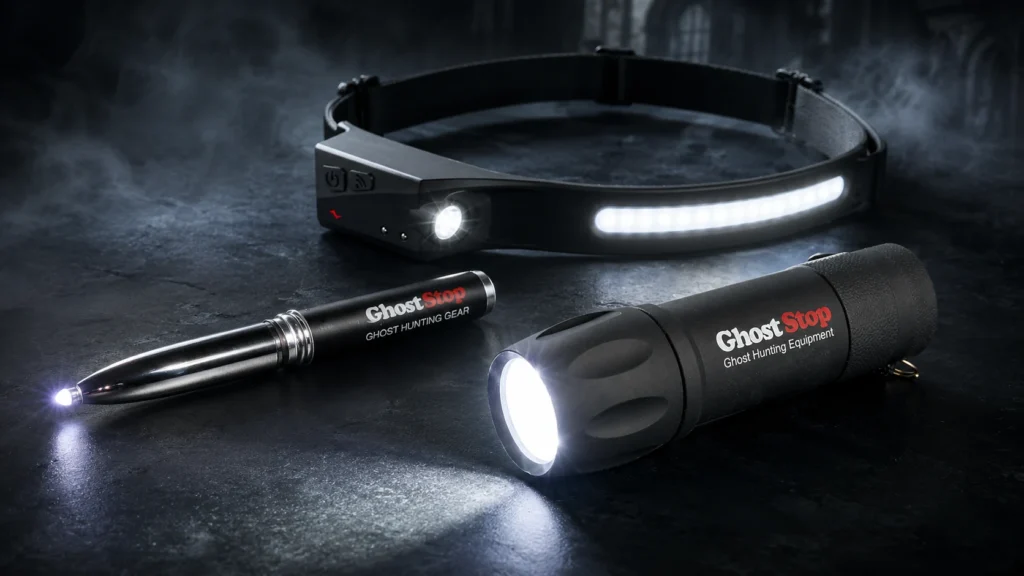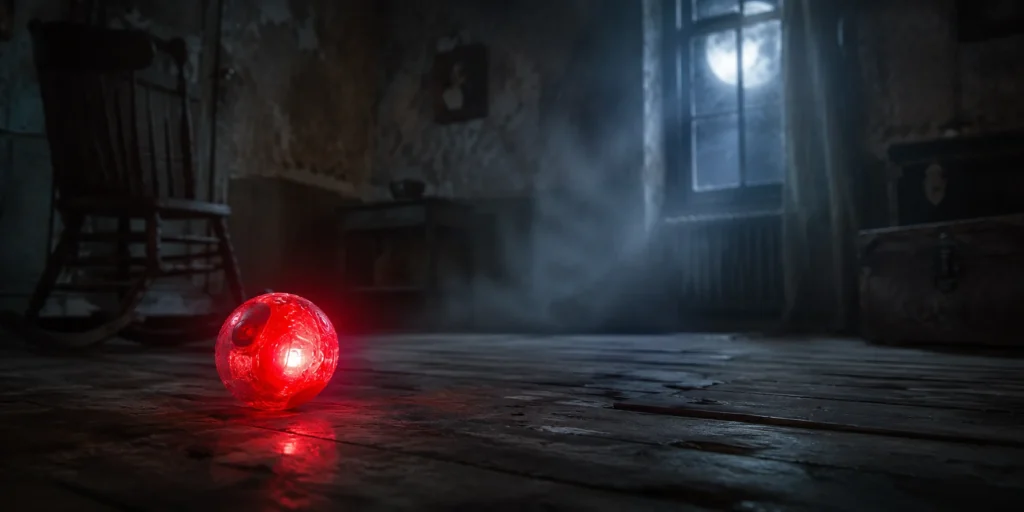

When people think of ghost hunting equipment, they usually picture spirit boxes, EMF meters, EVP recorders, REM Pods, cat balls, motion sensors and night vision cameras.
But one of the oldest and simplest tools still used by some paranormal investigators is the dowsing rod.
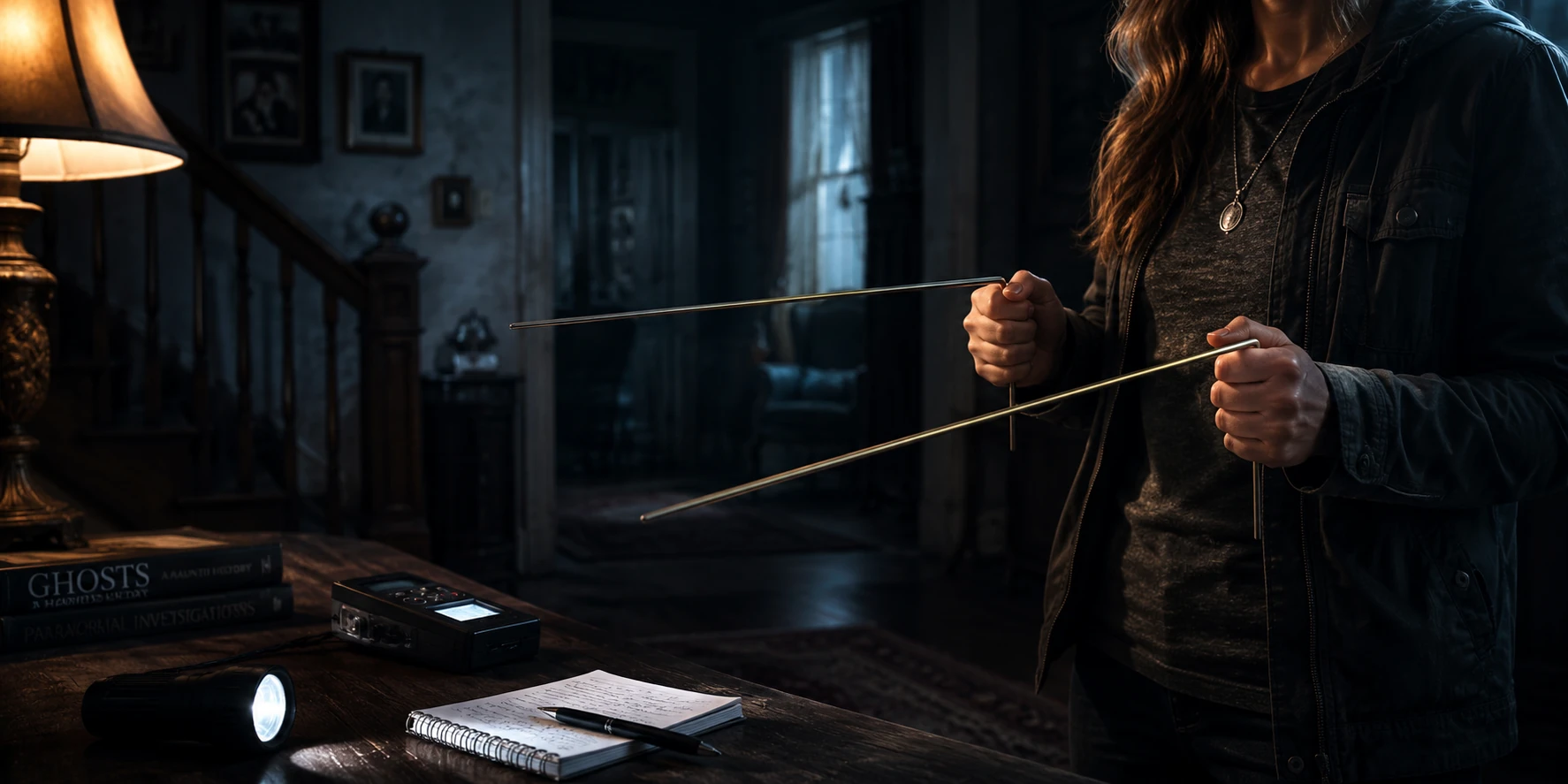
Dowsing rods, sometimes called divining rods, are usually L-shaped metal rods held loosely in each hand. Traditionally, they have been used to search for underground water, minerals or hidden objects. In modern paranormal investigations, some ghost hunters use them as a communication tool, a way to ask yes or no questions, or as part of a wider spiritual investigation setup.
Dowsing rods are not scientific proof of ghosts. Their movement can be influenced by tiny unconscious hand movements, expectation, balance, grip, posture and the ideomotor effect. That does not mean people cannot find them interesting or meaningful, but they should be used carefully and honestly.
In this guide, we’ll look at the best dowsing rods for ghost hunting, how paranormal investigators use them, what to look for before buying, and how to avoid treating every movement as paranormal evidence.
If you’re still building your full investigation setup, you may also want to read my guide to Best Ghost Hunting Equipment first.
Quick Verdict: Best Dowsing Rods for Ghost Hunting
If you just want a simple answer, the best dowsing rods for ghost hunting are usually lightweight L-shaped rods that move freely, feel comfortable in your hands and are easy to use during a controlled investigation.
For most beginners, I would start with a basic pair of metal dowsing rods rather than anything overly complicated. They are affordable, simple to use and easy to carry in a ghost hunting kit.
For UK buyers, SpiritShack is worth checking because it stocks dowsing rods aimed at paranormal and divination use. Some investigators may also like LED light-up dowsing rods, especially if they want the rods to be more visible in dark rooms or on camera.
Amazon is also useful for budget copper, brass and metal dowsing rods, especially if you want a basic pair to try before investing in anything more paranormal-focused.

What Are Dowsing Rods?
Dowsing rods are simple handheld tools used in a practice known as dowsing or divining.
Most modern dowsing rods are L-shaped. The shorter handle section is held loosely in each hand, while the longer part points forward. When the rods move, cross, separate or turn, the dowser interprets that movement as a possible response.
Traditionally, dowsing rods have been used for finding underground water, searching for minerals, locating hidden objects, tracing energy lines and exploring spiritual or divination practices.
In ghost hunting, dowsing rods are usually used less for finding water and more for communication or environmental exploration. Some investigators ask yes or no questions and assign a meaning to the rod movements before starting.
For example, they may decide that crossed rods mean “yes”, open rods mean “no”, one rod turning means direction, and no movement means no clear response.
The important thing is to set the rules before the session starts rather than deciding what the movement means afterwards.
Dowsing also overlaps with older divination practices, so readers interested in the spiritual side may also enjoy my guides to Scrying and How to Develop Psychic Abilities.
Are Dowsing Rods Good for Ghost Hunting?
Dowsing rods can be interesting during a ghost hunt, but they should be treated carefully.
They are not like a camera, recorder or EMF meter. They do not store data, record evidence or measure a physical reading in the same way. Instead, they rely heavily on the person holding them.
That means dowsing rods are very subjective.
Some investigators enjoy using them because they are simple, quiet and easy to include in communication sessions. Others avoid them because rod movement can be influenced by unconscious body movement, expectation or suggestion.
My view is that dowsing rods can be used as part of an investigation, but not as proof on their own.
If the rods appear to respond, I would treat that as something to note rather than something to instantly claim as paranormal. It becomes more interesting if it lines up with other things happening at the same time, such as unexplained knocks, relevant responses on an EVP recorder, activity from a motion sensor, temperature changes or repeated patterns.
Used honestly, dowsing rods can be a simple experimental tool. Used carelessly, they can create false confidence very quickly.
How Do Ghost Hunters Use Dowsing Rods?
Ghost hunters usually use dowsing rods in three main ways: communication, direction finding, and object or room investigation.
Each method needs a calm setup, clear questions and a bit of scepticism.
Dowsing Rods for Spirit Communication
Spirit communication is probably the most common paranormal use for dowsing rods.
The investigator holds the rods, asks a question, and watches for movement. The questions are usually simple yes or no questions.
An investigator might ask:
“Is anyone here with us?”
“Can you cross the rods for yes?”
“Can you point towards where you are?”
“Were you connected to this building?”
“Do you want us to leave?”
Before asking questions, it is important to establish what each movement means. Otherwise, it becomes too easy to interpret the rods however you want.
You might say something like:
“Please cross the rods for yes.”
“Please open the rods for no.”
Then test that pattern with a few simple control questions.
Dowsing rods can be interesting in this kind of session, but I would still compare any responses with other investigation methods. If you also capture a relevant EVP, hear a knock, see motion sensor activity or notice repeated patterns, the session becomes more interesting than rod movement alone.
If you prefer electronic communication tools, you may also want to compare dowsing rods with spirit boxes and EVP recorders, as those methods are often used alongside or instead of dowsing rods.
Dowsing Rods for Direction Finding
Some investigators use dowsing rods to point towards areas of interest.
For example, they might stand in a room and ask whether the rods can point towards where activity is coming from, which room should be investigated next, or whether an object has a connection to the location.
This can be interesting, but it should never be followed blindly. If rods point towards a staircase, dark area, private space or unsafe room, safety comes first.
Use the rods as a prompt for further investigation, not as a command.
If the rods point towards a particular room, you could follow up with safer and more grounded methods, such as setting up a camera, placing a trigger object, using an EVP recorder or monitoring the area with a motion sensor.
Dowsing Rods for Haunted Objects
Dowsing rods can also be used around haunted objects, dolls, boxes, jewellery, antiques or trigger objects.
An investigator might place the object on a table and ask questions around it. The rods may be used to ask whether the object has a connection to a person, place or event.
Again, this should be handled carefully.
If you are investigating an object, I would use dowsing rods alongside more practical tools such as a camera, EVP recorder, notebook, motion sensor, cat ball, REM Pod or controlled trigger-object setup.
That gives you more context than relying on rod movement alone.
If you are interested in object-based investigation, you may also want to read my guides to Haunted Objects, Trigger Objects for Ghost Hunting and Best Cat Balls for Ghost Hunting.

Best Types of Dowsing Rods for Ghost Hunting
There are a few different types of dowsing rods you might come across. The best choice depends on how you want to use them, whether you are filming, and whether you prefer something basic or more visual.
Basic Metal Dowsing Rods
Basic metal dowsing rods are the best starting point for most beginners.
They are usually simple L-shaped rods made from copper, brass, steel or another metal. Some come with handles, while others are just plain rods bent into shape.
The main advantage is that they are simple. There are no batteries, no settings, no app connection and no complicated instructions. You hold them, set your response rules, ask simple questions and document what happens.
For most ghost hunters, a basic pair is enough to start with.
Copper Dowsing Rods
Copper dowsing rods are popular because they look traditional and are often marketed for energy work, divination and spiritual practice.
Some people prefer copper because of its association with conductivity and energy. From a practical point of view, what matters more is whether the rods are balanced, comfortable and able to move freely.
Copper rods can be a good option if you want something simple and traditional-looking. They also tend to photograph well, which can be useful if you are creating content around your investigations.
Brass Dowsing Rods
Brass dowsing rods are another common option.
They can feel slightly different in the hand compared with copper rods, depending on the thickness, handle design and weight. Some people prefer brass because it feels a bit sturdier.
For ghost hunting, the material is less important than usability. A good pair of brass dowsing rods should move smoothly, sit comfortably in your hands and not feel too heavy during longer sessions.
Dowsing Rods with Handles
Some dowsing rods come with separate handles or sleeves.
These can be useful because they allow the rods to rotate more freely. They may also make the rods more comfortable to hold, especially if your hands get tired or you are doing a longer session.
The downside is that very free-moving rods can also move from tiny shifts in grip, posture or balance. So while handles can make them smoother, they do not make the results more reliable by themselves.
They can make the rods easier to use, but they do not remove the need for control and caution.
LED Light-Up Dowsing Rods
LED dowsing rods are a more specialist option.
These are designed to be more visible during dark investigations, especially if you are filming or working in low light. The main benefit is not that they are more paranormal, but that the movement can be easier to see on camera.
That can be useful if you are recording a session and want viewers or other investigators to clearly see what the rods are doing.
SpiritShack has LED light-up dowsing rods aimed at paranormal investigation use, which makes them an interesting option if you want something more visual than standard rods.
I would treat LED rods as a visibility upgrade rather than a reliability upgrade. They may look better on camera, but the same rules still apply: movement needs to be controlled and interpreted carefully.
What to Look for in the Best Dowsing Rods for Ghost Hunting
Dowsing rods are simple tools, but there are still a few things to look for before buying.
The first thing I would check is how smoothly the rods move. They should move freely without sticking, but they should not swing around so wildly that every tiny shift becomes a “response”.
Comfort also matters. During a ghost hunt, you may hold the rods for several minutes at a time. If the handles are uncomfortable, too thin or awkward to grip, your hands may tense up. That tension can affect how the rods move.
Weight is another thing to consider. Heavy rods can make your hands tired and may exaggerate small movements. For beginners, lightweight rods are usually easier to control.
If you are filming your investigation, visibility matters too. Plain rods can be difficult to see on camera in a dark room. LED dowsing rods or rods with a clear metallic finish may show up better under low light. You can also use a camera, flashlight or soft room lighting to make the rods easier to see.
Finally, be careful with products that make huge promises. Dowsing rods are simple tools. They do not prove ghosts, guarantee communication or replace proper investigation methods. A good pair should be sold as rods, not as a magic answer to every paranormal question.
How to Use Dowsing Rods During a Ghost Hunt
If you want to use dowsing rods during a paranormal investigation, keep the setup simple and controlled.
Start by choosing a calm area where you are not likely to be bumped, distracted or interrupted. Avoid standing near people walking around, moving floorboards, strong drafts or anything that could affect your balance.
Hold one rod in each hand. Your grip should be light enough that the rods can move, but steady enough that they are not swinging around wildly. Keep your elbows relaxed and your hands level.
Before asking questions, decide what the movements mean. For example, crossed rods might mean yes, open rods might mean no, pointing left or right might suggest direction, and no movement might mean unclear or no response.
Say the rules out loud so everyone knows how the session is being interpreted.
Then ask simple questions. Avoid long or confusing questions. Dowsing rods are usually used for simple responses, so yes or no questions work best.
Instead of asking:
“Can you tell us everything about your life and why you are here?”
Ask:
“Did you live in this house?”
“Are you connected to this room?”
“Do you want us to stay?”
“Can you cross the rods for yes?”
Simple questions make it easier to review the session afterwards.

If possible, film the rods, your hands and your body posture. This matters because it helps you review whether your hands moved, whether someone walked near you, or whether anything else may have affected the rods.
A static camera or phone tripod can be useful here. If you are filming in darker locations, a night vision camera may also help you review the session more clearly.
If the rods move, repeat the question. Ask control questions. Change rooms. Let another person try. See whether the same patterns happen again. One response on its own is not enough.
Write down the location, time, who held the rods, what questions were asked, what movements happened, whether anything else occurred and any possible normal explanations.
A notebook or investigation log helps stop the session becoming vague later.
Are Dowsing Rods Reliable?
Dowsing rods are controversial.
Many sceptics argue that rod movement is caused by the ideomotor effect. This is when small unconscious movements from the person holding the rods create motion without the person realising they are doing it.
That is a major reason why dowsing rods should not be treated as scientific proof of paranormal activity.
However, many people still enjoy using them as part of spiritual practice, divination and ghost hunting. Some investigators feel they can produce interesting results, especially when used alongside other tools.
My view is simple: dowsing rods can be interesting, but they need controls.
Before taking a response seriously, ask yourself whether your hands could have moved slightly, whether you expected a certain answer, whether you were standing still, whether the rods were balanced, whether anyone nearby moved, whether the floor shifted, whether the result repeated, and whether any other equipment reacted at the same time.
If the answer could be normal, consider that first.
That does not ruin the investigation. It makes it stronger.
Dowsing Rods vs Other Ghost Hunting Tools
Dowsing rods are very different from most ghost hunting equipment.
An EVP recorder captures audio. An EMF meter measures electromagnetic fields. A motion sensor detects movement. A cat ball reacts when moved or touched. A camera records visual evidence.
A dowsing rod relies on the person holding it.
That does not make dowsing rods useless. It just means they should be treated differently.
I would place dowsing rods in the same general category as pendulums, talking boards and some forms of spiritual divination. They are more subjective than electronic equipment, so they work best as part of a wider setup.
If you want measurable readings, my guides to EMF meters, EVP recorders, motion sensors and cat balls are better starting points.
If you want a spiritual or interactive experiment, dowsing rods can be worth trying.
Common Mistakes When Using Dowsing Rods
Dowsing rods are easy to use, but they are also easy to misread.
One of the biggest mistakes is holding them too tightly. If you grip the rods too firmly, they may not move freely. Try to stay relaxed and let the rods rest naturally in your hands.
Another common mistake is moving without realising. Small body movements can affect the rods. Shifting your weight, turning your wrists or leaning slightly can all make the rods move.
Leading questions can also be a problem. Try to avoid questions where you clearly want a certain answer.
For example, instead of saying:
“You are the angry spirit here, aren’t you?”
Ask something calmer and more neutral.
It is also important not to decide the meaning afterwards. Set your yes or no rules before the session starts. If you only decide what a movement means after it happens, the session becomes much less reliable.
If the rods move and nobody recorded it, you are relying on memory. Film the rods, your hands and the room if you can.
Most importantly, do not treat every movement as paranormal. Sometimes rods move because of your hands, balance, expectation or the way you are standing. Treat movement as something to review, not automatic evidence.
Best Dowsing Rods for Ghost Hunting: Beginner Setup
For beginners, I would keep the setup simple.
A good starter setup would be one pair of basic metal dowsing rods, a notebook or investigation log, a phone or camera on a tripod, an EVP recorder, a flashlight or headlamp, a second person observing, and a few simple yes or no questions.
You do not need an expensive setup to try dowsing rods.
The most important thing is to stay controlled, record what happens and avoid forcing the results.
If you enjoy using them, you can later upgrade to rods with smoother handles, copper rods, brass rods or LED light-up rods for filming.
This kind of setup also fits well with a wider beginner ghost hunting kit, especially if you are building around simple tools before moving into more advanced equipment.

Best Places to Buy Dowsing Rods for Ghost Hunting
You can buy dowsing rods from paranormal shops, spiritual shops and general online retailers.
If you’re comparing paranormal suppliers generally, my GhostStop vs SpiritShack guide may also help before buying.
SpiritShack
SpiritShack is a strong option for UK buyers because it stocks paranormal-focused dowsing rods and divining rods.
This is a good fit if you want rods specifically marketed towards ghost hunting, divination and spirit communication rather than generic water-divining rods.
SpiritShack also has LED light-up dowsing rods, which may be useful if you want the rods to show up more clearly during dark investigations or video recordings.
Amazon
Amazon is useful for budget-friendly dowsing rods, copper rods, brass rods and beginner sets.
This is probably the easiest place to compare different materials, handle styles, cases and prices.
Ghost Hunting Shops
Some paranormal equipment shops may stock dowsing rods or similar spiritual investigation tools.
If you are already buying other equipment, such as EMF meters, spirit boxes, REM Pods, cat balls or motion sensors, it may be worth checking whether the same supplier also stocks dowsing rods.
FAQs About Dowsing Rods for Ghost Hunting
Do dowsing rods detect ghosts?
No, dowsing rods do not detect ghosts in a scientific sense. Some investigators use them as a communication or divination tool, but their movement can be influenced by unconscious hand movements and expectation.
Are dowsing rods reliable for ghost hunting?
Dowsing rods are subjective and should not be treated as proof on their own. They can be interesting during an investigation, but results should be tested, filmed and compared with other evidence.
What are the best dowsing rods for beginners?
For beginners, simple L-shaped metal dowsing rods are usually best. They are affordable, easy to carry and simple to use during controlled yes or no sessions.
Are copper dowsing rods better?
Copper dowsing rods are popular, but they are not automatically better. Comfort, balance, movement and how carefully you use them matter more than the material alone.
Can dowsing rods be used for spirit communication?
Some paranormal investigators use dowsing rods for spirit communication by asking simple questions and assigning meanings to rod movements. However, the results should be treated carefully and not seen as proof by themselves.
What does it mean when dowsing rods cross?
Many people interpret crossed rods as a “yes” response, but you should set your own response rules before each session. Do not decide the meaning after the rods move.
Can dowsing rods move because of your hands?
Yes. Small unconscious hand, wrist or body movements can make dowsing rods move. This is one reason why dowsing rods are controversial and should be used with controls.
Should I use dowsing rods with other ghost hunting equipment?
Yes. If you use dowsing rods, it is better to use them alongside tools like cameras, EVP recorders, EMF meters, motion sensors or trigger objects so you have more context.
Are LED dowsing rods worth it?
LED dowsing rods can be useful if you want the rods to show up more clearly on camera during dark investigations. They are more of a visibility upgrade than a reliability upgrade.
Are dowsing rods safe to use?
Dowsing rods are physically safe when used sensibly, but you should avoid letting them guide you into unsafe areas. Never follow rods into dangerous rooms, unstable buildings, roads, water, private property or restricted locations.
Final Verdict: Are Dowsing Rods Worth Using for Ghost Hunting?
Dowsing rods can be worth trying if you are interested in spiritual tools, divination methods or simple yes/no communication experiments during a ghost hunt.
They are affordable, easy to carry and simple to use. They also do not need batteries unless you choose LED versions.
However, dowsing rods are not proof of ghosts. Their movement can be influenced by unconscious hand movements, expectation, balance and the way the rods are held.
For that reason, I would treat them as an experimental tool rather than hard evidence.
If you want to try them, start with a basic pair of L-shaped metal rods, set clear rules before the session, film what happens, and compare any responses with other investigation methods.
The best dowsing rods for ghost hunting are not necessarily the most expensive ones. They are the ones that feel comfortable, move smoothly, are easy to control and help you run a calm, honest investigation.
You May Also Want to Read
- Best Ghost Hunting Equipment
- Best Flashlights for Ghost Hunting
- Best Trigger Objects for Ghost Hunting
- Best REM Pod for Ghost Hunting
- Best Cat Balls for Ghost Hunting
- Best Motion Sensors for Ghost Hunting
- Best EMF Meters for Ghost Hunting
- Best EVP Recorders for Ghost Hunting
- Best Spirit Boxes for Ghost Hunting
- GhostStop vs SpiritShack
- Haunted Objects
- How to Develop Psychic Abilities
- Scrying