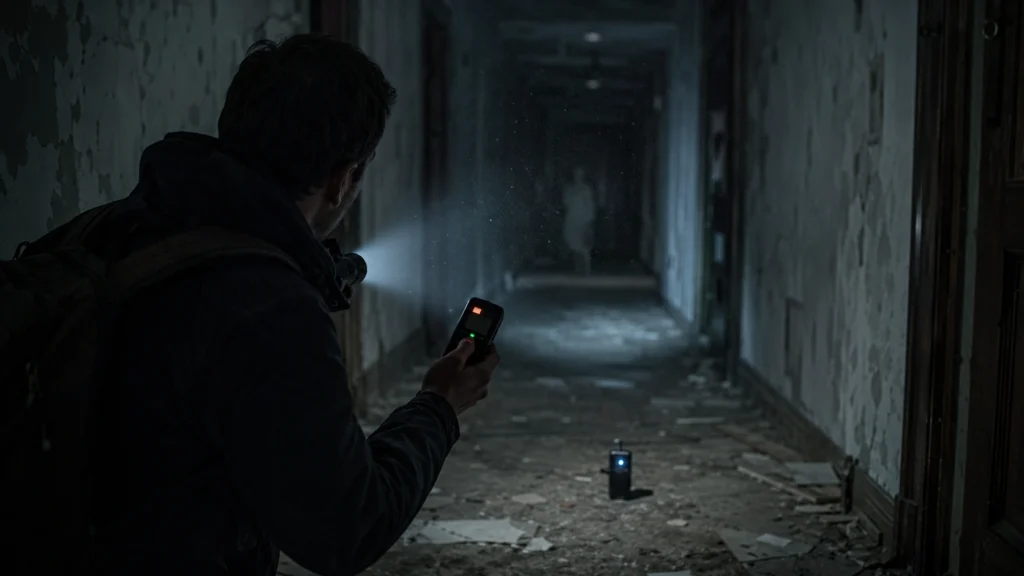

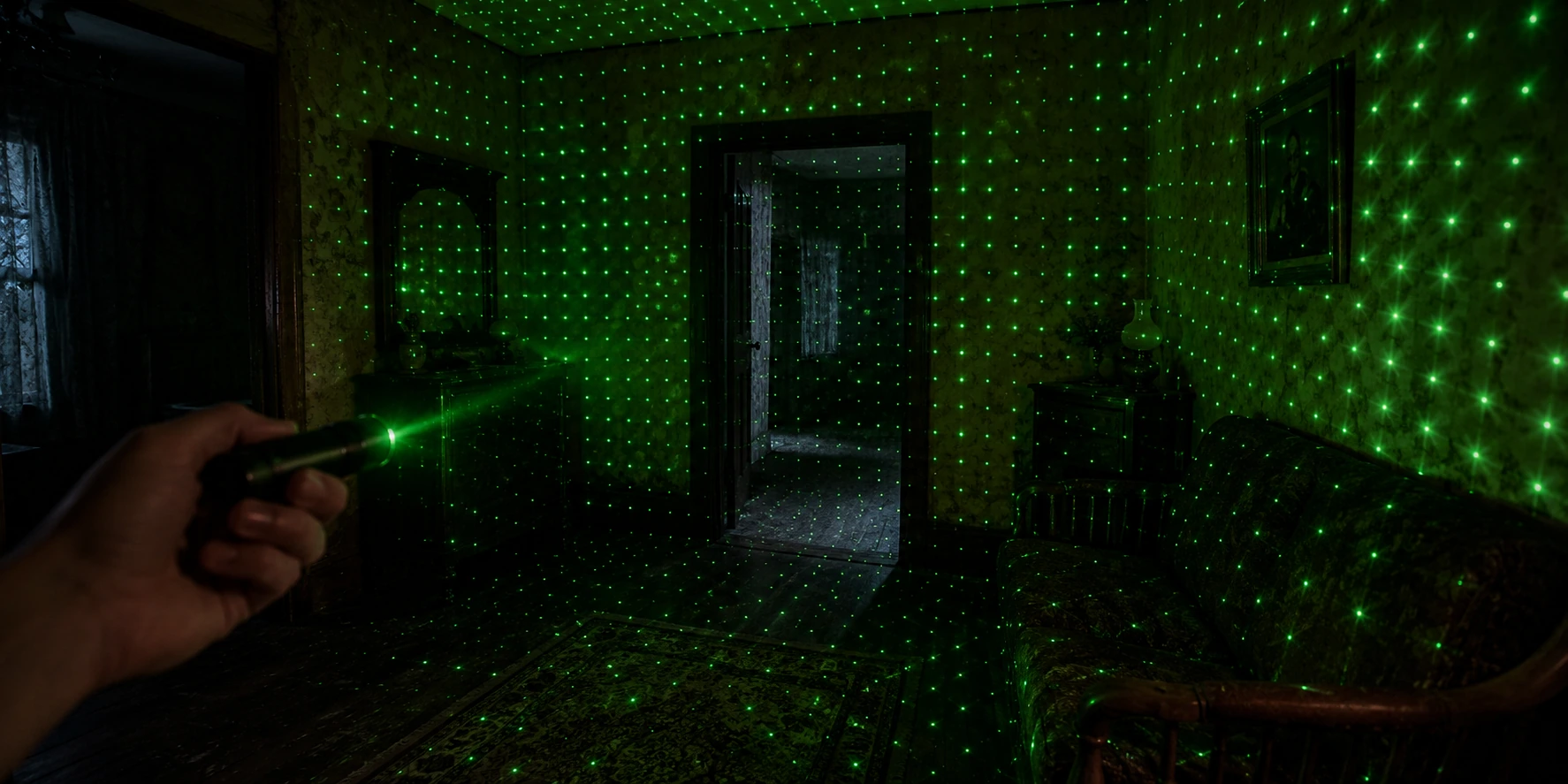
Laser grids are one of the most visual tools used in ghost hunting. If you have ever seen a paranormal investigation where a hallway, wall or empty room is covered in red or green dots, that is usually a laser grid being used to monitor movement.
The idea is simple. A laser grid projects dots, lines or a visible pattern across a room. If something moves through that space, the pattern may shift, distort, disappear, or become interrupted on camera. This can help investigators monitor dark rooms, corridors, staircases and reportedly active areas without relying only on eyesight.
Laser grids do not prove ghosts are real, and they can be affected by normal things like dust, insects, reflections, smoke, camera movement and people walking through the beam. But when used carefully alongside a night vision camera, motion sensor, EVP recorder, EMF meter or REM Pod, they can add another useful layer to a paranormal investigation.
In this guide, we’ll look at the best laser grids for ghost hunting, how laser grid pens work, the difference between red and green laser grids, where to place them, what to avoid, and whether they are worth adding to your ghost hunting kit.
If you are building your kit, you may also want to read my guides to Best Ghost Hunting Equipment, Best Motion Sensors for Ghost Hunting, Best Night Vision Cameras for Ghost Hunting, GhostStop Phasm Cam Review, Best EMF Meters for Ghost Hunting, and GhostStop vs SpiritShack.
What Is a Laser Grid in Ghost Hunting?
A laser grid is a device that projects a pattern of light across a room or surface. This may appear as dots, lines, a matrix pattern or a wider grid depending on the device.
In ghost hunting, laser grids are usually used to monitor visual disturbances. Investigators place them in dark rooms, hallways, doorways, basements, staircases or other reportedly active areas. If the laser pattern is interrupted, distorted or blocked, the team can check whether something moved through the space.
A basic laser grid pen might project hundreds of small dots across a wall or corridor. A more advanced laser grid system may cover a wider area, mount to a tripod, or work alongside other sensors.
The best way to think of a laser grid is as a visual monitoring tool. It helps you see movement or disruption in an area that might otherwise be hard to watch in the dark.

How Do Laser Grids Work During Paranormal Investigations?
Laser grids work by spreading light across a space. When the pattern is projected onto a wall, floor, hallway or object, it creates a visible reference point.
If something passes through the beam, blocks part of the pattern, or disturbs the projected dots, the change may be visible to the investigator or camera.
This is why laser grids are often used with night vision cameras, full spectrum cameras, static cameras, motion sensors, EVP recorders, REM Pods and trigger objects.
A laser grid works best when the camera is fixed and the room is controlled. If the camera moves, the laser pattern will appear to shift. If people keep walking through the area, you will get false positives. If reflective objects are nearby, the light may bounce in strange ways.
Used properly, a laser grid can help you monitor movement more clearly. Used badly, it can create confusing footage that looks paranormal but is actually caused by setup problems.
Can Laser Grids Detect Ghosts?
Laser grids do not detect ghosts directly.
They detect changes in a projected light pattern. If a person, animal, insect, object, shadow, reflection or environmental disturbance interrupts the laser dots, it may show up visually.
Some paranormal investigators believe that if a spirit or shadow figure moves through a laser grid, the pattern might distort or vanish in that area. That is the theory behind using laser grids for ghost hunting.
However, it is important to stay balanced. Laser grid footage can be affected by many normal things, including dust, insects, camera movement, smoke, mist, reflections, shiny surfaces, people moving nearby, loose tripod placement and changing light conditions.
So if a laser grid appears to distort, you should not instantly treat it as proof of a haunting. You should check the camera angle, environment, team movement and any other equipment running at the time.
A laser grid event becomes more interesting when it happens in a controlled room, on camera, with nobody nearby, and alongside other activity such as footsteps, EVP responses, motion sensor triggers or EMF changes.
Why Ghost Hunters Use Laser Grids
Laser grids are useful because they make invisible space easier to monitor.
In a dark room, it can be difficult to tell whether something moved. A laser grid gives the investigator a visible pattern to watch. If the pattern changes, you have something specific to review.
They are especially useful in places where people report shadow figures, movement in doorways, figures crossing hallways, activity near staircases, shapes standing in corners, or unexplained movement around beds, chairs or furniture.
A laser grid can also help if you are filming a room while your team investigates elsewhere. You can leave a static camera running, aim the laser grid across the room, and later review the footage for any changes.
This makes laser grids a good partner tool for motion sensors, because both can monitor empty spaces while you focus on other parts of the investigation.
Best Types of Laser Grids for Ghost Hunting
There are several types of laser grids and laser-style tools used in paranormal investigations. Some are simple and affordable, while others are more advanced.
Laser Grid Pens
Laser grid pens are the most common beginner option. They look like a laser pointer, but instead of projecting one single dot, they project a pattern of dots or a grid.
They are usually small, affordable and easy to carry in a ghost hunting kit. Many investigators use them in hallways, bedrooms, staircases and smaller rooms.
A laser grid pen is useful because it is simple. You point it at a wall or across a room, mount it if possible, and record the area with a camera.
The downside is that some cheaper laser pens require you to hold the button down, which is not ideal during a long investigation. If possible, look for one that can stay switched on safely or be mounted with a tripod holder.
Laser grid pens are best for beginners, small rooms, doorways, hallways, simple visual monitoring and budget ghost hunting kits.
Red Laser Grid Pens
Red laser grid pens are popular because they are affordable and easy to find. They can work well in dark spaces and are often used for simple ghost hunting experiments.
A red laser grid can be useful when filming because the pattern may show clearly against walls, floors or furniture.
However, red lasers may not always appear as bright as green lasers, especially in larger rooms or on camera. They can still be useful, but visibility depends on the device, camera and environment.
Red laser grids are best for smaller rooms, short-range monitoring, beginner setups and budget-friendly paranormal experiments.
Green Laser Grid Pens
Green laser grids are often preferred by investigators because green light is usually easier for the human eye to see. It can also appear brighter on camera, which makes it useful for dark investigations.
If you are using a laser grid in a hallway, large room or location where you need stronger visibility, green is often the better choice.
Green laser grids are popular for larger rooms, hallways, visual evidence experiments, night vision camera setups and shadow movement claims.
For most beginners, I would choose a green laser grid over a red one if the price difference is small.

Tripod Laser Grid Systems
Tripod-mounted laser grids are a step up from handheld laser pens. These are designed to stay still during an investigation, which makes your footage more reliable.
A tripod setup is useful because it removes hand movement. If you hold a laser pen in your hand, even tiny movements can make the pattern shift. That can make footage harder to interpret.
With a tripod-mounted laser grid, you can aim it across a hallway, room or staircase and keep it fixed in place while a camera records.
These are best for longer investigations, static camera setups, hallways, staircases, rooms with reported shadow movement, and investigators who want cleaner footage.
Advanced Laser Grid Systems
More advanced laser grid systems can offer wider coverage, different patterns, sensor features, motion tracking or stronger mounting options.
GhostStop has more advanced laser options such as GS-style laser grid systems, laser scopes, mount options and sensor-based laser equipment. These are more expensive than basic laser pens, but they may be useful for serious investigators who want better coverage and more control.
Advanced laser systems are best for experienced investigators, larger locations, controlled experiments, static camera setups, movement tracking and serious paranormal teams.
If you are new to ghost hunting, you probably do not need the most advanced option straight away. Start simple, learn how laser grids behave, then upgrade if you find yourself using them often.
Red vs Green Laser Grids: Which Is Better?
Both red and green laser grids can work for ghost hunting, but green is usually easier to see.
Green light tends to appear brighter to the human eye, which is helpful in dark rooms or larger spaces. It can also show up well on camera, especially if you are filming with night vision or full spectrum equipment.
Red laser grids can still be useful, especially for smaller rooms or budget setups. They are often cheaper and can do the job if the area is controlled properly.
My simple advice would be:
Choose green if you want better visibility.
Choose red if you want a budget option.
Choose a tripod-mounted system if you want cleaner footage.
Choose an advanced laser grid if you are doing serious investigations regularly.
The colour matters, but setup matters more. A green laser grid placed badly will not beat a red laser grid placed carefully in a controlled room.
How I Would Use a Laser Grid During a Ghost Hunt
If I were using a laser grid on an investigation, I would start by choosing the right location.
I would not just point it randomly into a room. I would use it where movement has actually been reported. That might be a hallway where people see shadow figures, a doorway where shapes are seen passing, or a staircase where footsteps are heard.
I would then place the laser grid on a stable surface or tripod and aim it across the area. After that, I would set up a camera to record the full pattern.
The key is to keep everything still.
If the laser moves, the evidence becomes messy. If the camera moves, the footage becomes harder to trust. If people walk through the beam all night, the footage becomes useless.
I would also make a note of where the laser grid was placed, what time the session started, who was in the room, whether the camera was fixed, whether windows or reflective objects were nearby, whether any motion sensors reacted, and whether any sounds or EVPs happened at the same time.
A laser grid is only useful if you know what was happening around it.
Best Places to Use Laser Grids
Laser grids work best in places where you have a clear surface or space to project onto.
Good places include hallways, staircases, empty rooms, doorways, basements, bedrooms, long corridors, rooms with shadow figure reports, and areas watched by a static camera.
Avoid placing them near mirrors, shiny surfaces, windows, moving curtains, reflective picture frames or anything that may scatter the light strangely.
Also avoid using them in places where people keep walking around. A laser grid needs a controlled area to be useful.
If possible, pair the laser grid with a camera and leave the space alone for a while. That gives you much cleaner evidence than constantly moving around the beam.

Laser Grids and Motion Sensors
Laser grids and motion sensors work well together because they both monitor movement in different ways.
A motion sensor can alert you when something physically disturbs an area. A laser grid can help you see whether anything visually interrupts a projected pattern.
For example, you might place a motion sensor near a doorway and aim a laser grid across the same hallway. If the motion sensor activates and the laser grid appears to distort at the same time, that is worth reviewing carefully.
This does not prove anything on its own, but it gives you two pieces of information instead of one.
You can read my full guide to Best Motion Sensors for Ghost Hunting if you want to build this kind of setup properly.
Laser Grids and Night Vision Cameras
Laser grids are much stronger when used with a camera.
If nobody is filming, you may miss the most important moment. A laser grid is visual, so it needs visual documentation.
Night vision cameras and full spectrum cameras are especially useful because most laser grid sessions happen in dark rooms. If you are using a laser grid in a hallway or old building, a fixed night vision camera can record the pattern while you investigate elsewhere.
This setup is useful for shadow movement, hallway activity, doorway monitoring, dark-room experiments, visual disturbance claims and static camera investigations.
You may also want to read my guides to Best Night Vision Cameras for Ghost Hunting and GhostStop Phasm Cam Review.
Laser Grids and Shadow Figures
Laser grids are often used in locations where people report shadow figures. The idea is that if a dark shape moves through the projected dots, it may block or distort the pattern.
This can be useful, but it also needs caution.
Shadow figure claims are easy to misinterpret. A person walking nearby, a camera adjusting exposure, a reflection, or a moving object can all create strange-looking footage.
If you are investigating shadow movement, try to control the environment as much as possible. Keep the camera fixed, keep people away from the area, remove reflective objects where possible, and note any normal movement.
If you are interested in this topic, you may also want to read my guide to Shadow People.
Common False Positives With Laser Grids
Laser grids can create interesting footage, but they can also produce false positives.
Common causes include dust crossing the laser, insects flying through the beam, camera movement, tripod movement, reflections, smoke, mist, shiny surfaces, people moving nearby, handheld laser movement, poor focus and changing exposure on the camera.
This is why fixed placement is so important.
If your laser grid is handheld, every tiny movement can look like the room is shifting. If the camera is handheld too, the footage becomes even harder to trust.
For the best results, keep both the laser and camera still.
Are Laser Grids Worth It for Beginner Ghost Hunters?
Yes, but I would treat them as a supporting tool rather than a first purchase.
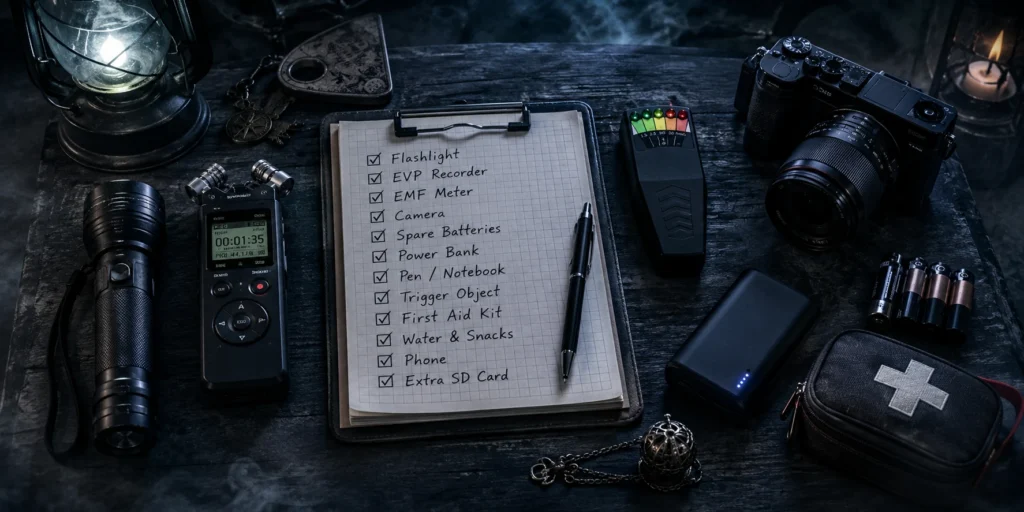
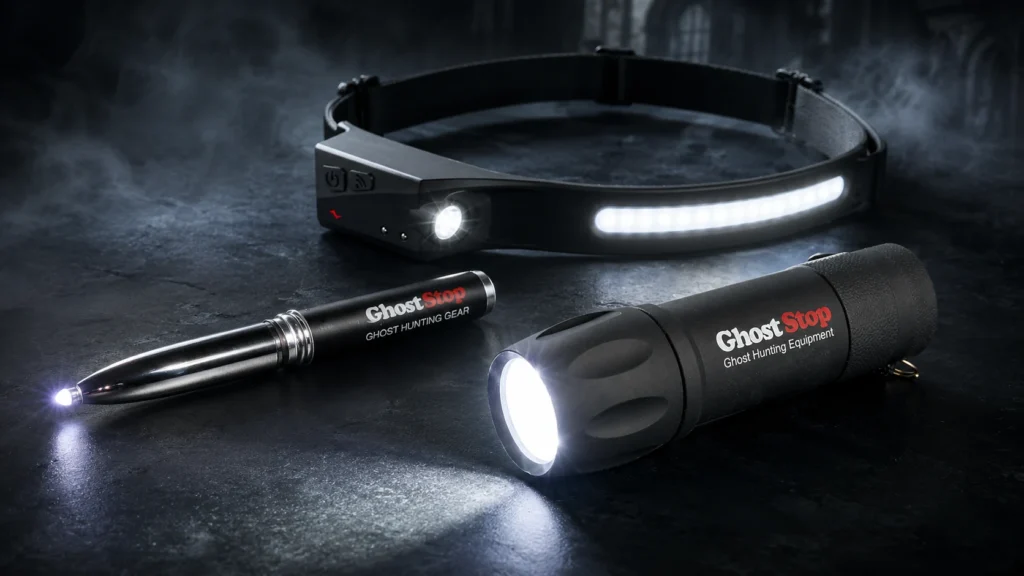
If you are brand new to ghost hunting, I would start with an EMF meter, EVP recorder, torch and camera first. Once you have those basics, a laser grid can be a good next step.
A basic laser grid pen is usually affordable and easy to use. It can make your investigation footage more interesting and help you monitor dark spaces more clearly.
However, do not expect it to prove anything on its own. A laser grid is best when used with a camera, motion sensor or other equipment.
For beginners, I would recommend a green laser grid pen, a simple tripod or mount, a night vision camera or phone camera, a controlled room, and written notes during the session.
That is enough to start experimenting without spending too much.
Best Places to Buy Laser Grids for Ghost Hunting
For dedicated ghost hunting laser grids, the two main places I would look are SpiritShack and GhostStop.
SpiritShack has laser grid pens, red and green laser matrix pens, and the SpiritShack Laser Grid T20. These are useful for UK buyers who want ghost hunting laser grid tools without dealing with international shipping.
GhostStop has laser grid pens, GS1 and GS2-style systems, mount options and more advanced laser grid equipment for paranormal investigations. Their range is especially useful for US buyers and investigators who want more specialist equipment.
You can also find budget laser grid pens on Amazon, but dedicated paranormal suppliers usually give you more relevant options for ghost hunting.
Browse Laser Grid Pens on Amazon:
FAQs About Laser Grids for Ghost Hunting
Do laser grids detect ghosts?
Laser grids do not detect ghosts directly. They project dots, lines or patterns across a space so investigators can watch for movement, disruption or visual disturbances. Any unusual change should still be checked against normal causes.
What colour laser grid is best for ghost hunting?
Green laser grids are usually the most visible and are often easier to see in dark rooms or on camera. Red laser grids can still work well, especially in smaller rooms or budget setups.
Are laser grid pens good for beginners?
Yes, laser grid pens can be good for beginners because they are simple, affordable and easy to carry. A green laser grid pen with a tripod or mount is a good starting point for basic visual monitoring.
Where should I place a laser grid during a ghost hunt?
Good places include hallways, staircases, doorways, basements, empty rooms and areas where shadow movement has been reported. Avoid mirrors, windows, shiny surfaces and areas where people keep walking through the beam.
Do I need a camera with a laser grid?
Yes, ideally. A laser grid is a visual tool, so it works best when recorded by a fixed camera, night vision camera or full spectrum camera. Without footage, it is easy to miss or misremember what happened.
Can dust or insects affect a laser grid?
Yes. Dust, insects, smoke, mist and reflections can all affect how the laser pattern appears. This is why laser grid footage should be reviewed carefully before making any paranormal claims.
Are laser grids better than motion sensors?
No, they do different jobs. A laser grid helps monitor visual disturbances, while a motion sensor detects movement or disturbance in a physical area. They work best together when monitoring hallways, doorways or reportedly active rooms.
Are expensive laser grids worth it?
Expensive laser grids may be worth it for serious investigators who want better coverage, mounting options or advanced sensor features. Beginners can start with a simple laser grid pen before upgrading.
Final Thoughts
Laser grids are a useful visual tool for ghost hunting, especially when investigating shadow movement, hallways, staircases and dark rooms. They help create a visible pattern that can be filmed and reviewed later.
They are not proof of ghosts on their own, and they can be affected by dust, insects, reflections, camera movement and poor placement. But when used carefully, they can add useful context to an investigation.
For beginners, a green laser grid pen and a simple tripod can be enough to start. For more serious investigators, tripod-mounted grids or advanced laser systems may be worth considering.
The best results come when laser grids are used alongside other tools, such as motion sensors, night vision cameras, EVP recorders and EMF meters.
If you are building your ghost hunting kit, a laser grid is a strong supporting tool once you already have the basics covered.
You may also want to read:
- Best Ghost Hunting Equipment
- Best Motion Sensors for Ghost Hunting
- Best Night Vision Cameras for Ghost Hunting
- GhostStop Phasm Cam Review
- Best EMF Meters for Ghost Hunting
- Best EVP Recorders for Ghost Hunting
- Best REM Pod for Ghost Hunting
- Best Spirit Boxes for Ghost Hunting
- GhostStop vs SpiritShack
- Shadow People
- Is My House Haunted?