

Shadow people are dark, human-like figures described in personal accounts and paranormal folklore. The experiences can feel convincing, but do not establish the presence of a supernatural being: low lighting, fatigue, visual perception and sleep paralysis can all contribute to similar sightings.
Can sleep paralysis cause a shadow-person sighting? Yes. The NHS explains that sleep paralysis can involve sensing someone in the room while waking or falling asleep. Check lighting, reflections, sleep disruption and the timing of the experience before drawing conclusions. See Is My House Haunted?, djinn folklore and imp legends for related interpretations. If recurring experiences affect sleep or wellbeing, seek professional advice.
If you are seeing unexplained shadows at home, it may also help to read my guides to Is My House Haunted?, Residual Hauntings, and What Is a Poltergeist? to compare different types of paranormal activity.
What Exactly Are Shadow People?
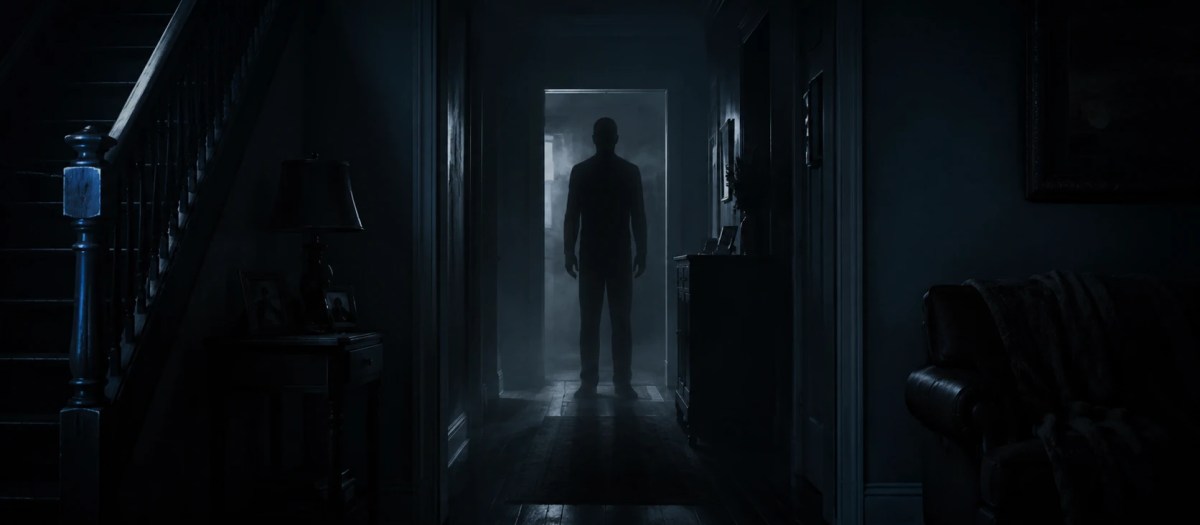
Shadow people are usually described as dark, human-shaped figures seen briefly in the corner of the eye, in doorways, beside beds, or moving through rooms. They are often reported as featureless silhouettes rather than full apparitions, which makes them difficult to identify or explain.
Some people describe shadow people as fleeting shapes that vanish almost instantly, while others report a stronger sense of presence or being watched. Because these sightings often happen in low light, during stress, tiredness, or around sleep, it is important to consider both natural explanations and paranormal interpretations.
In paranormal belief, shadow people are sometimes viewed as spirits, watchers, interdimensional beings, or unknown entities. However, experiences vary widely, and not every shadow sighting should automatically be treated as supernatural.

A Brief History of Shadow Sightings
Reports of shadowy figures are not limited to modern paranormal stories. Many cultures have folklore involving dark shapes, night visitors, spirits, omens, or figures seen between waking and sleeping. While the names and interpretations differ, the idea of a shadow-like presence has appeared in stories across many traditions.
In modern times, shadow people have become a popular topic in paranormal research, online forums, personal accounts, and ghost investigation communities. Some people see them as spiritual entities, while others believe they may be linked to sleep paralysis, stress, grief, low lighting, or the way the brain interprets shapes in darkness.
This mix of folklore, psychology, and personal experience is part of what makes shadow people such a fascinating and unsettling subject.
Psychological vs Paranormal Perspectives
There are two main ways people tend to interpret shadow people: psychological explanations and paranormal explanations.
From a psychological perspective, shadow sightings may be linked to sleep paralysis, tiredness, stress, anxiety, grief, or the brain misreading shapes in low-light conditions. Many people see movement or figures in peripheral vision, especially when they are exhausted or emotionally unsettled.
From a paranormal perspective, some believe shadow people may be spirits, entities, or forms of energy that appear only briefly. Others connect them with hauntings, residual energy, or more intelligent forms of paranormal activity. As with most unexplained experiences, it is worth keeping an open mind while also looking carefully at natural explanations.
Personal Stories of Shadow People Encounters
Personal accounts of shadow people vary widely. Some people describe seeing a dark figure standing in a doorway, moving along a hallway, or watching from the corner of a room. Others report seeing a shape only for a second before it disappears.
These encounters can feel deeply unsettling, especially when they happen repeatedly or in the same location. However, personal experiences are also shaped by fear, lighting, tiredness, and emotional state, so it is helpful to write down what happened rather than relying only on memory.
Whether shadow people are paranormal entities, psychological experiences, or something not yet fully understood, these reports remain one of the most common and mysterious types of modern haunting accounts.
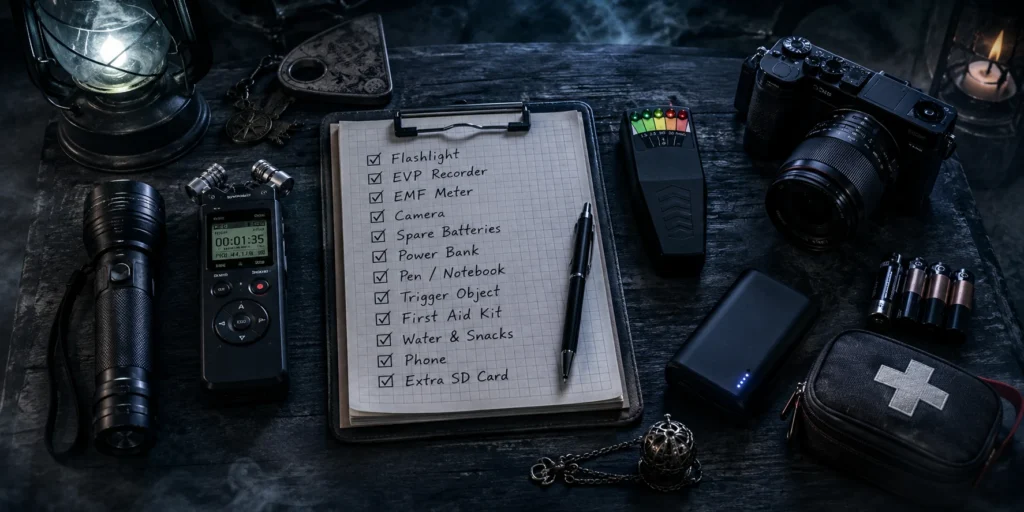
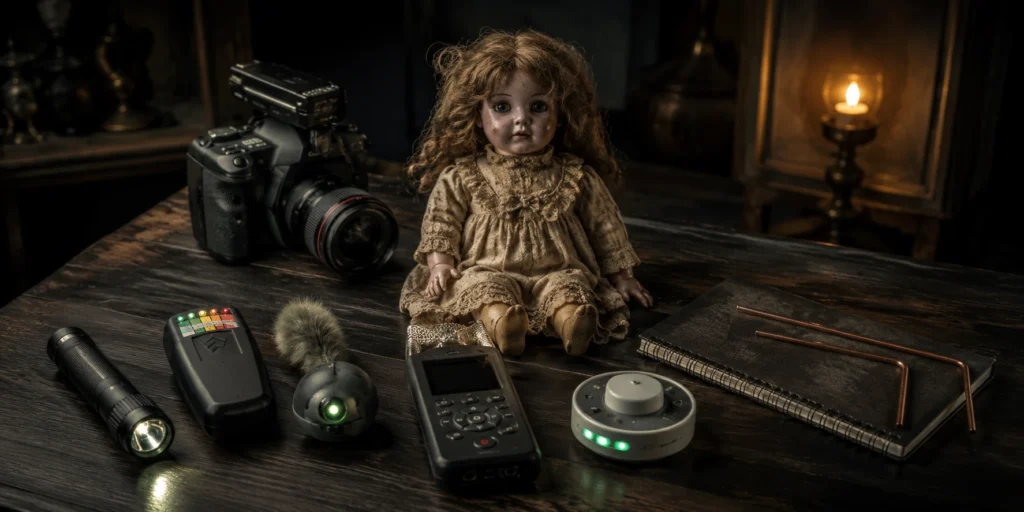
If sightings happen repeatedly in the same room or at the same time, you may want to document the environment with a journal, an EMF meter, or a night vision camera. This can help you look for patterns before assuming the experience is paranormal.

Why do shadow people often appear in doorways or peripheral vision?
A fleeting shape in a doorway can be unsettling because people recognise familiar outlines even when visual information is incomplete. In dim light, a coat on a hook, passing headlights, a reflection or an object moving in a draught may briefly resemble a person. Checking the viewpoint and lighting is more informative than assuming an apparent human silhouette has a supernatural cause.
Peripheral vision is particularly sensitive to movement but gives less detail than direct central vision. By the time someone turns to look, the angle, lighting and visual impression may have changed. An outline that seems to vanish on inspection is therefore not evidence that an entity deliberately disappeared. It is a reason to recreate the conditions cautiously and look for ordinary sources.
There is also an important difference between an incident reported while someone is fully awake, and one occurring while they are falling asleep. Treating every account as the same phenomenon can make the pattern appear stronger than it is. The circumstances of the experience deserve as much attention as the witness’s description.
Shadow people and sleep paralysis: what is the connection?
The NHS describes sleep paralysis as a temporary inability to move or speak while waking up or falling asleep. Some people feel that another person is in the room, experience pressure or fear, or perceive a threatening presence. These sensations can seem exceptionally real without establishing that another being was there.
Sleep paralysis does not explain every shadow sighting, particularly accounts reported during ordinary waking activity. It does provide a documented explanation for some bedroom experiences. A useful record notes whether movement was possible, whether the witness had just woken, how long the episode lasted and whether disrupted sleep was involved.
If frightening episodes are frequent or cause anxiety about going to sleep, speaking with a GP is more appropriate than attempting a paranormal test. A health explanation should be discussed respectfully; someone describing a vivid experience is not necessarily being dishonest or irrational.
How can you investigate recurring shadow sightings?
Begin with the room in daylight. Mark where the observer stood, and identify windows, mirrors, polished surfaces, furniture, doorways and sources of moving light. At the time of day when the report occurred, look for headlights, nearby television screens, streetlights, trees and other changing shadows. A repeatable environmental effect is useful evidence about the setting.
Ask witnesses to write down their accounts independently before discussing what happened. Record the date, time, estimated duration, location, lighting, sleep state and whether any noise or physical movement accompanied the sighting. Details such as a person’s height are often difficult to judge without a known distance or reference object.
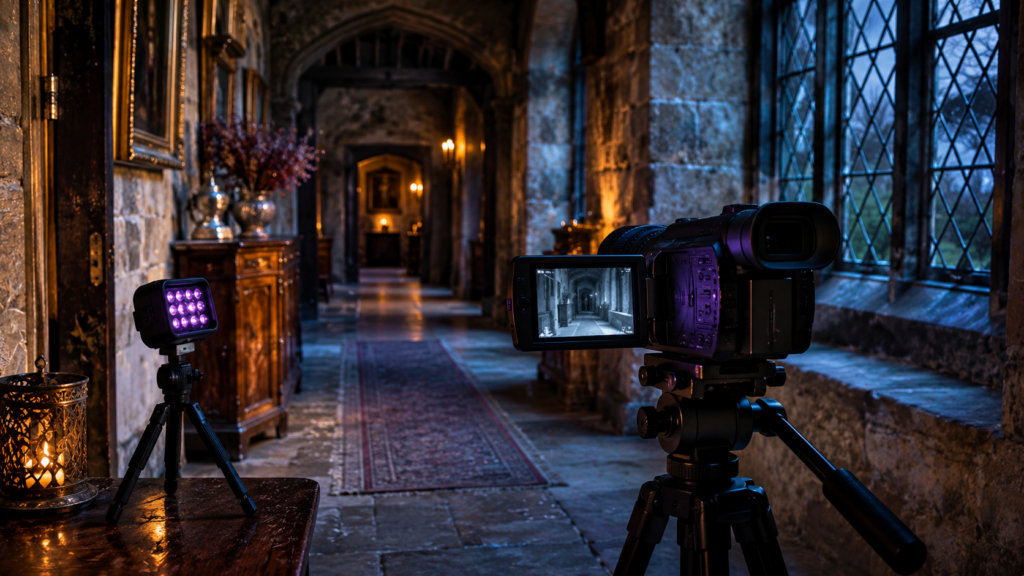
If filming, collect a clear daylight reference shot and keep original recordings rather than only edited highlights. Infrared illumination may reveal insects, reflective dust, motion blur or unexpected shadows. Our night-vision camera guide explains why camera position and light sources matter.
One practical improvement is to separate what the witness noticed at the time from what they concluded afterwards. A useful note might read, ‘I saw a dark figure-shaped area beside the door for two seconds,’ rather than ‘a hostile spirit watched me.’ The first records an observation; the second adds an interpretation. Both may be meaningful to the witness, but only the observation can be compared with lighting, floor plans or recordings.
If other people appear on a recording, respect their privacy. Avoid publishing identifiable footage or personal details without appropriate permission. Repeated investigations should not involve trespassing, deliberately frightening vulnerable people or interfering with someone else’s sleep. These simple boundaries make the findings more trustworthy and the process safer.
What evidence would make a claim more convincing?
A useful video would show a recognisable setting with reliable date and location details, clear scale references and enough uninterrupted footage to evaluate what happened before and after the appearance. Independent observations agreeing on measurable details add context. Neither dramatic reactions nor a dark silhouette on their own identify an unknown creature.
Investigators should test ordinary possibilities first, including people, animals, fabrics, glass, camera compression and movement. Some events may remain unexplained because the recording lacks information. That is a legitimate outcome; it is not positive proof of an entity.
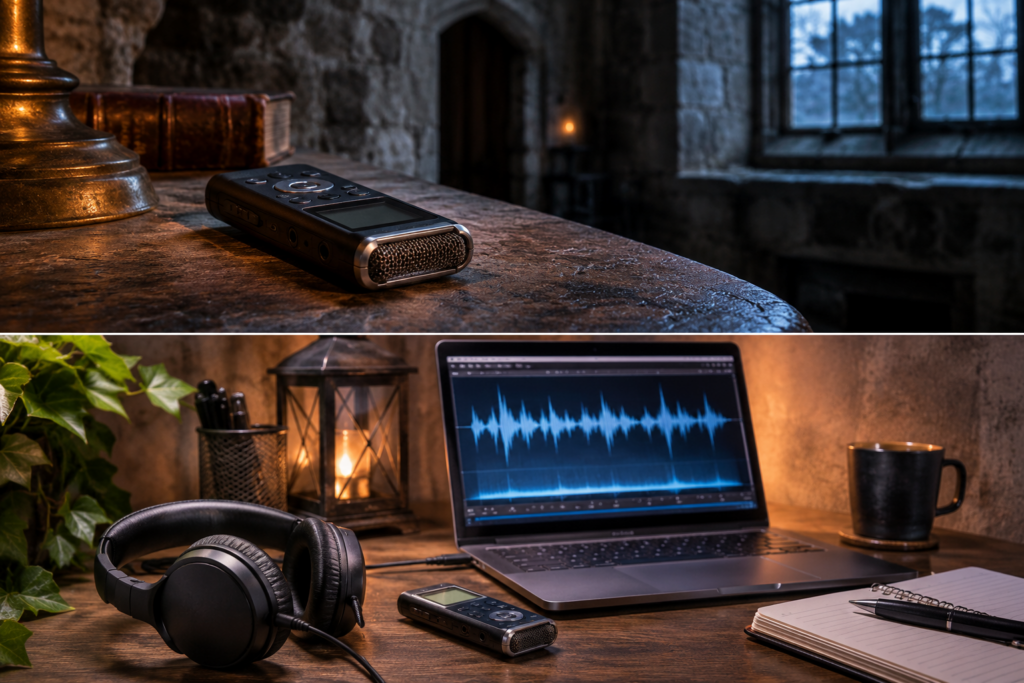
A simultaneous EMF reading or apparent voice on a spirit box cannot establish a cause without controls. Electrical equipment has ordinary sources of interference, while ambiguous sounds are susceptible to interpretation. See our guides to EMF meters and poltergeist reports for related explanations.
Shadow people, ghosts and ordinary silhouettes compared
A shadow person is a descriptive label used in contemporary experiences and paranormal storytelling; it is not an established biological species or a scientifically verified class of haunting. One person may describe a dark outline as a ghost, while another may use the term shadow figure. Labels describe interpretations, not independently confirmed causes.
It helps to separate visual impressions from events that supposedly leave physical traces. A dark figure glimpsed beside a bed is a different kind of claim from a door moving or a visible object falling. The latter can sometimes be measured and tested, whereas a brief impression requires careful documentation and cannot easily be repeated.
Questions readers ask about shadow people
Can two people see the same shadow? Yes. Both may observe a moving light or dark object. Separate written accounts, a shared viewpoint and environmental checks help establish what was actually seen.
Does a hat or red eyes identify a particular entity? No. Those details occur in stories, but there is no evidence-based classification system linking them to a real species of being.
Are shadow people always dangerous? There is no basis for assuming that a reported shadow is a hostile supernatural presence. Check practical safety, lighting, sleep and the possibility of an actual person first.
Does a photograph prove a shadow person exists? No. A photo can document an appearance without establishing the identity or cause of the shape. The original file, environment and camera settings are crucial.
How to Deal with a Shadowy Visitor
If you believe you have seen a shadow person, try to stay calm and write down exactly what happened. Note the time, location, lighting, your emotional state, and whether anything else unusual occurred. Many shadow sightings happen during tiredness, stress, sleep disruption, or low-light conditions, so it is worth considering natural explanations before assuming the experience is paranormal.
If the atmosphere in your home feels heavy or unsettling, you may also want to read my guides to smudging your home and protection during paranormal investigations. For a more ceremonial approach, my guide to the Lesser Banishing Ritual of the Pentagram may also be useful.
You may also want to read:
- Is My House Haunted? Signs, Causes and What to Do
- What Is a Poltergeist?
- Residual Hauntings
- Orbs: Spiritual Signs or Dust?
- Best EMF Meters for Ghost Hunting
- Best Night Vision Cameras for Ghost Hunting
- Smudging Your Home
- Protection During Paranormal Investigations
- Lesser Banishing Ritual of the Pentagram