

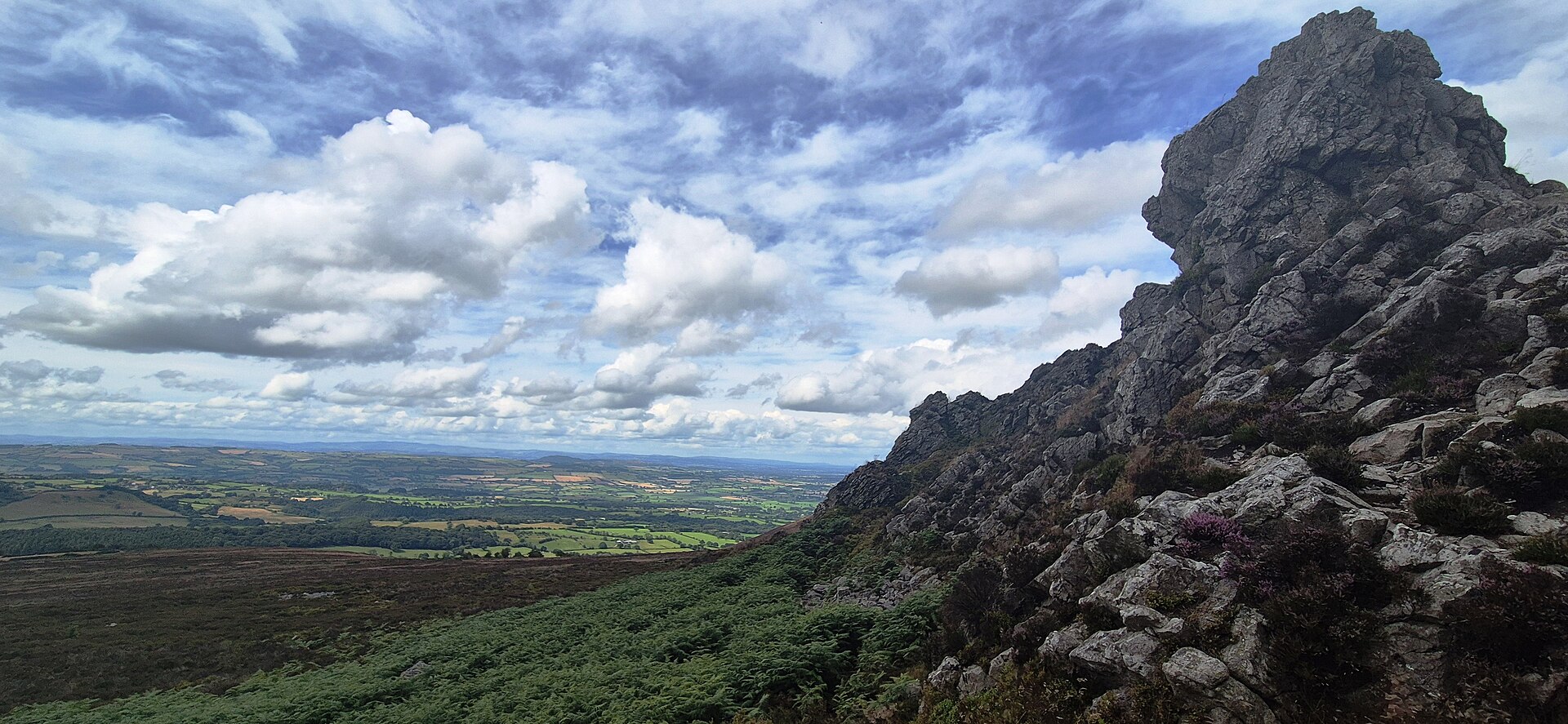
What is the Devil’s Chair in Shropshire? The Devil’s Chair is the largest and most famous rock outcrop on the Stiperstones ridge, within Shropshire’s dramatic National Nature Reserve. Its broken quartzite has inspired stories of the Devil, witches and supernatural warnings for generations. The place is real, its geology is exceptionally important, and the supernatural stories are part of local folklore—not established evidence that the ridge is haunted.
High above the fields and former mining villages of the Shropshire Hills, the Stiperstones has a stark appearance even on a clear afternoon. Pale blocks of fractured rock rise from heather, bilberry and grasses; beyond them, the land opens into broad views over the Welsh borders. It is a landscape that practically invites legend. This guide explains the geology, the best-known myths, how to find the Devil’s Chair and how to enjoy the walk safely.
For more landscapes and historic sites linked to eerie local legends, explore our Haunted Places Explorer and related travel guides.
If you like destinations where strange stories are deeply connected to the landscape, our guides to the haunted Peak District and Pendle Hill and the Pendle witches make useful companion reads.
Quick facts: visiting the Devil’s Chair
- Where: the Stiperstones ridge in Shropshire, within a protected National Nature Reserve.
- What it is: a large quartzite tor, one of a chain of rocky outcrops on the ridgeline.
- Best for: walking, panoramic scenery, geology, landscape photography and folklore.
- Access: use designated paths; expect unstable and uneven stones and exposed conditions.
- Cost: generally no admission charge to walk the public paths, but parking or other facilities may have separate rules.
- Best preparation: supportive walking boots, waterproof layers, an offline map and suitable daylight.
How did the Stiperstones form?
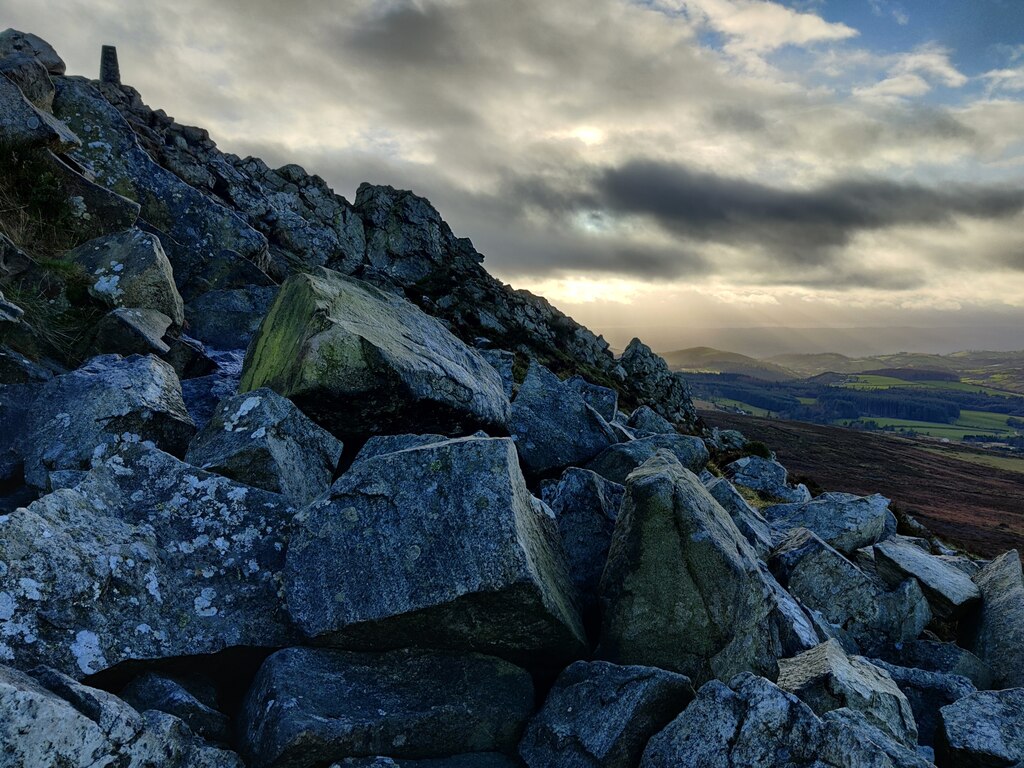
The Stiperstones ridge is made of unusually hard quartzite derived from deposits laid down about 480 million years ago in the Ordovician period. It has been pushed, fractured and exposed over geological time. The tors—the dramatic rocky projections such as the Devil’s Chair—were shaped further during intensely cold conditions associated with the last ice age.
This was not simply a glacier dumping rocks across a hillside. Severe freezing and thawing in periglacial conditions shattered the resistant rock, creating large areas of angular fragments, scree and characteristic stone runs. Natural England identifies the site’s Ordovician quartzite and boulder-strewn landforms as important features of the reserve.
Understanding this history makes the legendary stories even more striking. Villagers who saw enormous broken rocks strewn across the ridge had no modern geology textbook to explain them. A tale of the Devil spilling stones from his apron would have offered a memorable explanation for an extraordinary sight.
The Natural England reserve guide and the Stiperstones visitor leaflet give useful background on the geology, landscape and conservation.
The legend of the Devil’s Chair
The Devil and the apron of stones
One frequently retold story says the Devil was transporting stones across the countryside with an intention to block a valley. He stopped on the ridge to rest, but the strings of his apron broke, spilling the stones over the hillside. This supposedly created the rugged boulder landscape visible today. Like many British landscape legends, the story links an unusual natural feature to an extraordinary supernatural figure.
The Devil is also said to have a favourite resting place on the ridge: his chair. Some versions warn that sitting upon the stones, shouting challenges or disturbing the outcrop may bring a storm or supernatural misfortune. These warnings make good folklore, but visitors should be far more concerned with the genuine risk of slipping on steep, loose rock than with invoking a curse.
Witches on the longest night
Other versions of the legend connect the Devil’s Chair with witches gathering on the longest night of the year. Stories speak of the Devil returning to convene supernatural beings or choose a ruler for their earthly activities. Such tales are associated with the wider tradition of witches’ gatherings at isolated, elevated places.
There is no reliable historical evidence that organised satanic meetings occurred on this tor. The important point is that the story exists within a living culture of Shropshire folklore. That distinction protects both the historical integrity of the place and the people who might be misrepresented by sensational retellings.
The ridge that must never sink
A further tale warns that if the Stiperstones disappears completely into the earth, England will fall. Some retellings describe the Devil striking or throwing himself upon his chair to sink the rocks. This is an example of an apocalyptic landscape prophecy, not a prediction based on geology or history.
Wild Edric: Shropshire’s spectral rider
The Devil is not the only supernatural figure associated with the Stiperstones area. Shropshire folklore also remembers Wild Edric, a local Saxon leader connected with resistance to the Norman conquest. In later legends, Edric and his followers become a sleeping or imprisoned host who may ride out in times of national danger.
The stories sometimes place his hidden company beneath the hills or around old mines. Reports of a spectral army appearing before major wars belong to the folklore tradition rather than reliable records of supernatural events. Still, they add an unusual layer to the Stiperstones: this is a landscape where the past is imagined as not entirely finished with the present.
For readers interested in English ghost legends, our ghost dogs folklore guide explores another recurring type of spectral encounter in Britain’s countryside.
History beneath the ridge: mining at the Stiperstones
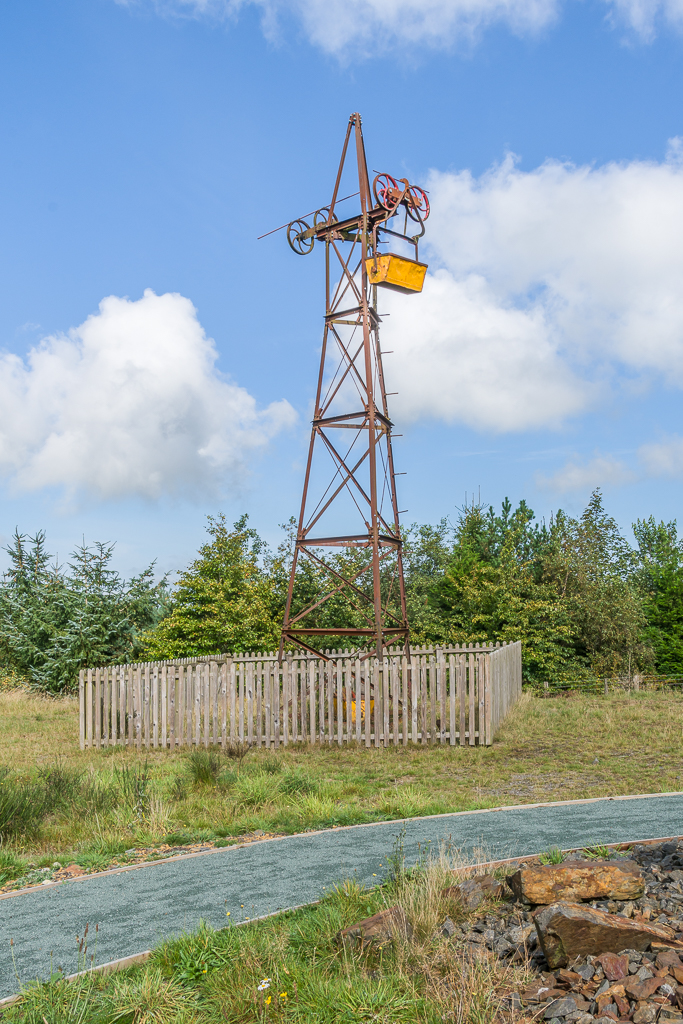
Long before the area became a popular walking destination, mining shaped communities around the Stiperstones. Lead and other minerals were extracted in different periods, leaving shafts, workings, spoil heaps and altered landscapes. More recent extraction included barytes and other minerals; the industrial legacy remains visible in the surrounding valleys.
The former mining village around The Bog gives a particularly tangible connection with this past. The Bog Visitor Centre occupies a former Victorian school and has offered information, refreshments and local crafts. Its official website currently says it is closed for the winter season and plans to reopen in spring 2027. That makes advance planning important for visitors expecting toilets or refreshments in November.
Mine workings are not places to explore casually. Fenced or abandoned shafts can be extremely dangerous, and entry to old mines requires specialist arrangements. Treat them as protected industrial heritage, not an invitation to conduct an unsupervised ghost hunt.
How to get to the Devil’s Chair
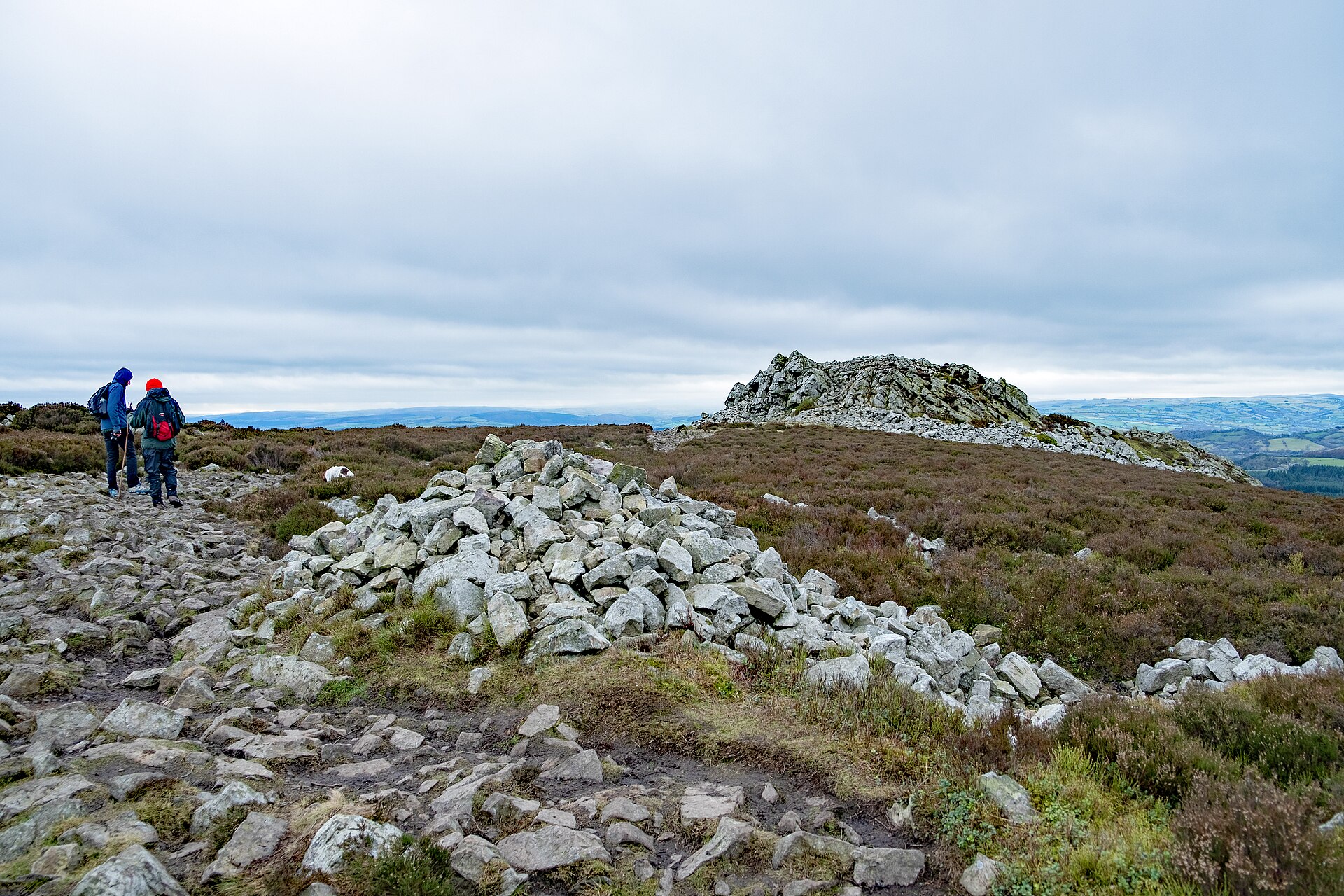
The Stiperstones is southwest of Shrewsbury in the Shropshire Hills. A commonly used approach is from the car park on the eastern side of the ridge, reached via local roads around Snailbeach, The Bog or Bridges. There are walking routes linking several tors, including the Devil’s Chair, Cranberry Rock and Manstone Rock.
Distances and walking difficulty depend on the route you select. The ridge is exposed and underfoot conditions can be awkward even on dry days; loose quartzite blocks can shift, and the line of the path may become hard to follow in mist. Rather than supplying a misleading single route length, we recommend choosing a marked route on an up-to-date map and checking any path closures.
The official visitor leaflet includes background and access guidance, and a Stiperstones and Devil’s Chair circular route may help walkers compare options. Navigation apps are helpful but should not replace awareness of the conditions on the day.
When is the best time to visit?
Late spring and summer generally offer longer daylight and more forgiving weather, while late summer can bring attractive colour from the heather. Autumn and winter can be atmospheric, but the ridge is exposed to powerful wind, rain and low cloud. Arriving just before sunset without suitable gear is not a good way to experience a remote hillside safely.
Photography works particularly well when side-light catches the angular blocks. Avoid trampling vegetation to reach a viewpoint or scrambling onto unstable stones for a picture. Keeping to established paths helps protect the nationally important heathland habitat.
Can you go ghost hunting at the Devil’s Chair?
The location is often described as haunted, but there is no reliable evidence demonstrating the presence of a supernatural entity. Visitors can enjoy the folklore, make field notes or photograph the landscape during ordinary public access. Organised activities and equipment-based investigations may require landowner or reserve permission, especially where they disturb wildlife, other walkers or protected habitats.
Natural England’s reserve guidance warns that some recreational activities, including organised orienteering and climbing, are permit-only. Do not assume public access automatically authorises every type of event. For any investigation, plan a simple, low-impact approach and use our paranormal investigation checklist for sensible equipment ideas.
A short Shropshire folklore itinerary
If you are visiting from Shrewsbury or the surrounding area, combine a daylight walk at the Stiperstones with nearby industrial heritage and a stop in a village on the return journey. If planning a wider Shropshire paranormal trip, our Shrewsbury Prison ghost-hunting guide offers a very different experience: a historic built environment with organised visitor arrangements rather than open, exposed moorland. If you prefer a wooded Shropshire landscape, our guide to haunted woods in the UK includes Wenlock Edge and its separate legends of Ippikin and Major Smallman.
The contrast is worth enjoying. The Stiperstones gets much of its atmosphere from wind, space and legend; old prisons and inns evoke the past through architecture and human occupation. You do not need to force either setting into the same ghost-hunting template.
Frequently asked questions
Where exactly is the Devil’s Chair?
It is a prominent quartzite tor on the Stiperstones ridge in Shropshire, England, accessible from walking routes in the National Nature Reserve.
Why is it called the Devil’s Chair?
The name comes from folklore that imagines the largest rock outcrop as the Devil’s seat or resting place. Different versions of the associated legends have been told locally.
Is the Devil’s Chair walk difficult?
The route depends on your starting point, but expect rough, rocky ground and an exposed ridge. Suitable footwear and a weather check are essential. Some routes may be unsuitable for visitors with reduced mobility.
Is the Bog Visitor Centre open in winter 2026?
Its website says it is closed until spring 2027. Check the official centre website for reopening arrangements before planning your visit.
Has anyone proved the Devil’s Chair is haunted?
No credible scientific evidence establishes a haunting. Its reputation is better understood as a rich body of local folklore connected to the landscape and its history.
Final verdict: a haunting landscape worth visiting
The Devil’s Chair is worth visiting for its extraordinary geology and remarkable legends. It offers an authentic sense of place without needing invented evidence or dramatic gimmicks. Research the stories, prepare for the terrain and allow the Stiperstones to be what it already is: one of Shropshire’s most atmospheric landscapes.