

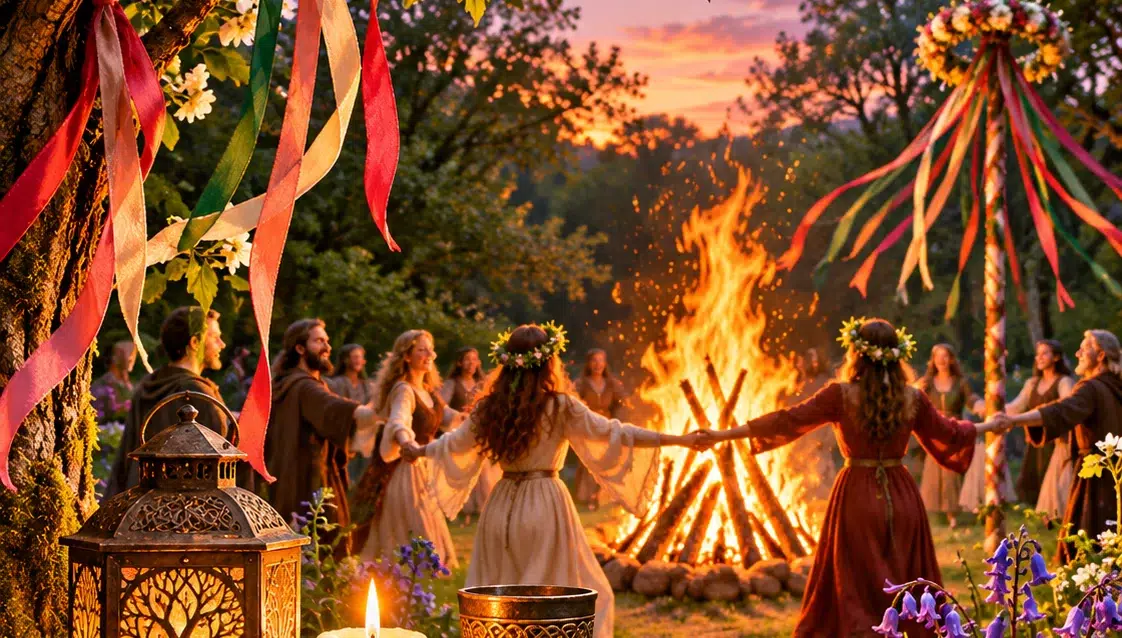
Quick answer: Beltane (also spelled Bealtaine) is a traditional Gaelic May Day festival welcoming the beginning of summer. In 2027, Beltane falls on Saturday 1 May; some celebrations start on the evening of Friday 30 April. Historically documented Irish customs include May flowers, decorated May bushes, communal dancing and bonfires. Modern Pagans may mark it through outdoor gatherings, seasonal decorations, reflection and safe candle or LED-light activities.
As the days grow longer and spring flowers fill hedgerows, Beltane offers a reason to celebrate the changing season. It is sometimes called a fire festival, but it also has a long history of flowers, food, local communities and everyday hopes for wellbeing. This guide explores those traditions carefully, explains how Beltane differs from the summer solstice, and gives you practical ways to celebrate without needing a bonfire or expensive supplies.
Beltane is one of the eight festivals featured on the modern Wheel of the Year. It follows Ostara and the spring equinox and comes before Litha and the summer solstice. Unlike an equinox or solstice, Beltane is usually attached to a traditional calendar date rather than one exact astronomical instant.
When is Beltane in 2027?
Beltane is generally observed on 1 May, making Saturday 1 May 2027 its usual calendar date. Some people begin on May Eve, Friday 30 April 2027, since the evening before a festival often has traditional significance. Others celebrate on the nearest weekend or around the halfway point between the March equinox and June solstice.
In traditional Irish seasonal reckoning, May Day welcomed the beginning of summer. That is not the same system as the modern meteorological calendar, in which summer starts on 1 June, or the astronomical calendar, in which the June solstice marks summer. When you see “Beltane is the start of summer”, the intended reference is the Gaelic seasonal calendar, not a claim that every climate changes suddenly overnight.
What does Beltane mean, and how is it pronounced?
Beltane is the common English spelling; Bealtaine is the Irish spelling used for the festival and for the month of May. Pronunciation differs by language, dialect and spelling. English speakers often say something like “BEL-tayn”, while Irish-language pronunciation may sound quite different. If you are learning Irish, consult a speaker or an Irish pronunciation resource instead of assuming one Anglicised version is universal.
The exact etymology of the name is debated. You may find explanations involving bright fire or a deity called Bel, but not all such proposals are established. What is much clearer from historical accounts and folklore collections is the seasonal role of fire and the importance of May Day to farming communities.
Where did Beltane come from? History and folklore
Beltane has historical roots in Gaelic seasonal tradition. Irish folklore and medieval texts refer to early-May customs, including cattle, fire, protection and the transition to summer pastures. These records span different eras; we should not imagine that every family in ancient Ireland performed exactly the same elaborate ritual.
One particularly valuable source is the National Museum of Ireland’s account of May Day and Bealtaine. It describes May bushes, flowers over doorways, communal dancing, bonfires and beliefs about safeguarding homes and livestock. These details are better-supported than many sweeping internet descriptions of “universal Celtic magic”.
Bonfires, cattle and protection
Historical accounts connect May fires with hopes for the health and protection of livestock. The expression about being between two fires of May is recorded in Irish tradition, and the museum describes accounts of cattle being driven through embers or between fires. Those practices belong to specific historical circumstances; they are not instructions for people to imitate today.
Modern fire ceremonies can be meaningful as symbolism, but the simplest choice is a single candle in a suitable holder—or an LED light. Never build an unauthorised fire, light flames near dry vegetation or take animals near fire for the sake of historical reenactment.
May flowers and the decorated May Bush
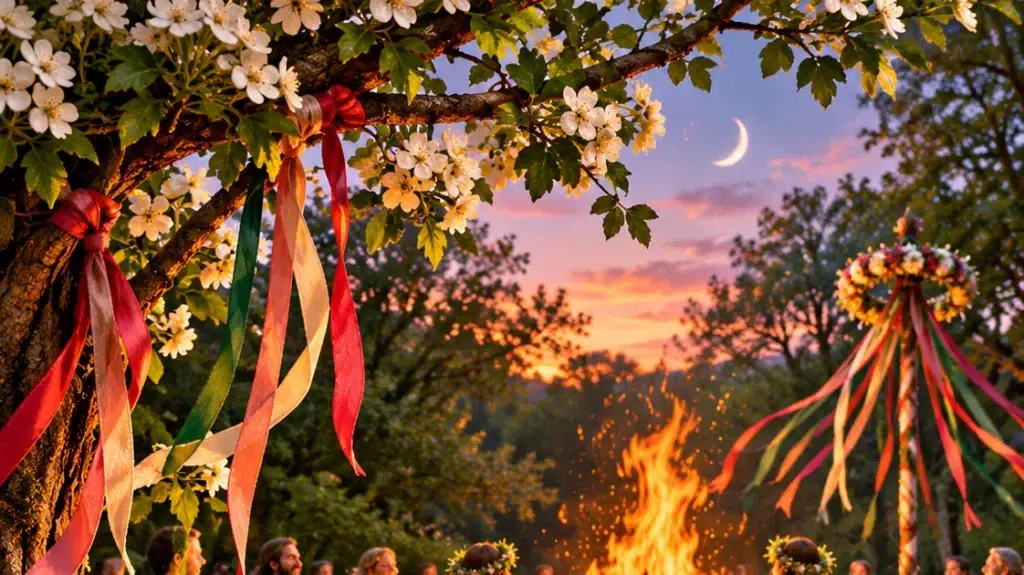
The May Bush was a shrub or small tree decorated with ribbons, cloth streamers and other items. In some Irish communities it stood outside a home; elsewhere it appeared in a shared public place. Hawthorn was sometimes used, but you should not cut a tree or damage a hedge to recreate the tradition. A reusable branch in a pot or a paper-and-ribbon version works well.
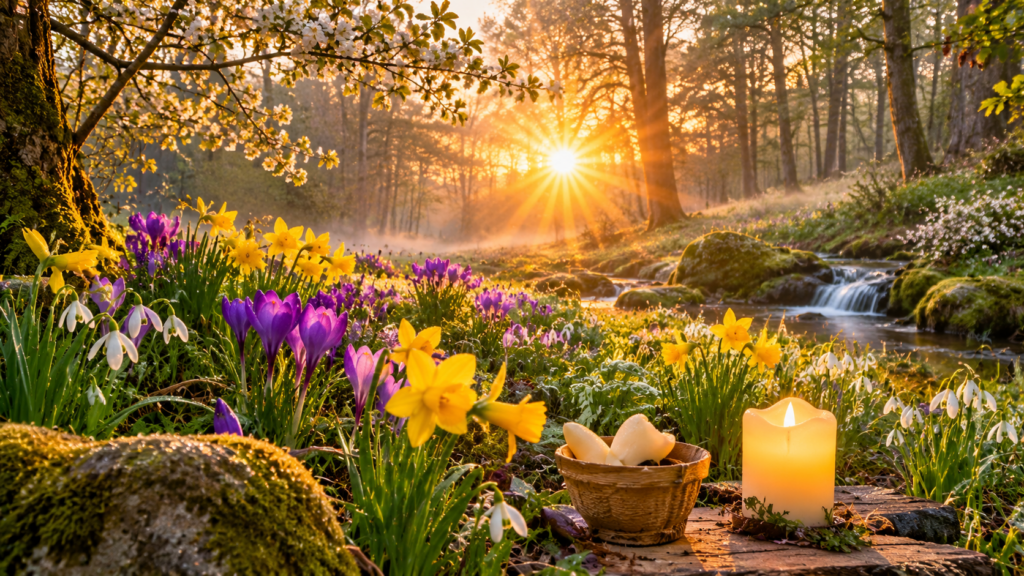
The museum also records flowers placed on doorsteps and windowsills, often yellow varieties including primroses and buttercups. In folklore these were associated with good luck and protection. You can appreciate that belief as cultural history without claiming the flowers have demonstrable supernatural properties.
Is the maypole an ancient Beltane practice?
Maypole dances are associated with European May Day customs and appear in some Irish folklore records, but it would be too simple to label every maypole custom an unchanged ancient Gaelic Beltane rite. Different local practices have influenced one another over time. If you attend a public maypole event, enjoy it as a community tradition and follow the organisers’ instructions; you do not need to construct a pole yourself.
Beltane symbols and seasonal meanings
Modern Beltane celebrations often combine older May Day customs with contemporary symbolism. The following suggestions are helpful for planning a celebration, but they are not a compulsory set of ancient correspondences.
| Seasonal element | Theme people associate with it | Practical alternative |
|---|---|---|
| Flowers and greenery | Growth and the approach of summer | Arrange garden flowers or a reusable floral garland |
| Ribbons and May Bush | Community, colour and good fortune | Decorate a potted branch without cutting wild plants |
| Fire or candlelight | Warmth, renewal and protection in folklore | Use an attended candle or LED lantern |
| Music and dancing | Celebration and connection | Create a short playlist or attend a local event |
| Seasonal food | Hospitality and abundance | Share a picnic, meal or homemade bread |
| Outdoor walks | Connection to changing nature | Notice blossom, insects and lengthening evenings |
How to celebrate Beltane: nine enjoyable ideas
- Make a May flower arrangement. Fill a small vase with responsibly sourced flowers or use paper blossoms if you have allergies or pets.
- Decorate a miniature May Bush. Attach fabric ribbons to a reusable potted branch. Remove decorations afterwards so wildlife cannot become entangled.
- Share a seasonal meal. Plan a picnic, bake bread or invite someone for a simple supper. Food and company often matter more than special equipment.
- Watch the May sunrise. Visit a safe local place and observe the light, birds or changes in the landscape.
- Choose a creative project. Start a sketchbook, craft a floral wreath or plan something you want to make this summer.
- Listen to music or dance. Put on a favourite song, attend a community event or celebrate in a way that is accessible to you.
- Mark the season with a light. An LED lantern works well indoors, in shared housing or anywhere flames are impractical.
- Plant for pollinators. Choose plants suited to local conditions, avoiding invasive species and excessive pesticides.
- Write a note of appreciation. Thank a friend, neighbour or family member for something that has helped you recently.
A simple Beltane ritual without a bonfire
This five-step exercise is a modern reflective practice, not a recreation of an ancient Gaelic rite. It is suitable for anyone who wants to recognise early summer, including people who do not follow a particular religion.
- Prepare a calm space. Place a flower, ribbon, leaf or drawing on a small table. Use an LED candle if you would like a light.
- Look at what is growing. Notice one thing outdoors that has changed since the spring equinox. It could be blossom, insects or simply a longer evening.
- Choose an intention. Ask: “What deserves more energy or attention as summer approaches?” Keep the answer specific and achievable.
- Make a small gesture. Tie a ribbon around a reusable branch, write your intention on paper or plant a suitable seed.
- Close with a real-world action. Pick one practical thing to do in the next seven days and put it in your calendar.
If you incorporate candles, always use a stable heat-resistant holder and never leave a flame unattended. You can explore our beginner’s candle guide for further safety-minded ideas. The reflection is not a claim that a ribbon, plant or candle can cause a supernatural outcome.
Make a Beltane floral wreath or May Bush at home
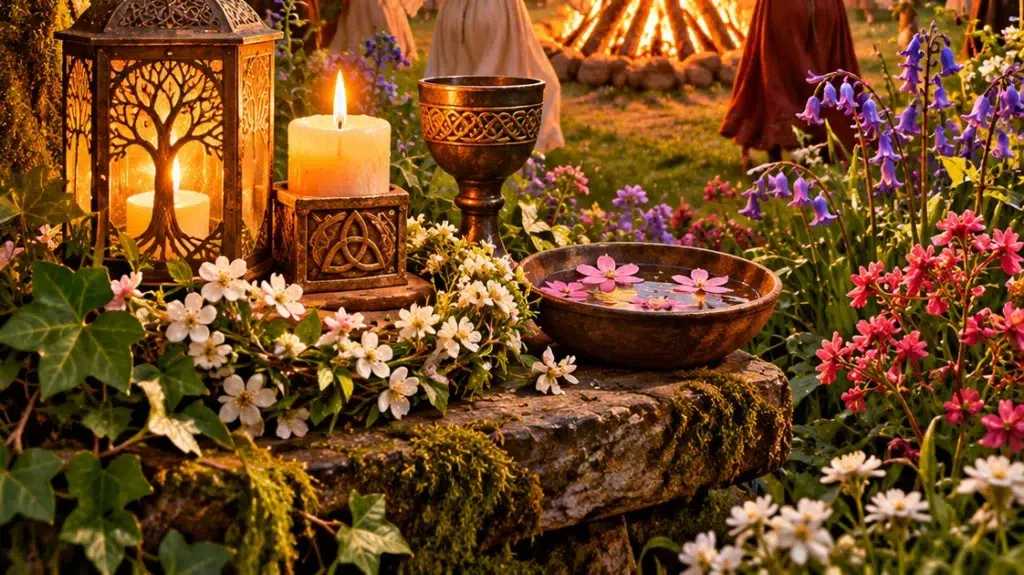
For an easy afternoon activity, gather a small reusable base, fabric scraps, paper flowers and string. Secure the decorations to the base, check that nothing sharp or loose is left accessible to small children or animals, and place it in a sheltered spot. This is especially useful for people living in flats who do not have a garden or space for a traditional outdoor celebration.
You can also arrange fresh flowers in a vase and add a short note explaining what the colours mean to you. There is no need to copy ritual instructions that claim to be centuries old without a source. Simplicity makes the activity easier to repeat next year and avoids waste.
What foods are associated with Beltane?
Many present-day celebrations include bread, seasonal produce, dairy-based dishes or a shared feast. However, there is no single fixed historical Beltane menu across all Gaelic communities. Food availability varied by place, year, farming conditions and household. A meal you can comfortably prepare is more useful than an expensive “authentic” list with no documentary support.
For a low-effort Beltane picnic, consider bread, a savoury pastry, a fresh salad or fruit available locally. If you have dietary restrictions, adapt freely. The important theme is welcoming the season and enjoying hospitality; a plant-based or allergy-aware meal is every bit as suitable.
Beltane versus Ostara and Litha: what is the difference?
These three festivals occur close together on the Northern Hemisphere Wheel, so it is easy to confuse them. Their calendar positions and cultural histories are distinct:
| Festival | Usual time | Main focus |
|---|---|---|
| Ostara | Spring equinox, about 20 March | Balance, spring growth and new beginnings |
| Beltane | 1 May | Traditional Gaelic start of summer, flowers, fire and community |
| Litha | Summer solstice, about 20–21 June | Maximum daylight and midsummer reflection |
Our Wheel of the Year hub introduces all eight festivals, while the separate guides go into practical and historical detail. This separation helps readers find the information they need without confusing several different seasonal traditions.
Can Beltane be celebrated without fire, a maypole or an altar?
Yes. Fire, maypoles and altars are not requirements. You can mark May Day through nature walks, crafts, a meal, music, volunteering or simply observing a change in the season. If you celebrate with friends, choose activities that everyone can participate in. Wheelchair-accessible public gardens and indoor floral crafts can be good alternatives to uneven woodland paths or open-air gatherings.
For families, avoid flames near children, supervise scissors during ribbon crafts and check plant toxicity around pets. If you attend a public bonfire or event, use official transport and safety information; do not assume an event is operating merely because one took place in a previous year.
Frequently asked questions about Beltane
When is Beltane in 2027?
Beltane is commonly celebrated on Saturday 1 May 2027, with some observances beginning on the evening of Friday 30 April.
Is Beltane the same as May Day?
The festivals overlap on the calendar, and traditional Irish Bealtaine is a May Day observance. However, May Day celebrations vary widely across countries and communities.
Is Beltane the summer solstice?
No. Beltane is usually 1 May. The summer solstice comes in June and is often called Litha by modern Pagans.
Can I celebrate Beltane without a bonfire?
Yes. Flowers, a seasonal meal, music, a safe lantern or a short nature walk can all provide a meaningful celebration without an open fire.
What is the May Bush?
In Irish tradition it was a bush, often hawthorn, decorated with ribbons and other ornaments. The National Museum of Ireland documents variations in the custom.
Final verdict: celebrate Beltane with respect for the season and its history
Beltane works best as a welcoming celebration of early summer rather than a checklist of complicated rituals. Its documented customs give you plenty of inspiration—flowers, dancing, gatherings and light—while modern choices let you make the day accessible, safe and personal.
Continue your seasonal journey with Litha and the summer solstice, or return to the complete Wheel of the Year guide. If you missed the earlier equinox, our Ostara guide explains the spring themes leading into May.
Sources and further reading
- National Museum of Ireland — Traditions and customs of May Day / Bealtaine, for May bushes, flowers, bonfires and community traditions.
- National Museum of Ireland — Summer seasonal festivals, for traditional Irish seasonal context.
- Our Irish Heritage — Traditional May Day customs in Ireland, by a curator of the Irish Folklife Division.
- Religion Media Centre — The festival of Beltane, for a concise overview of religious and modern practice.