

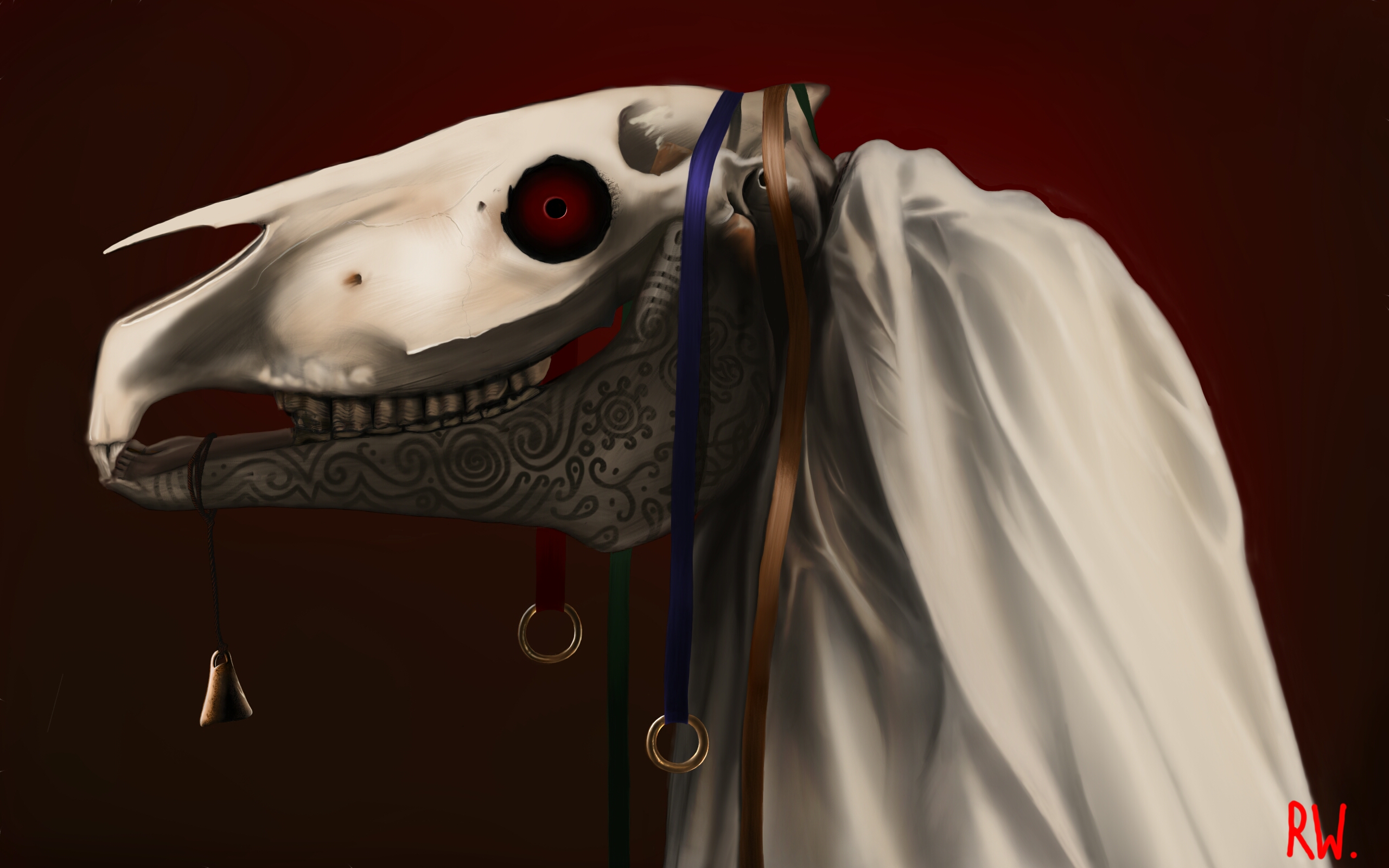
The Mari Lwyd is a Welsh Christmas and New Year custom in which a decorated horse’s skull or horse-shaped figure visits homes with a party of singers. It looks like an apparition from a ghost story, but this ‘Grey Mare’ is part of a playful community performance rather than an alleged supernatural encounter.
Quick Answer: What Is Mari Lwyd?
The Mari Lwyd is a horse figure traditionally carried from door to door in parts of South Wales during the winter holiday period. Decorated with fabric and ribbons, its head may snap its jaw while the party sings. A verse contest known as the pwnco can decide whether the visitors are admitted and offered hospitality.
What Does Mari Lwyd Mean?
Mari Lwyd is commonly rendered in English as ‘Grey Mare’. Some discussions propose other associations for the name, but it would be unwise to declare one speculative etymology certain. The name identifies a specific Welsh custom, not a generic label for any ghost horse.
Its pronunciation and regional forms are bound up with Welsh-language tradition. For readers encountering the term in writing, the important context is that the Mari is a theatrical figure led by real people, often with a song leader and other characters alongside it.
Why Is There a Horse Skull at Christmas?
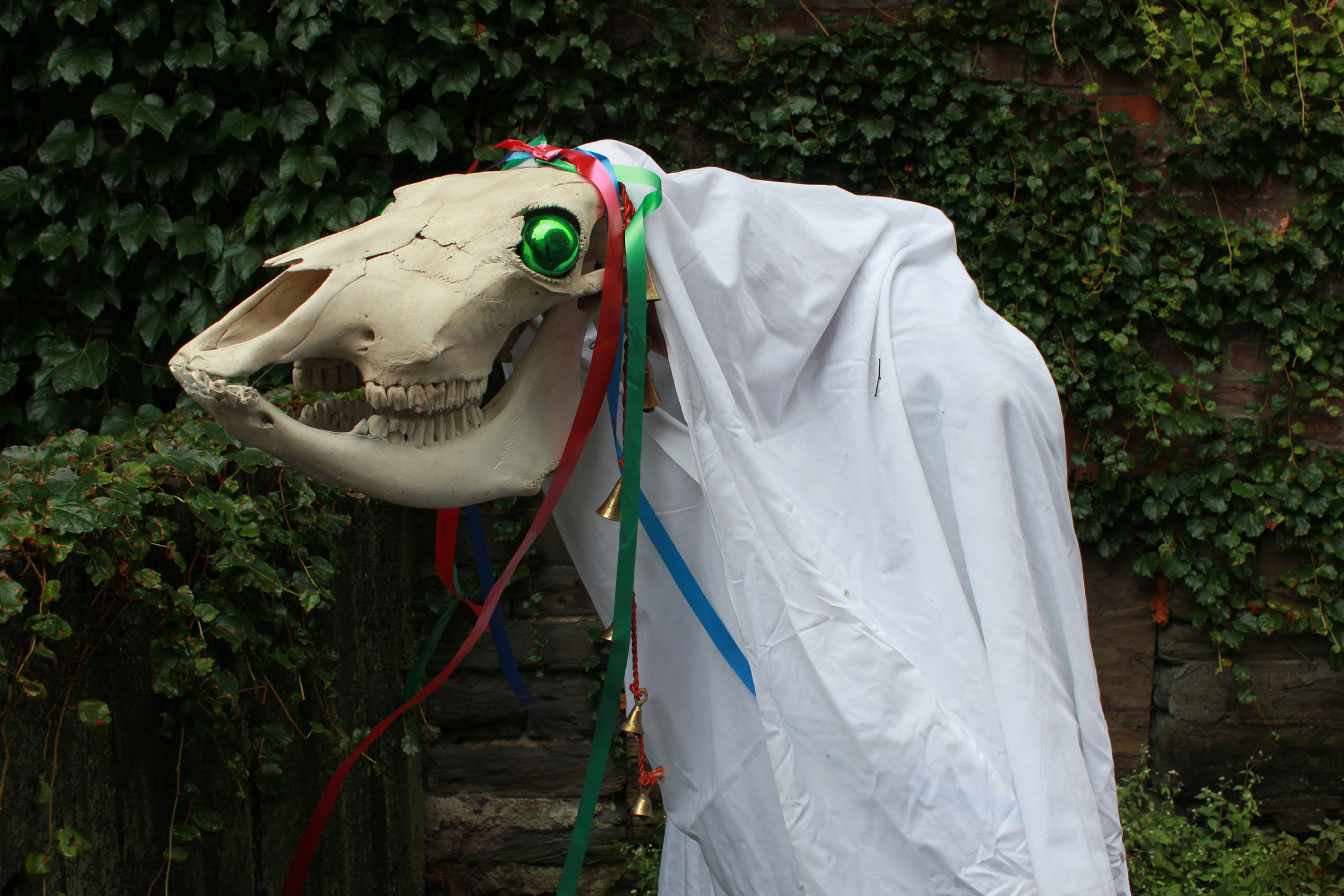
The familiar figure uses a horse’s skull with a hinged or otherwise movable lower jaw, set on a pole beneath a long white cloth. The carrier is concealed and can make the head snap towards householders and spectators. Ribbons, rosettes, greenery, bells and glass eyes complete the dramatic effect.
Not all Mari Lwyd examples were made from an actual skull. Museum Wales records variations using other materials as well as authentic horse skulls. This matters when viewing modern examples: creative interpretation is part of the custom, and a vivid image alone is not proof of a particular historical construction.
When Does the Mari Lwyd Appear?
Traditionally, visits are associated with Christmas and the New Year, including the period through Twelfth Night and, in some areas, Old New Year. The exact days are not identical everywhere. Modern public celebrations can also be arranged to suit community festivals and available venues.
The custom is especially associated with South Wales, including Glamorgan and Gwent. Wales.com describes how contemporary revivals bring the striking horse figure to new audiences while retaining links to local language and performance.
What Happens in the Pwnco Singing Contest?
At a house or pub, the visitors sing for admittance. The people inside respond with teasing verses, often improvised or adapted from traditional material. Back and forth goes the challenge, called the pwnco, until the party is admitted or the contest ends. The exchange can be mischievous, highly verbal and funny.
Once welcomed inside, the Mari might snap its jaw and move about while the group shares music, food, drink or further entertainment. The ceremony is therefore not simply a frightening disguise. It involves negotiation, hospitality, performance and a sense of shared winter occasion.
The People’s Collection Wales account offers an accessible explanation of the verses and door-to-door custom. This is a valuable corrective to modern internet posts that show only a skull and present the tradition as a sinister pagan spectre.
Is Mari Lwyd Actually a Ghost or a Pagan Spirit?
The figure can look supernatural, especially when its white covering moves in dim light, but no evidence establishes it as a real spirit. Folklorists and cultural writers have suggested associations with fertility, seasonal renewal, the dead and other animal disguises. Those interpretations are interesting, but they are not the same as proving the custom came unchanged from prehistoric religion.
Surviving written records are commonly discussed from around the late eighteenth to early nineteenth century. This tells us something about documentation, not the precise birthday of a folk practice. There can be older traditions without reliable evidence for the exact age of the Mari Lwyd familiar today.
A Museum Wales educational resource explicitly treats the custom’s origins as uncertain. That ambiguity should be part of the story rather than concealed behind a more sensational claim.
How Has the Mari Lwyd Changed in Modern Wales?
The custom has been adapted and revived in different communities. Some figures are carefully made by artists, others use traditional-looking components, and events may take place at festivals, museums, pubs or community gatherings. The changing form demonstrates how a living custom is passed on, not a reason to dismiss its importance.
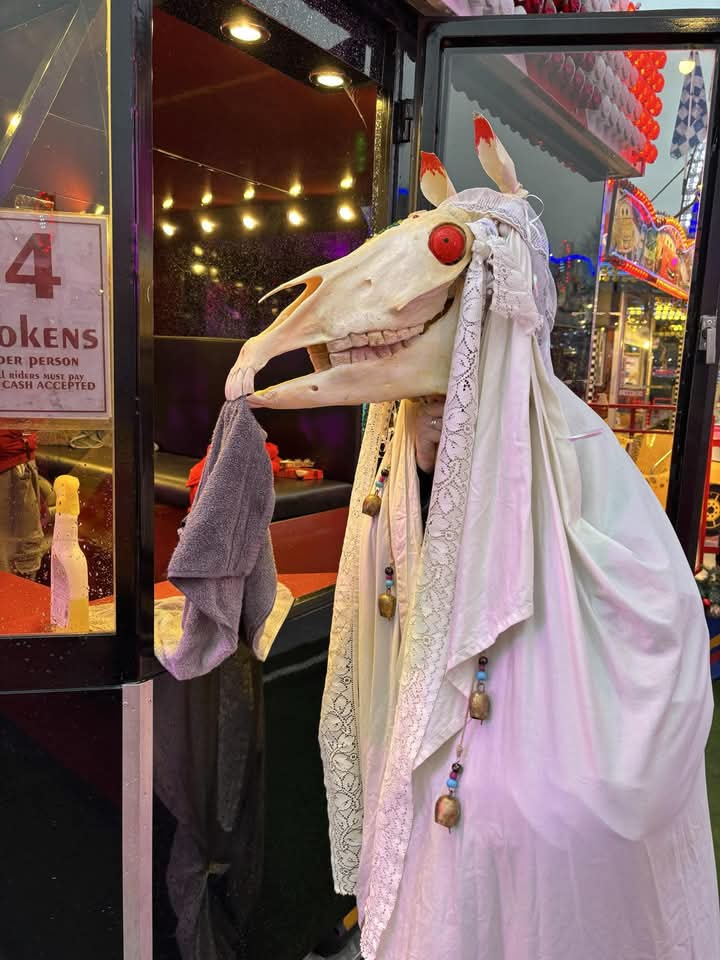
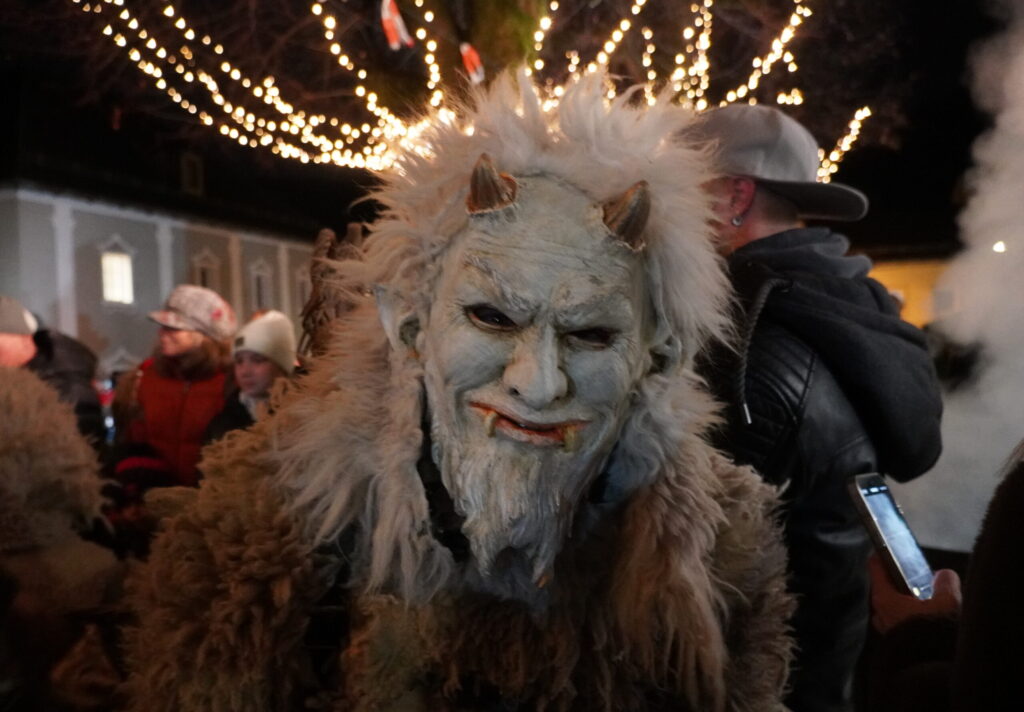
The Mari Lwyd is sometimes compared with British hooded-animal customs such as Hoodening. Similarities may illuminate broader themes in folk performance, but each regional practice has its own evidence, names and community meanings. The Welsh verse exchange is especially distinctive. Alpine Krampusnacht traditions offer another example of unsettling winter costumes, with their own regional history.
Why Is Mari Lwyd Such an Unusual Christmas Legend?
It brings together visual horror and cheerful sociability. The skull can startle children, and the snapping jaws provide an eerie performance, but the accompanying songs and verses turn that unease into an invitation. For other midwinter context, see our Yule and winter solstice guide, while keeping Welsh Mari Lwyd customs separate from modern Pagan Yule rituals.
It is easy to see why the image travels so widely online: the white-cloaked horse is unforgettable. Yet its real cultural interest lies in the voices at the door and the people who continue performing the custom.
Frequently Asked Questions
What is the Mari Lwyd made from?
Traditionally it often uses a horse skull on a pole with a white cloth and coloured decorations. Other materials have also been documented.
Is the Mari Lwyd a ghost?
No. It is a costume and performed folk tradition, not evidence of an apparition.
When is the Mari Lwyd performed?
Usually around Christmas and New Year, but the exact dates vary between local practices and modern events.
Is Mari Lwyd certainly ancient pagan?
No. Its origins remain uncertain, and claims of an unbroken prehistoric tradition are not established by surviving sources.
Image Credits and Interpretation
Featured image: original illustration by Rhŷn Williams, uploaded by Hogyncymru / Wikimedia Commons, CC BY-SA 4.0. In-body photographs: R. fiend, CC BY-SA 3.0, and Inle01UK, CC BY-SA 4.0. The featured image is artwork, not a photograph.
Sources and Further Reading
Museum Wales: Winter Folklore and the Mari Lwyd; People’s Collection Wales: New Year; Wales.com: The Mari Lwyd; Museum Wales: Folklore and Myth learning resource.
Final Verdict: The Ghostly Horse Is Only Half the Story
The Mari Lwyd is unforgettable because its unsettling appearance conceals a lively tradition of Welsh verse, humour and seasonal hospitality. Its enduring appeal is best explained through documented practice and living cultural context rather than invented supernatural origins.