


What are some of the world’s most famously haunted castles? The Tower of London, Edinburgh Castle, Château de Brissac, Leap Castle, Himeji Castle, Bran Castle, Castle Fraser, Predjama Castle, Ballygally Castle and Houska Castle all have distinctive supernatural traditions. Their architecture and history are real; claims of ghosts, curses and gateways to another world belong to folklore or reported experiences, not verified paranormal evidence.
A castle is an ideal home for a ghost story. Its towers, passages and battlements suggest centuries of conflict, changing ownership and lives lived under very different circumstances. But not all stories deserve the same level of confidence. A useful haunted-castles guide connects each place’s confirmed history with its legends, then explains whether you can actually visit. We’ve kept this article’s original international scope rather than converting it into an unrelated UK-only ranking.
For additional UK and US historic haunts beyond the castles in this worldwide guide, try our interactive haunted places map.
Affiliate disclosure: Mystic Realm Blog may earn commission through selected booking links. This guide currently prioritises official castle information; a separate GetYourGuide linking sweep will follow once the Ghost Travel refresh is further along.
Quick picks: which haunted castle should you choose?
- Best famous royal history: Tower of London, England.
- Best atmospheric Scottish city visit: Edinburgh Castle.
- Best Loire Valley grandeur: Château de Brissac, France.
- Best private Irish haunted-castle tradition: Leap Castle, County Offaly.
- Best Japanese folklore: Himeji Castle and the Okiku well story.
- Best Gothic vampire imagery: Bran Castle, Romania.
- Best Scottish country-house setting: Castle Fraser, Aberdeenshire.
- Best extraordinary cliffside setting: Predjama Castle, Slovenia.
- Best castle-hotel ghost story: Ballygally Castle, Northern Ireland.
- Best gateway-to-hell legend: Houska Castle, Czechia.
1. Tower of London, England: ghosts of royal tragedy
The Tower of London is the most globally familiar British location on this list. Founded after the Norman conquest, the fortress grew into a place of royal residence, power, imprisonment and execution. The stories associated with Anne Boleyn, Lady Jane Grey and the Princes in the Tower reflect genuine political upheaval, but the accounts of these people appearing as ghosts were developed and retold much later.

Anne Boleyn’s execution within the Tower in 1536 is established history. A story about her spirit wandering the grounds is folklore. That distinction allows visitors to understand the tragedy without being told that a paranormal encounter is an established fact. Other tales involve ominous footsteps, apparitions and the sounds of the former fortress.
Historic Royal Palaces offers extensive daytime interpretation and separately ticketed after-dark ghost tours on selected dates. The official programme advertises Sunday evening ghost tours from November 2026, subject to availability. Our detailed Haunted London guide explains the Tower and other London locations more fully.
2. Edinburgh Castle, Scotland: the phantom piper
Edinburgh Castle stands above the Scottish capital on Castle Rock. Its commanding position and layers of military history have inspired stories involving soldiers, prisoners and a mysterious piper. One familiar legend describes the sound of pipes continuing through underground passages after the musician disappeared. That is a haunting tale, not a documented report proving such a passage or spirit exists.

The authentic story includes the castle’s long development as a stronghold, royal centre and military site. Historic Environment Scotland manages visitor access and explains the major events through exhibitions and historical interpretation. It is important not to confuse ordinary admission with unadvertised nighttime access.
Check the official Edinburgh Castle visitor page for seasonal hours and ticket arrangements. For a full city itinerary that includes underground vaults and ghost walks, read our Haunted Edinburgh travel guide.
3. Château de Brissac, France: the Green Lady
Château de Brissac in the Loire Valley is a spectacular multi-storey residence associated with the Cossé-Brissac family. Its unusually tall profile, decorated rooms and long aristocratic history lend themselves to tales of apparitions. One of the best-known legends is the Green Lady, a ghostly figure often linked in retellings to a tragic noblewoman. The precise events surrounding that story need historical verification before they can be presented as fact.
The castle’s genuine architectural history and collections are reason enough to visit. The operator describes seven floors and 204 rooms, with landscaped grounds and interiors open to visitors during the advertised season. Unlike many castles whose booking arrangements rely on online tickets, the official Brissac visitor page says tickets for ordinary visits are purchased on site.
During the 2026 winter season, the château advertises afternoon opening on most days except Mondays and Tuesdays, with closures on Christmas Day and New Year’s Day. Check the current timetable before travelling and do not infer that a standard guided or self-guided heritage visit includes a ghost investigation.
4. Leap Castle, Ireland: a private fortress full of legends
Leap Castle, near Roscrea in County Offaly, is associated with the O’Carroll family and a famously violent local past. Tales of a priest murdered inside the chapel, an oubliette and a dreadful presence often called an elemental are among the stories attached to it. Some descriptions present every incident as established fact; a better guide distinguishes historical structures and family records from later versions of the legend.
The Bloody Chapel is central to the castle’s haunting reputation, and its dark history makes it attractive to paranormal enthusiasts. Stories of supernatural smells, figures and sounds should be attributed to witnesses or tradition rather than asserted as physical phenomena with proven causes.
Leap Castle is a privately managed property and family home, not an open-access ruin. Discover Ireland’s visitor listing and current local guides describe visits as available by prior arrangement. Contact the owners ahead of time; never arrive expecting a walk-in ticket or explore surrounding private land without permission.
5. Himeji Castle, Japan: the legend of Okiku
Himeji Castle is among Japan’s most celebrated surviving fortresses, with a magnificent white main keep and elaborate defensive layout. Its present complex was largely completed in the early seventeenth century, and the site is recognised as a UNESCO World Heritage property. The haunting tradition associated with Okiku tells of a woman whose tragic story became attached to a well and a recurring count of missing plates.

Versions of the Okiku story appear in different regions and in later dramatic works, so do not treat all details as a verified incident that took place at Himeji. Its importance lies partly in how a widespread Japanese ghost tale became associated with a famous historical location.
The official Himeji tourist guide explains visiting hours and access from Himeji Station. Importantly, it lists revised admission pricing from March 2026, so older online articles may quote obsolete rates. The castle’s steep wooden stairways and crowded interior require planning, particularly for anyone with mobility needs.
6. Bran Castle, Romania: Dracula’s shadow
Bran Castle is often marketed as Dracula’s Castle because of its dramatic Transylvanian appearance and its association in tourism with vampire fiction. Yet the connection to Bram Stoker’s fictional Count Dracula and the historical Vlad III is more complicated than souvenir-shop descriptions suggest. It should not be portrayed as proof that a vampire lived in the building.
The castle’s documented medieval development and later role as a royal residence are more securely established. Its towers, narrow stairways and mountain landscape offer an evocative visit regardless of the Dracula association. The legend works best when clearly presented as literature and tourism rather than literal history.
The official Bran Castle website publishes seasonal opening times, standard tickets and optional experiences such as the Time Tunnel. Advance online booking can be useful at busy periods, but verify whether any add-on is included in your chosen ticket.
7. Castle Fraser, Scotland: the Green Room and a family estate
Castle Fraser near Inverurie, Aberdeenshire, is a grand Scottish tower house surrounded by landscaped grounds. Its history reaches through centuries of family life and architectural change. Stories of an apparition or mysterious events attached to individual rooms have become part of the castle’s supernatural reputation, but online retellings often give different details without original sources.
The stronger reason to visit is the architecture and interpretation of a historic Scottish estate. The National Trust for Scotland manages the castle, gardens and walking routes. Visitor information distinguishes castle interior opening from garden and estate access, which can continue under different seasonal arrangements.
In November 2026, the National Trust for Scotland planning page lists selected late-autumn opening days for the castle itself, not unrestricted daily interior access. This is particularly important for travellers who might otherwise arrive on a closed day. The attraction is a heritage destination, not a guaranteed paranormal investigation venue.
8. Predjama Castle, Slovenia: the knight in the cliff
Predjama Castle is set into a towering rock face near Postojna. Its unusual architecture and cave passages have made it internationally famous. The castle’s best-known figure, the knight Erazem of Predjama, features in stories of conflict, smuggling through hidden tunnels and a dramatic death during a siege. Some versions are deeply embroidered, and later ghost stories are yet another layer.

The real site is impressive even without a ghost legend. Its rooms, staircases, medieval defensive features and cliffside setting show how landscape shaped architecture. The official Predjama Castle website says the castle is open year-round and describes the app-guided experience. Cave access below the castle is seasonal to protect the resident bats.
The operator warns that castle tours involve numerous stairs and are not suitable for visitors with certain mobility impairments or pushchairs. An accessible description is far more helpful than a generic claim that the fortress is “waiting to be explored by everyone”.
9. Ballygally Castle, Northern Ireland: the hotel ghost room
Ballygally Castle on the Antrim coast is different from the ruins and ticketed castles on this list: it is an operating hotel within a historic tower-house property. The hotel advertises its reputedly friendly ghost, Lady Isabella Shaw, and tells a legend of an unhappy woman who died after being confined in a turret.
The story has become part of the hotel’s identity. Visitors are invited to learn about the “ghost room”, which is located in a tower area. The hotel also describes its four centuries of history and its position on the Causeway Coastal Route. Neither promotional legends nor visitors’ unusual experiences establish that the ghost story happened exactly as told.
The official Ballygally Castle hotel site has details of guest rooms, bookings and access. A hotel reservation is not an unrestricted licence to explore staff-only corridors or private guest rooms; check whether the particular historic tower area is accessible to non-residents.
10. Houska Castle, Czechia: a supposed gateway to hell
Houska Castle, in the Kokořín region of Czechia, has a particularly dramatic legend: a chasm below the building is said to open into hell. Some versions describe faceless monks, strange creatures and a chapel built over the supposed entrance. These stories provide powerful Gothic imagery but have no verified geological or supernatural basis as an actual portal.
The castle’s documented history is more concrete. Its owners describe medieval origins, later restoration and the opening of the building to visitors in modern times. They also promote a Dante-inspired mechanical exhibition called Inferno, which should be understood as an artistic visitor attraction, not proof of another dimension.
The official Houska Castle website lists ordinary visits primarily from April to October, with guided tours and seasonal hours. On 12 November 2026 the standard published season had ended, so do not assume winter access is available unless a special event is announced.
Are these the ten most haunted castles in the world?
No scientifically valid ranking exists. Our selection represents notable castle-related ghost traditions across several countries, with different sorts of visitor experiences. Some are working hotels, some are museums, some privately managed buildings and some seasonal attractions. That range is useful to travellers but means the list is not a measurable top-ten league.
In a later dedicated UK castles guide, we could cover Chillingham Castle, Berry Pomeroy, Bolsover Castle and other British sites without replacing the international focus of this page. English Heritage itself discusses the ghostly stories around Berry Pomeroy and Bolsover, and Chillingham advertises specialist tours throughout the year. Those would be natural future cluster pages.
Which haunted castle is best for your trip?
- For a short UK break: combine Edinburgh Castle with our Haunted Edinburgh city guide, or visit the Tower as part of our Haunted London itinerary.
- For an overnight experience: consider Ballygally Castle as a hotel with a ghost-story tradition.
- For medieval architecture: Himeji and Predjama offer extraordinary buildings and visitor interpretation.
- For a private folklore visit: contact Leap Castle’s owners well before travelling.
- For an unusual European road trip: compare Château de Brissac, Bran and Houska, paying attention to winter opening.
How to visit historic castles responsibly
Castles are not unrestricted ghost-hunting sites. Their interior conditions may include steep stairways, low light, inaccessible towers, protected collections and private residential areas. Never assume a general ticket grants access after hours or that a tour guide permits electronic investigation equipment. Some properties have photography restrictions and seasonal closures, while others welcome only pre-arranged groups.
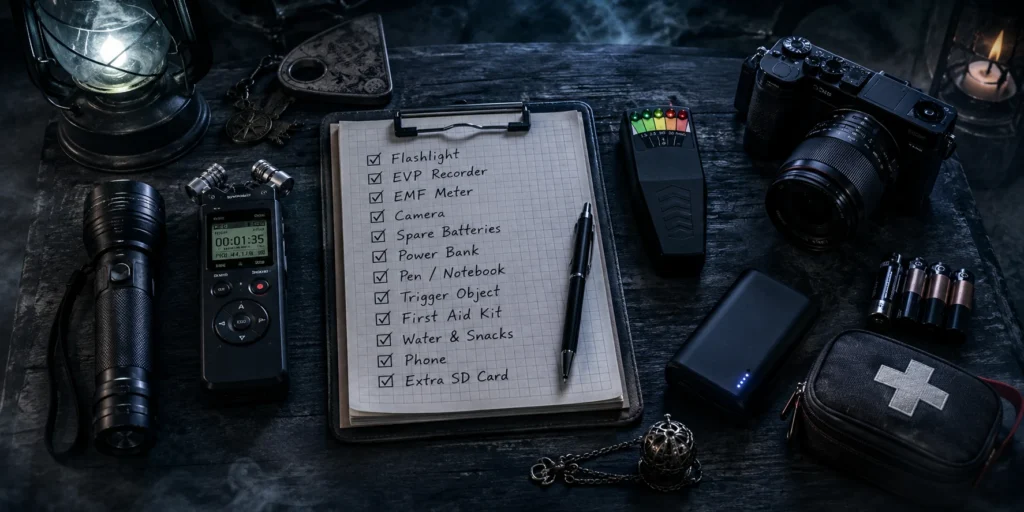
If you’re planning a supervised paranormal event, follow the operator’s requirements and use our ghost hunting equipment checklist for ordinary preparation. The most useful tools may be a notebook, sensible footwear, a charged phone and a willingness to ask what is actually known about the building.
Frequently asked questions
What is the most haunted castle in the world?
There is no evidence-based answer. The Tower of London, Leap Castle and Houska Castle are particularly well known for their legends, while other castles attract local stories that are less internationally familiar.
Can you sleep in a haunted castle?
Yes, some historic castles operate as hotels, including Ballygally Castle. Specialist paranormal visits at other properties are different from normal accommodation and require separate arrangements.
Are the ghosts at Himeji Castle real?
Okiku’s story is a famous Japanese ghost legend with several regional variations. The castle itself is genuine historical heritage; supernatural interpretations of the tale have not been established.
Can you tour Leap Castle without booking?
No. It is a privately managed family property and visits are by arrangement. Contact the owners in advance.
Does Bran Castle prove Dracula existed?
Bran Castle is a real medieval building associated in tourism with Bram Stoker’s fictional vampire. That does not make the novel’s supernatural events historical facts.
Final verdict
The world’s haunted castles offer an unusually powerful mixture of genuine heritage and stories that have endured for generations. We recommend choosing a castle first for its history, architecture and realistic access, then enjoying the haunting narratives in their proper context. For readers planning a British itinerary, the Tower of London and Edinburgh Castle are practical starting points with detailed companion articles already on Mystic Realm Blog.
Sources and visitor planning
- Historic Royal Palaces — Tower of London events
- Historic Environment Scotland — Edinburgh Castle
- Château de Brissac — opening dates and tickets
- Discover Ireland — Leap Castle
- Visit Himeji — castle details
- Bran Castle — official planning information
- National Trust for Scotland — Castle Fraser
- Predjama Castle — official operator
- Ballygally Castle Hotel — accommodation and ghost room
- Houska Castle — official seasonal opening