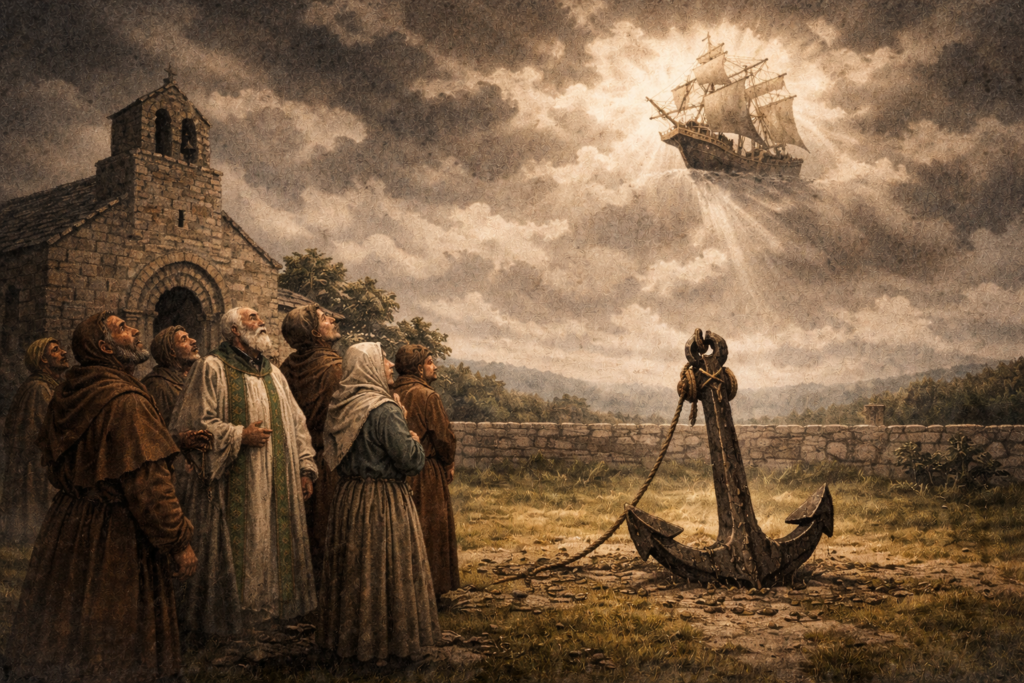



Mother Shipton’s Cave in Knaresborough, North Yorkshire, is a historic visitor attraction famous for its legendary prophetess and a real mineral-rich Petrifying Well. The cave is associated with Ursula Southeil, supposedly born in 1488, but many of the prophecies attributed to Mother Shipton were printed or invented centuries later. Visitors can see the woodland, cave and well on opening dates.
For a trip, the most important distinction is between the documented 400-year-old visitor attraction, its unusual geology and the folklore surrounding Mother Shipton. This guide explains all three, including accessibility and the latest seasonal visiting arrangements. If you enjoy northern English legends, see our haunted York guide and Pendle Hill witch trials guide.
If you enjoy visitor attractions where folklore and history overlap, browse our Haunted Places Explorer for more intriguing destinations.
Quick answer: is Mother Shipton’s Cave real and can you visit?
Yes. The cave and Petrifying Well are real natural features in a managed wooded park beside the River Nidd at Knaresborough. The attraction says paying visitors have come here since 1630, making it one of England’s oldest continuously promoted visitor destinations. That historical attraction does not prove the famous prophecies were genuine.
Who was Mother Shipton?
Mother Shipton is the name given in English folklore to a wise woman and supposed prophetess, commonly called Ursula Southeil or Ursula Southill. Later stories place her birth in a Knaresborough cave in 1488 and her life in Tudor England. However, there are no secure contemporary records of her life, so dates, relatives and individual conversations should be presented as traditional accounts, not well-established biography.
Her name appeared in printed prophecies in the seventeenth century, long after the era in which she supposedly lived. Publishers and later writers enlarged the narrative, turning the wise-woman tradition into an enduring cultural figure. A helpful historical overview is the Ephemera Society’s examination of Mother Shipton publications.
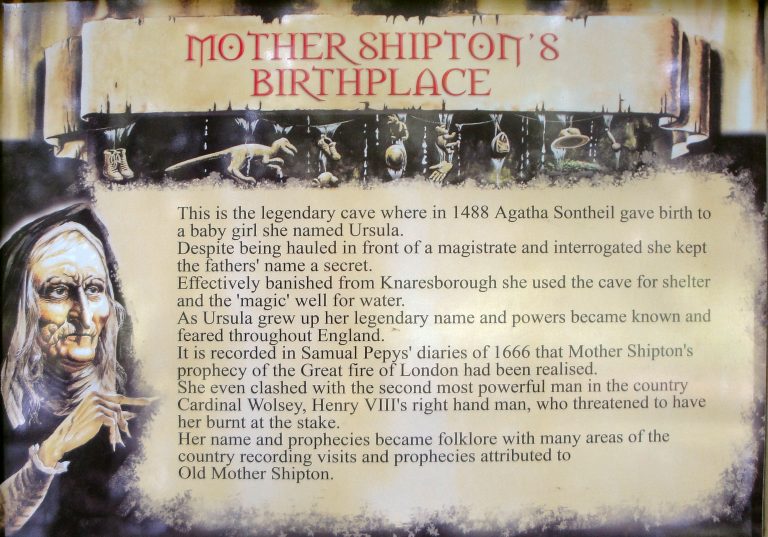
Did Mother Shipton predict the Great Fire of London?
A frequently repeated story says she foresaw the Great Fire of London in 1666, the Spanish Armada of 1588, railways, metal ships and modern communication. The problem is the date of the text: a prediction written down after an event cannot establish that someone foresaw it.
The earliest surviving Mother Shipton pamphlets date to around 1641. They are already removed from her alleged lifetime. Later editions increasingly add spectacular modern-sounding lines. There is no reliable evidence that she predicted all of these things before they occurred.
Which Mother Shipton prophecies were invented later?
Some of the best-known lines about ‘iron in the water’, rapid communications and a supposed 1881 end of the world circulated in a nineteenth-century edition. The editor Charles Hindley admitted in 1873 that he had fabricated a number of the prophecies used in his 1862 text. This is unusually direct historical evidence that at least part of the famous prophetic tradition was manufactured.
You can read about the confession in the Ephemera Society article and the historic study Mother Shipton Investigated. That does not make the Knaresborough landscape any less worth visiting; it simply changes how the stories should be interpreted.
What is the Petrifying Well, and does it really turn things to stone?
The Petrifying Well produces a real mineral-coating process, not supernatural transmutation. Calcium-carbonate-rich water trickles over objects suspended from the limestone rock face, gradually leaving a hardened deposit on their surfaces. Everyday items such as small toys and shoes can become encased in a stony crust.
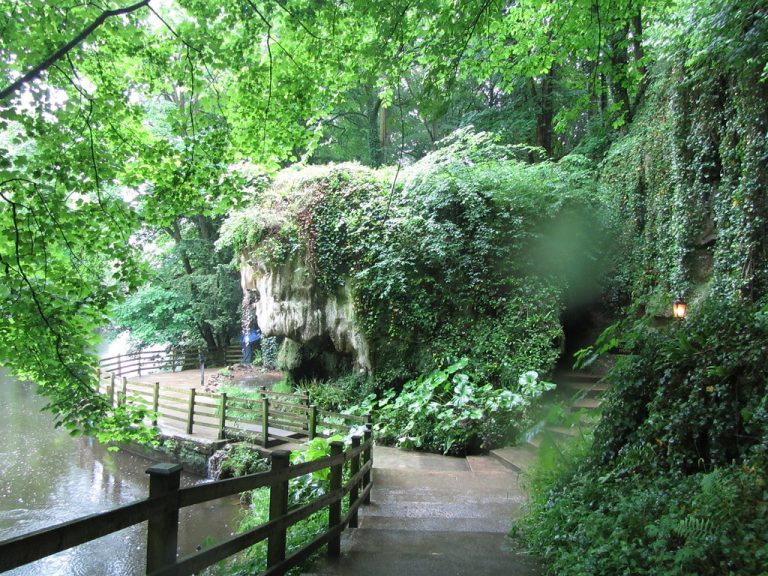
The result looks extraordinary, but it should not be confused with turning an object’s entire substance into solid rock. Mineral deposition varies by object and conditions. The park’s displays help visitors see how the process works across time.
What can you see at Mother Shipton’s Cave?
The legendary cave
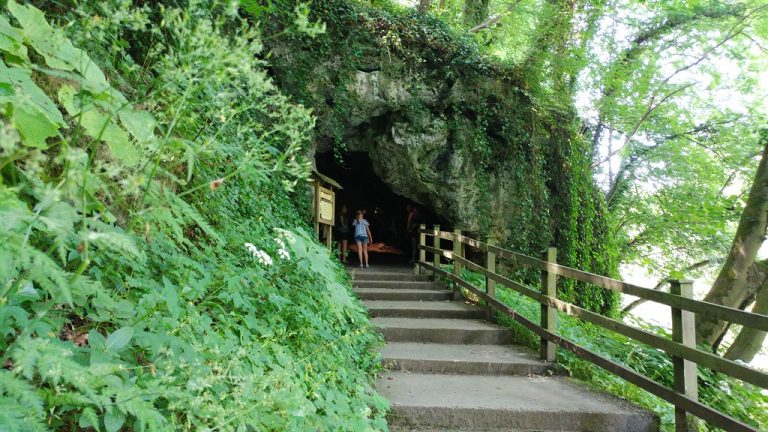
A short cave within the park marks the traditional birthplace of the seer. The site offers interpretation of her legend, but it does not provide archaeological proof that the historical Ursula Southeil was born there. Treat it as a place of cultural storytelling.
The woodland and River Nidd
The cave and well sit within a riverside woodland park of roughly one mile, giving the attraction a scenic character beyond the main displays. Walking routes, seasonal decorations and occasional family events mean it can suit visitors who are more interested in nature than the supernatural. The surrounding woodland is also a useful reminder that magical landscapes acquire different legends; our fairies guide explains fairy-ring biology and the Cottingley photograph story.
The displays and gift shop
The museum and gift shop explore the folklore, cave history and mineral-coated objects. Availability may vary during special-event opening periods, so consult the current official programme before planning a journey around any particular display.
Opening times: what’s happening in November 2026?
As of 12 November 2026, the attraction says it is temporarily closed while preparing for its Christmas programme. Its official visitor page advertises selected Magical Christmas and Winter Woodland Walk dates from 28 November 2026, weather permitting. Those sessions require advance booking.
For 2027 the operator aims to open on selected winter dates and daily from 20 March to 31 October 2027, excluding a specific June event day. Dates and prices can change and are subject to weather. Check the official calendar rather than relying on an old article or assuming every weekday is open.
How much does it cost to visit?
The venue uses group/car admission and individual pedestrian pricing that vary with peak and off-peak dates. The published 2026 rates ranged from £35 per car/group of up to five in off-peak periods to £42 in peak periods; additional individual pedestrian charges applied. These are historic 2026 figures, not a quote for a future 2027 visit. Consult current official ticket prices before booking.
Is Mother Shipton’s Cave wheelchair accessible?
No: the operator says there is currently no wheelchair access to the cave and Petrifying Well. Reaching them involves three sets of roughly 25 outdoor steps, around 75 in total. The steps have handrails, but pushchairs must be left at the foot of the steps or visitors may use a sling for young children.
The visitor information also notes that it does not have Blue Badge parking. Anyone with mobility requirements should read the official accessibility details and contact the venue before travelling. It is better to plan for the real terrain than to discover the limitation on arrival.
Can you bring a dog?
Dogs on leads are normally welcome around the woodland park, with restrictions in the playground and museum/gift shop, and assistance-dog exceptions. The seasonal Christmas experience has additional restrictions and generally does not admit pet dogs. Confirm the exact policy for the event you are attending.
How to combine the cave with a visit to Knaresborough
Allow time for the historic town and River Nidd views rather than treating the well as a five-minute attraction. A walk around Knaresborough’s public riverside paths and town centre can make a pleasant day out, though steep paths and stairs are common in the area. Avoid trying to fit the visit into a fixed itinerary if the weather is poor.
For another England location where witchcraft history intersects with travel, our Burley Witches Village guide explores Sybil Leek and the New Forest, while our haunted woods article compares forest folklore across Britain.
Frequently asked questions
Is Mother Shipton’s Cave England’s oldest tourist attraction?
The operator describes it as England’s oldest visitor attraction, with paying visitors recorded from 1630. That is a claim about the site’s tourist history, not proof of Mother Shipton’s life.
Did Mother Shipton really predict the future?
There is no convincing evidence that the famous modern prophecies were made before the events they describe. Some were openly fabricated in the nineteenth century.
What makes objects at the Petrifying Well look like stone?
Calcium-rich water leaves mineral deposits over time, coating objects with a hardened limestone-like crust.
Is it open in winter?
Only on selected dates and special programmes. Check the website for closures, weather updates and booking requirements.
Final verdict
Mother Shipton’s Cave is worth visiting for a rare combination of English folklore, riverside scenery and genuinely unusual geology. The prophecies should be read critically and the accessibility restrictions taken seriously. The best experience is to appreciate what the place really offers rather than treating later stories as authenticated predictions.