


Where are the most haunted places in York? The Golden Fleece, Treasurer’s House, the medieval Shambles, York Minster, St Mary’s Abbey and the area around Clifford’s Tower are among the city’s most atmospheric historic sites. York also has a thriving tradition of guided ghost walks, but the ghost stories themselves are folklore and reported experiences—not verified supernatural encounters.
York is one of my favourite cities to explore, particularly when the daylight fades from the snickelways and centuries of buildings seem to close in around you. Its Roman foundations, medieval streets and later social history mean there is always another story to uncover. This guide combines ten worthwhile places with actual visitor information, suggestions for guided walks and a distinction between genuine history and claims made by storytellers. If you are travelling further into North Yorkshire, our Mother Shipton’s Cave visitor guide explores Knaresborough folklore and its real Petrifying Well.
If York’s historic haunts leave you wanting to explore more, browse our Haunted Places Explorer for other locations and practical visitor information.
Affiliate disclosure: Some links on Mystic Realm Blog may earn commissions if you make a booking, at no additional cost to you. Historical sources and independent interview links are provided for editorial context.
Quick guide: ten haunted York stops
- Most famous haunted pub: the Golden Fleece, on Pavement near the Shambles.
- Best documented ghost-story heritage house: Treasurer’s House, close to the Minster.
- Best medieval atmosphere: the Shambles and York’s network of small lanes.
- Best architectural landmark: York Minster, an active cathedral with 2,000 years of history around its site.
- Best quiet ruin: St Mary’s Abbey in Museum Gardens.
- Best serious historic reflection: Clifford’s Tower, where the Jewish community suffered a massacre in 1190.
- Best professional storytelling: an organised York ghost walk with a knowledgeable local guide.
- Best deliberately theatrical experience: the York Dungeon, which uses live performers and effects rather than paranormal investigation.
1. The Golden Fleece: a haunted pub with centuries of stories
The Golden Fleece at 16 Pavement is an obvious starting point for ghost-lore fans. Its crooked interiors, timber-framed character and long association with the city’s commercial history make it a compelling setting. In my earlier guide, I called it my go-to York haunt—and it remains an especially fitting stop when exploring the old streets.

The pub’s current operator describes it as a historic establishment mentioned in archives as early as 1503 and openly celebrates its reputation for resident ghosts. That does not mean the present building or its licensed operation has remained completely unchanged since that year; York Civic Trust records a licence from 1668 and later rebuilding. “Old” and “unchanged since the Tudor period” are different claims.
One of the best-known legends involves Lady Alice Peckett, whose story appears in material displayed at the pub. Such tales are part of its identity, not proof that an apparition has been independently documented. The official Golden Fleece pub page also lists dining and a small number of ensuite guest rooms; check availability and age rules directly.
2. Treasurer’s House: Roman soldiers under the floor?
Treasurer’s House has one of York’s most famous ghost narratives: a story of Roman soldiers appearing to march through a cellar at an unexpected level below the modern floor. Its owner, the National Trust, actively discusses the reported sighting alongside other stories of figures, unusual smells and unexplained experiences.

The attraction is the relationship between the tale and the building itself. Visitors can explore rooms and learn about the house’s history, collections and former residents, then decide what to make of the stories. The Roman-soldier account is often retold in more dramatic terms than its original testimony supports, and it does not establish that ghosts exist.
The National Trust’s ghost stories page is an unusually useful primary source because it sets out the claims while also detailing its real visitor rules. The Trust does not permit paranormal research or equipment on site. During April–October visits are generally by guided tour; winter opening arrangements differ. Always check the current opening information.
3. The Shambles: medieval streets and dark alleyways
The Shambles is one of York’s most recognisable streets, with overhanging buildings and narrow passages creating an almost cinematic sense of the past. The atmosphere is largely architectural: centuries of rebuilding, timber and close-packed shopfronts have left a memorable street scene. Ghost walks often use the area as a backdrop for stories about the people who lived and traded there.
The nearby snickelways—small passages through the historic centre—offer an opportunity to understand how the medieval city functioned. Their twists and sudden changes of scale can feel disorientating in the dark, but that sensation is not evidence of a haunting. The Shambles is also a popular shopping area, so it is best approached as a working public street rather than a set reserved for ghost hunters.
If you want a perspective from people who regularly tell York’s ghost stories, read our exclusive Shadows of York Ghost Walk interview. This original Q&A is valuable because it lets a local tour team speak in its own words, rather than repeating anonymous claims found across travel websites.
4. York Minster: the history behind the legends
York Minster is a monumental Gothic cathedral built on a site with earlier Roman and Christian associations. Visitors may hear tales of ghostly figures, warnings and unexplained sounds connected with the precincts. Yet its greatest story is visible: extraordinary medieval glass, architectural engineering and centuries of religious life.

The Minster is an active place of worship, and public visits have published opening times and ticket arrangements. The official visitor planner lists sightseeing hours, services, the Undercroft Museum and tower experiences. It can close or restrict access for worship and events, so do not assume every section is available whenever the doors are open.
For visitors interested in the city’s layers, a Minster visit and an evening ghost walk make a stronger pairing than a guide that promises ghosts inside the cathedral. Respect services, photography policies and other visitors.
5. The Black Swan: old York hospitality and pub folklore
The Black Swan on Peasholme Green is another old inn frequently included in York’s ghostly discussions. Like the Golden Fleece, its appeal comes from a combination of architectural character, centuries of hospitality and stories that have been told and retold in a social setting.
Descriptions of York’s “oldest pub” vary because they may refer to the earliest building, a documented tavern, a continuous licence or an advertised tradition. Dates should therefore be attributed rather than presented as unquestionable facts. For visitors the sensible approach is to enjoy the character of the building and the stories while respecting working staff and guests.
6. The Guy Fawkes Inn: history around the Gunpowder Plot
The Guy Fawkes Inn near the Minster is associated with the birthplace and local legacy of Guy Fawkes, remembered for his involvement in the 1605 Gunpowder Plot. Connections between famous historical people and later ghost stories are common in York. What is documented is the era and the city’s relationship to its residents; apparitions and spooky encounters are separate and much harder to verify.
A visit here works well in a walk around the Minster precinct, with an opportunity to discuss the English religious tensions that shaped Fawkes’s life. The danger with this kind of site is reducing complicated history to a single dramatic ghost claim. The historical context deserves room to breathe.
7. St Mary’s Abbey and the Museum Gardens
St Mary’s Abbey has some of York’s most beautiful ruined masonry. Located within Museum Gardens, it reminds visitors of the wealth and influence of medieval religious communities before the dissolution of the monasteries. Those real events provide a meaningful background for legends about monks, shadows and voices around the ruins.

The site is ideal for daytime exploration, but it is not an invitation to wander behind barriers or visit after closing. The gardens are usually free to enter and have public access times; special events can alter those hours. Use the official York Museum Gardens website for current access.
8. Clifford’s Tower: remember the historical tragedy
Clifford’s Tower is a prominent part of York Castle, but it should not be treated as an easy backdrop for made-up horror. The site is associated with the massacre of York’s Jewish community in 1190. As documented by English Heritage, a mob attacked the community, and many people trapped inside a wooden tower died. The present stone structure was erected later in the thirteenth century.
Visitors should approach this as a place of remembrance as much as architecture. Understanding the historical violence and antisemitism involved is more important than implying that the deaths necessarily produced ghosts. The English Heritage account is essential reading if your ghost walk passes this location.
9. York Castle Museum and the Dungeon: history versus theatrical fright
York Castle Museum interprets social and prison history around the castle complex. Its reconstructed streets and collections can help visitors understand the life and labour behind the darker stories. Admission is a museum experience, not a paranormal investigation or a guarantee of access to closed historic areas.
The York Dungeon is entirely different: a live theatrical attraction combining trained actors, scenes and special effects to tell disturbing aspects of York’s past. The operator clearly explains that dark rooms, loud sounds, lighting and surprise elements form part of the show. This is an excellent choice for visitors who want designed scares, but not for those seeking a quiet, evidence-based ghost investigation.
Review the Dungeon accessibility and experience guide before booking if you are affected by loud noises, enclosed spaces or flashing lights.
10. York’s ghost walks: the stories told by local guides
One of the best ways to experience York’s darker side is with a knowledgeable storyteller. Tours vary widely, from historical narration to comedy-horror and full theatrical performances. Some follow the Shambles and Minster precincts; others favour quieter lanes, the river or old city walls.
Visit York maintains a current directory of ghost walks. Examples include the long-established Original Ghost Walk of York, the Ghost Trail of York, Deathly Dark Tours and other guides operating seasonally. Rather than claiming one is the universal “best”, compare routes, duration, group size, accessibility, age advice and the kind of storytelling you actually enjoy. If you’re comparing ghost walks in other historic English cities, our Cambridge ghost tours guide covers university legends and the differences between shared and private walks.
Our conversation with Shadows of York Ghost Walk is particularly worth exploring because it is an original Mystic Realm Blog interview with the team. It gives readers a way to hear from an actual provider, and it deserves links from this main city guide rather than an unnecessary rewrite.
A haunted York walking itinerary
Daytime: architecture, museum and city history
Begin with York Minster or Treasurer’s House when open, then wander through the Shambles and the snickelways. Take time for a pub lunch or coffee rather than rushing a checklist. In the afternoon, the Museum Gardens and St Mary’s Abbey offer an atmospheric contrast to the busy streets. If you have time, visit Clifford’s Tower and its memorial information with the respect that its history requires.
Evening: choose one ghost tour
For the evening, book one walk rather than overlapping multiple tours with similar routes. Check whether it is mainly history, theatrical storytelling or comedy, and arrive at the specified meeting point with suitable footwear. York’s narrow streets can become crowded; tours run in different weather and some attractions have age restrictions.
How to weigh up York’s haunted reputation
Old buildings, underground spaces and the stories attached to them can prompt powerful experiences. That is not in dispute. What remains unproved is that an unusual noise, shadow or unpleasant sensation must be supernatural. Changing light, acoustics, building movement, stress and the expectation of seeing a ghost are useful alternative explanations to consider.
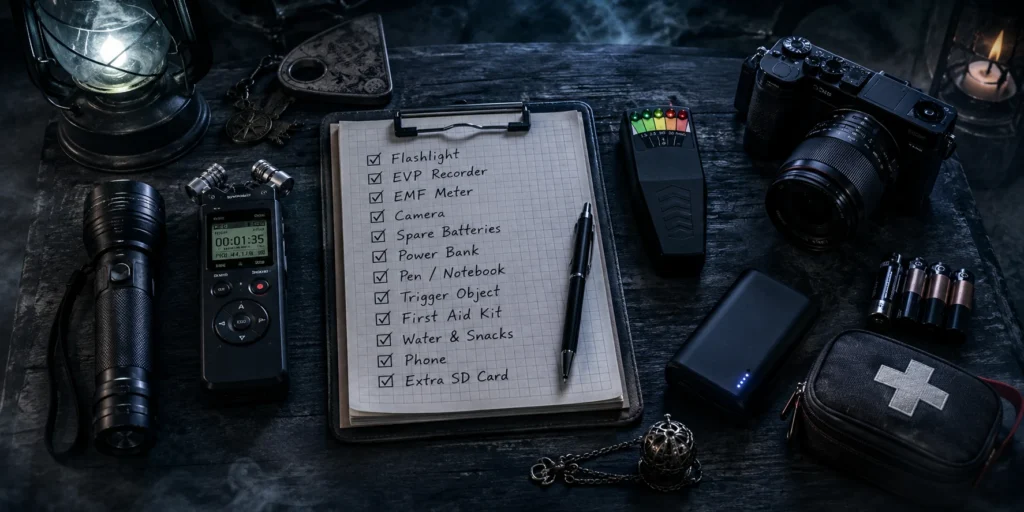
If you’re investigating reported activity, avoid claiming that a smartphone app or EMF meter can establish a spirit’s presence. Our practical ghost hunting equipment checklist explains the limits of common tools. For a wider British city trip, the Haunted Edinburgh guide offers another look at how authentic history and ghost-tour traditions overlap.
Frequently asked questions about haunted York
What is the most haunted place in York?
There is no evidence-based ranking. The Golden Fleece is strongly associated with pub ghost stories, while the National Trust discusses a particularly famous Roman-soldier account at Treasurer’s House.
Can you go ghost hunting inside Treasurer’s House?
Not as an independent investigation: the National Trust explicitly says paranormal research and equipment are not permitted. Visit during official opening arrangements.
Are there year-round ghost walks in York?
Yes. Several operators advertise regular or year-round guided walks, with additional special events around Halloween. Check each provider’s calendar and weather guidance.
Is York Dungeon a real haunted location?
The Dungeon is a designed, actor-led theatrical attraction. It can be entertaining and atmospheric, but it should not be confused with a place where paranormal phenomena have been verified.
Is haunted York suitable for children?
Many outdoor walks welcome families, but the recommended ages and intensity vary. The Dungeon and darker comedy experiences may not suit very young children. Always review individual operator guidance.
Final verdict: history gives haunted York its depth
York’s haunted appeal is not dependent on proving a ghost exists. The city offers rare historic streets, meaningful heritage sites and storytellers who bring the past to life. For first-time visitors, choose the Shambles, Treasurer’s House and a guided walk; then explore St Mary’s Abbey or the Minster for a fuller sense of the city’s history. Our original Shadows of York interview is the natural next read after this guide.