

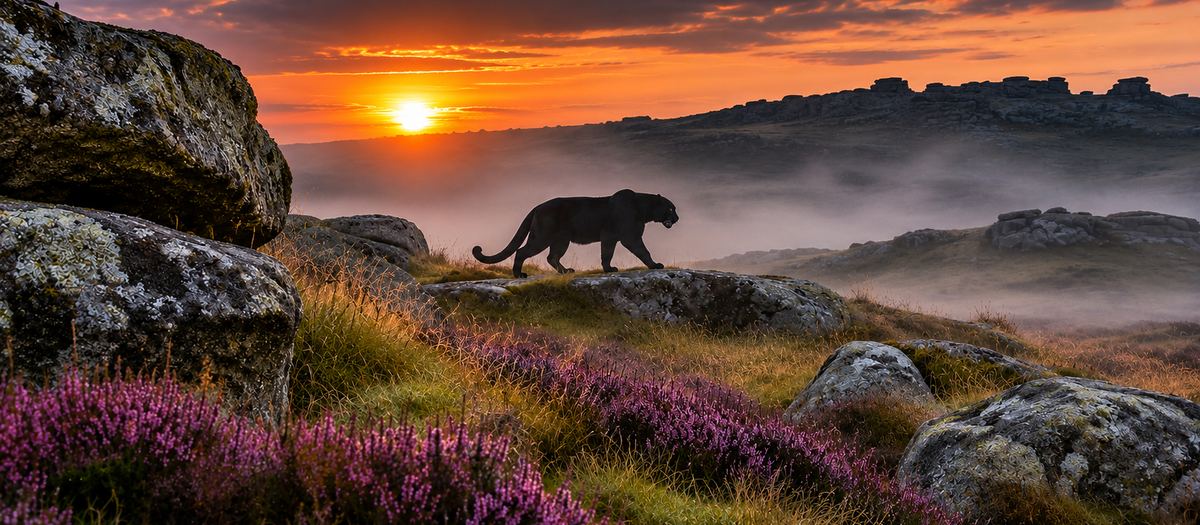
The Beast of Bodmin Moor is an alleged large black cat said to roam Cornwall’s wild moorland. Eyewitnesses have described panther-like animals, but an official investigation in 1995 found no convincing evidence that large exotic cats were killing livestock there. The legend remains part of Cornwall’s cryptozoology, alongside very different supernatural stories from nearby Bodmin Jail.
Britain’s cryptid stories also overlap with older woodland folklore. Our guest feature on Bigfoot and the Green Man explores how different traditions can shape the way mysterious creatures are imagined.
For more places linked to supernatural folklore and local history, browse our Haunted Places Explorer for mapped UK and US destinations.
This guide explains the reports, what the evidence does and does not show, and how to explore Bodmin Moor responsibly. If you want a historic stop nearby, our Jamaica Inn visitor guide covers the famous coaching inn and its haunting traditions.
Quick answer: is the Beast of Bodmin Moor real?
There is no conclusive public evidence confirming a breeding population of large exotic cats on Bodmin Moor. That does not mean every witness is dishonest or every sighting has been explained. It means reports and blurry pictures are not enough to establish the presence of a large predator. Misjudged distance, lighting, ordinary cats and mistaken identification are among the possibilities.
What is the Beast of Bodmin Moor?
The beast is usually described as a large, dark-coated feline with a long tail, moving through fields and across the open moor. Some eyewitnesses compare it to a black leopard or puma. The phrase Beast of Bodmin Moor is a popular label for a collection of sightings rather than the established name of a single identified animal.

Bodmin Moor covers a large, rugged area. A sighting at a distance can be difficult to assess without a known size reference or a clear photograph. A small animal crossing nearer to a camera may appear larger than it really is; the absence of surrounding reference points matters.
The 1995 government investigation: what did it find?
The UK Ministry of Agriculture, Fisheries and Food investigated claims of big cats on Bodmin Moor in 1995. Officials assessed reported sheep kills along with photographs, video footage and footprints. The inquiry found no field or post-mortem evidence linking investigated livestock deaths to big cats, and concluded that submitted images and tracks could be attributed to domestic cats or dogs.
This conclusion was subsequently summarised in UK parliamentary records. It was an assessment of available evidence, not proof that no exotic cat could ever pass through the area. That distinction is important: an unanswered sighting is not positive evidence of a population.
Could an escaped exotic pet explain the sightings?
One longstanding explanation is that big cats escaped from private collections or were released after changes to exotic-animal regulation. The Dangerous Wild Animals Act 1976 is often mentioned in this theory because it regulated keeping dangerous animals. There is, however, a gap between showing that private ownership existed and demonstrating that released leopards survived or reproduced on Bodmin Moor.
A big cat could theoretically travel through rural Britain, but establishing an animal’s identity requires more than a dramatic story. Strong evidence might include independently verified genetic material, a reliable clear image with size context, veterinary identification or a documented carcass. Each claim should be considered on its own evidence.
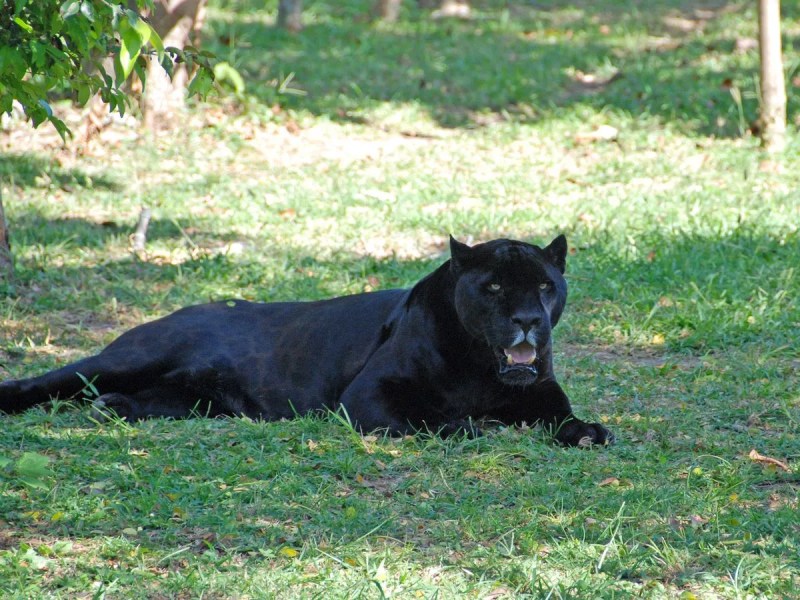
Why are black cats especially common in the legend?
Dark silhouettes are striking, and large-cat legends have circulated across Britain for decades. Panthers, however, are not a separate species: the name is commonly used for dark-coloured leopards or jaguars. A black puma is a popular description in sightings, but reliable evidence of melanistic pumas is lacking.
It is possible to be genuinely startled by an animal in poor light and still misjudge its size or species. Disturbing accounts deserve careful examination rather than ridicule or automatic acceptance.
Bodmin Jail: a different kind of haunting
Bodmin Moor’s big-cat stories often appear alongside haunted-location guides, but Bodmin Jail’s ghost legends are separate from the Beast of Bodmin. The jail dates to 1779 and is now a heritage visitor attraction. It interprets the lives of prisoners and the history of crime and punishment, including the harsh conditions associated with earlier periods.

Some visitors report strange sounds, cold sensations or apparitions. The site offers experiences themed around its history and paranormal reputation; those are commercial visitor experiences, not scientific confirmation of ghosts. Stories associated with former prisoners should be described sensitively rather than used as entertainment without context. For a comparison with a different former prison, our original Stephen Hack interview about Shepton Mallet Prison records one investigator’s personal accounts in Somerset; it is not an account of Bodmin Jail.
The official Bodmin Jail website lists daytime historical experiences, the immersive Dark Walk, guided tours and selected paranormal events. Confirm opening times, ticket types and age requirements there. For additional background on reported hauntings, see our 30 East Drive case and visitor guide.
What ghost stories are told about Bodmin Moor?
Stories of mysterious lights, figures appearing on isolated roads and uncanny sounds form part of Cornwall’s wider folklore. The dramatic landscape can help these tales endure: mist, moving shadows, animal calls and the sound of distant traffic may feel very different in darkness. A tale repeated in guidebooks is not automatically a historical event.
Our haunted woods of the UK guide looks at how woodland and isolated landscapes acquire supernatural reputations. For another landscape rich in folklore, the haunted Peak District guide explores reported hauntings against real local history.
How to explore Bodmin Moor safely
Visit in daylight if you are unfamiliar with the area. Use established public routes, check the forecast and make sure someone knows where you are going. The moor contains open land, wildlife and rough terrain; please do not approach livestock, trespass or go searching for animals at night.
If you think you have seen an unusual animal, record the date, approximate distance, direction, terrain, duration and any reference points. A clear observation log is more useful than immediately deciding the animal must be a leopard. Do not follow or attempt to trap wildlife.
A Cornish folklore itinerary: Jamaica Inn and Bodmin Jail
For a practical day out, start with the landscape itself, consider the historic Jamaica Inn at Bolventor and book Bodmin Jail separately if you want the Dark Walk or a historical tour. The inn’s museum explores smuggling and Daphne du Maurier’s fiction, while the jail focuses on penal history. Their spooky reputations are different and give useful context to the wider moorland folklore.
What did the 1995 Beast of Bodmin investigation actually examine?
The 1995 investigation by the then Ministry of Agriculture, Fisheries and Food examined photographs, video, plaster casts and reported livestock deaths. During a 1998 House of Commons discussion, a minister explained that the investigated photographs and footage were judged to show domestic cats, that some tracks were attributed to cats or dogs, and that livestock evidence did not establish attacks by an exotic big cat.
That is more specific than claiming the government proved every sighting false. The investigation did not produce firm evidence of free-living big cats in the area, but the minister also acknowledged that it would be impossible to rule out every wild big cat anywhere in Britain. The distinction matters when evaluating modern reports: absence of verified evidence is not the same as knowing exactly what every witness saw.
Claims that an official report confirmed a breeding panther population should be treated sceptically unless the report and its evidence can be produced. Readers interested in the original controversy can compare modern articles with the publicly available parliamentary record rather than relying on recycled social media summaries.
What would count as convincing evidence of a large exotic cat?
A clear photograph may be suggestive, but a reliable identification needs context such as scale, distance and the original recording. A domestic cat photographed on the crest of a hill can look unusually large when there is no visible object of known size. Blurred night-time footage can make a fox, dog or ordinary cat difficult to recognise.
More persuasive evidence could include diagnostic genetic material collected with reliable documentation, verifiable remains, a clearly identifiable animal recorded repeatedly in one area, or independently examined tracks with known scale. A photograph of a footprint alone is often insufficient to identify the species, particularly in soft ground where prints can spread.
An unusual image or print should be assessed by qualified wildlife specialists where possible. It would be irresponsible to infer that an animal is a panther simply because a story already has that label.
How could a large cat reach the British countryside?
A common suggestion is that exotic pets escaped or were released in the twentieth century, particularly following changes to dangerous-wild-animal legislation. Such an explanation is plausible as a scenario for an isolated sighting, but it is not evidence that a self-sustaining population exists on Bodmin Moor. Those are separate claims.
To establish a breeding population, evidence would be needed of multiple animals over time, not merely one large silhouette. Investigators would need to consider food availability, territory, survival, reproductive success and the likelihood that animals would leave identifiable traces.
When an explanation involves unknown releases from private collections, look for a documented case rather than assuming a widely repeated rumour is an established event.
A responsible visitor’s guide to Bodmin Moor sightings
Bodmin Moor is an exposed landscape with open moorland, grazing animals, granite tors and rapidly changing weather. The safest reason to visit is its scenery and heritage, not to track a supposed predator at night. Carry appropriate clothing, check conditions and take care around livestock, roads and uneven ground.
If you spot an unfamiliar animal, keep your distance, note its movement and location, and avoid chasing or feeding it. If it presents an immediate danger, contact the appropriate local authorities. A sighting diary can include the date, time, weather, estimated distance and a sketch made before viewing other people’s reports.
Visitors interested in local storytelling can explore our Jamaica Inn guide and the local history surrounding Bodmin Jail. A legend can enhance the experience of visiting a place without turning every sound or movement into proof of a cryptid.
Frequently asked questions
Was the Beast of Bodmin Moor proven to be a panther?
No. Large black-cat sightings have been reported, but the evidence reviewed in the official 1995 inquiry did not confirm a big-cat threat to livestock.
Did people release panthers after the 1976 animal law?
Release of exotic pets is one proposed explanation, not an established origin story for the Bodmin sightings. A specific release and surviving population have not been demonstrated.
Can I visit Bodmin Jail?
Yes. It is an operating visitor attraction with various ticketed experiences. Check the official site for admission, opening times and paranormal-event availability.
Is the Beast of Bodmin Moor a ghost?
No. The beast is normally described as a living, unidentified animal. Its stories belong primarily to cryptozoology, whereas ghost sightings at Bodmin Jail are a separate paranormal tradition.
Final verdict
The Beast of Bodmin Moor remains a fascinating British big-cat legend, but the reported sightings should not be treated as proof of an undiscovered predator. Bodmin Moor is worth exploring for its scenery and folklore, while Jamaica Inn and Bodmin Jail offer accessible ways to encounter two different aspects of Cornwall’s mysterious reputation.