

Quick verdict: Rider–Waite–Smith is our best tarot deck for most beginners because its 78-card design is well documented and easy to learn from. Modern Witch Tarot is the best contemporary alternative; The Wild Unknown is excellent for readers who like nature-inspired art; Thoth Tarot is best for experienced readers interested in esoteric symbolism; and Golden Thread Tarot suits people who prefer a minimalist visual style. These are editorial recommendations based on published information, not claims of hands-on testing.
Affiliate disclosure: Some links in this article are affiliate links. Mystic Realm Blog may earn a commission from qualifying purchases at no extra cost to you. Check the current retailer’s price, stock and edition details before ordering.
Choosing tarot cards should be about more than how mystical the packaging looks. The right deck has images you enjoy, a structure you can learn and cards you can handle comfortably. A deck that works for a ceremonial magician may overwhelm a first-time reader, while a very simple deck can leave someone wanting more detailed symbolism. Below are five established choices with their strengths, drawbacks and the type of reader each suits.
Best tarot decks compared
| Deck | Best for | Main limitation |
|---|---|---|
| Rider–Waite–Smith | Best overall beginner deck | Traditional imagery can feel dated |
| Modern Witch Tarot | Contemporary artwork | Bright, busy scenes |
| The Wild Unknown | Nature-inspired illustration | Less like standard teaching imagery |
| Crowley Thoth Tarot | Deep Hermetic symbolism | Steeper learning curve |
| Golden Thread Tarot | Minimalist graphic style | Check exact edition and guide |
The ranking considers visual readability, compatibility with beginner teaching, distinctive art styles, and documented product information. It does not reflect physical testing or a numerical score. If you have never used a deck before, read our tarot reading for beginners guide before choosing one of the more specialised sets.
1. Rider–Waite–Smith Tarot — best overall for beginners

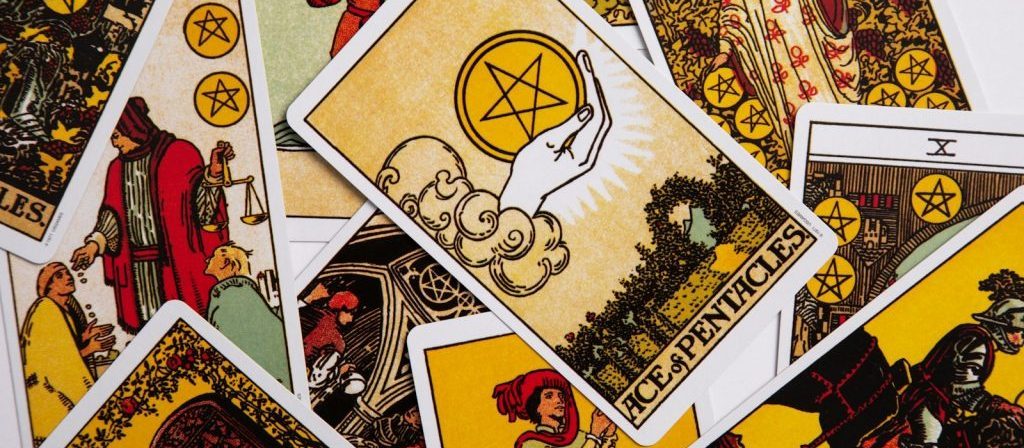
Pamela Colman Smith illustrated the iconic Rider–Waite–Smith system for a deck developed with Arthur Edward Waite in 1909. Its detailed Minor Arcana scenes are a major reason it is widely used in beginner teaching. Instead of facing only a row of suit symbols, you can look at the figures, colours and objects to help construct an interpretation.
It also offers an enormous range of compatible books and lessons. If you learn what the Eight of Pentacles represents in one standard guide, you can usually recognise the same scene in the pack. One publisher edition includes 78 cards and a booklet, although other printings vary in appearance and packaging.
Best for: First-time tarot readers and people who want a solid reference deck. Drawback: Some prefer more contemporary artwork.
2. Modern Witch Tarot — best modern alternative

Modern Witch Tarot by Lisa Sterle updates familiar Rider–Waite–Smith scenes through contemporary people, clothing and settings. Its modern representation may be more inviting to someone who finds the traditional deck remote, but its underlying visual language remains relatively easy to connect with the lessons you encounter in books and online.
A standard 78-card edition includes introductory guidance. Check that your chosen listing is the complete deck rather than a related journal, poster book or unauthorised reproduction. UK retailer information describes one standard deck and its booklet.
Best for: Beginners who want a contemporary feel. Drawback: Its vibrant imagery can feel busy.
3. The Wild Unknown Tarot — best for nature-inspired artwork

The Wild Unknown Tarot by Kim Krans uses striking animal and nature imagery. It encourages close observation and personal symbolic associations, especially if human-centred RWS scenes are not your preference. The artwork may appeal to artists, journal-keepers and readers who already enjoy working with natural imagery.
However, you may find that standard tarot guides describe different pictures, so a dedicated companion guide can be useful. Also check that you are buying the Tarot deck itself: the Wild Unknown Animal Spirit and Archetypes products belong to separate ranges.
Best for: Nature-inspired readers and art enthusiasts. Drawback: A less direct fit for generic beginner tutorials.
4. Thoth Tarot — best for advanced symbolism

The Thoth Tarot pairs the writing and symbolism of Aleister Crowley with paintings by Lady Frieda Harris. Its card images reflect a particular system of ceremonial magic, astrology and Hermetic ideas. It is an important choice for readers interested in occult art and the development of twentieth-century tarot, though it is less straightforward than RWS for a first purchase.
The deck appears in different sizes and editions, so check the actual listing. Watkins Books describes a standard-sized edition. We also have a guide to Aleister Crowley if you want the historical background.
Best for: Experienced readers drawn to intricate symbolism. Drawback: Requires more specialist study.
5. Golden Thread Tarot — best minimalist style
The Golden Thread Tarot is associated with minimalist black-and-gold imagery. It suits readers who prefer clean shapes rather than densely illustrated scenes. That simplicity also means some cards may offer fewer obvious visual clues to someone who is learning from traditional guides.
Before buying, make sure the listing names the correct deck and creator rather than a generic gold-foil tarot set. Confirm that it contains the card system and guidebook you expect. The old page showed a generic gold-themed photograph, but we could not independently verify it as this product, so we have left that photo out of the refreshed buying guide.
Best for: People who appreciate minimal graphic design. Drawback: Fewer visual prompts and variable marketplace listings.
Which tarot deck is right for your learning style?
The most useful distinction is between a deck that teaches through detailed scenes and one that invites open-ended interpretation. If you are new to tarot, cards with clear people, objects and actions can make it easier to remember a meaning. You can describe the picture and then compare it with the traditional interpretation rather than learning a long glossary before your first reading. That’s the main advantage of Rider–Waite–Smith and many decks based on it.
If you already like visual art and storytelling, The Wild Unknown may be more immediately engaging. You might describe the mood, line work and symbolism of an animal card before checking the companion guide. A Thoth deck is a different challenge: its detailed correspondences can reward readers who want to research Hermetic and astrological ideas. Minimalist designs may appeal aesthetically but can require more interpretation from fewer visual cues.
| Reader | Good first option | Why it suits |
|---|---|---|
| Complete beginner | Rider–Waite–Smith | Illustrated scenes and abundant teaching support |
| Modern-style beginner | Modern Witch Tarot | Contemporary artwork with familiar card structures |
| Nature enthusiast | The Wild Unknown Tarot | Animal imagery and visual interpretation |
| Ceremonial-magic reader | Thoth Tarot | Extensive esoteric symbolism to study |
| Minimalist art lover | Golden Thread Tarot | Simplified graphic presentation |
Rider–Waite–Smith vs Marseille vs Thoth: what changes?
Rider–Waite–Smith, Marseille and Thoth are three commonly discussed approaches to tarot imagery. Many historical Marseille-style decks use numbered suit cards with repeated symbols rather than the fully illustrated scenes popularised by Pamela Colman Smith. This can be rewarding once you understand numbers, suits and context, but some beginners find it harder than describing a picture.
Thoth Tarot has its own set of titles, visual motifs and esoteric correspondences, whereas Rider–Waite–Smith is the familiar reference point for a large portion of modern beginner instruction. The distinction matters when buying a companion book. A guide with card-by-card explanations for one system may not match the precise art or names in another. Check the book’s intended deck system rather than assuming every tarot manual is interchangeable.
How do tarot decks differ in size, material and guidebooks?
A full-size deck is often easiest for inspecting detailed artwork, but very large cards can be awkward to shuffle or carry. Smaller decks are more portable, though tiny writing and symbols can reduce readability. A satin or matte finish can feel different when handling the cards, but preferences vary and cannot be established from a listing title alone. Look for photographed examples in someone’s hands where possible.
Guidebooks also vary. Some decks include only a folded keyword leaflet, while others come with a separate book containing extended meanings and spreads. The number of pages alone is not a measure of quality, but clear definitions, full coverage of all 78 cards and practical examples are useful. For beginners, spending a little more on a genuinely informative guide may be more worthwhile than paying for a decorative box or gilt edges.
A simple three-card reading to try with any of these decks
Choose a question you can think about constructively, such as “What could help me approach this project more clearly?” Decide on the positions situation, possible action and what to review before drawing. Shuffle, place three cards face up and describe what is actually visible in each. Then compare your notes with the meanings in the deck’s guidebook and write down one real-world step the exercise prompts.
This is a reflective activity, not a verified method of predicting an outcome. The same image may feel different to two readers, and a card should not override practical information. If a card worries you, consider how its symbolism is used metaphorically rather than assuming it predicts harm. Our beginner reading guide includes further examples and advice on keeping an interpretation journal.
Can you avoid counterfeit or mislabelled tarot decks?
A low-price listing is not automatically counterfeit, but some marketplace listings use original artists’ images on unofficial copies. Check for a publisher or creator named in the description, a clear photo of the box, the number of cards and whether the guidebook expected for that edition is included. Compare the product with its official publisher information where available. If the listing says “oracle” while showing a tarot cover, check carefully before buying.
Be especially cautious with very similar titles: “golden tarot”, “gold foil tarot” and “Golden Thread Tarot” do not necessarily identify the same artwork or creators. Likewise, Kim Krans’ Animal Spirit deck and The Wild Unknown Tarot are separate products. If you care about supporting the illustrator, an authorised edition from a credible retailer is the safer choice.
What matters when buying tarot cards in the UK?
Check whether a UK seller actually stocks the edition you want, because international listings may have shipping charges or different booklets. Compare the full delivered price, returns terms and packaging. A deck with an impressive discount can be less attractive once postage is added. If you’re buying a gift, consider a retailer that provides straightforward returns in case the recipient already owns the deck.
For small hands or readers with limited grip, a smaller or more flexible deck may be useful; for those who struggle with fine print, clearer and larger cards may be preferable. Accessibility can matter more than how beautiful a product looks in a promotional photograph. When possible, use an in-store example or a video showing the cards being handled, rather than assuming the photographs reveal their physical feel.
Should you buy a tarot deck or an oracle deck?
A traditional tarot pack follows a recognisable structure: 22 Major Arcana and 56 Minor Arcana, usually divided into four suits. Oracle decks do not have to follow that structure. Both can be enjoyed for reflection and symbolic reading, but a course teaching the conventional tarot card system won’t necessarily apply to a 40-card oracle product. If your goal is to learn standard tarot, confirm the 78-card structure before purchasing.
You do not need to buy a deck because it is described as “psychic”, “energised” or “ancient”. Those are marketing claims rather than evidence that one product has unusual powers. Focus on artwork, legibility, authenticity and whether the deck comes with useful instructions. A good deck is one you will actually learn from and enjoy using.
How to choose a deck before buying
Check how much time you want to spend learning the system. A beginner should look for 78 cards, illustrated numbered cards, a readable guidebook and images that connect clearly with explanations. Experienced readers may value unusual symbolism or artistic choices. Size also matters: large cards are beautiful but can be uncomfortable to shuffle. A standard deck is often more practical for regular practice.
In the UK, compare delivery costs, returns and seller credibility as well as price. Counterfeits can include unauthorised artwork, poor printing or a missing guidebook. Cross-check the publisher’s details before ordering. There is no need to buy several decks immediately, and a more expensive deck has not been shown to provide better supernatural predictions.
Can you learn tarot without buying an expensive deck?
Yes. A basic deck and a notebook are enough, and you can study card meanings through books before purchasing a pack. Start with a single card, describe the picture and consider what it suggests about a reflective question. Then compare it with a guidebook and write down what you learnt. This builds familiarity without turning every card into a prediction or a test of psychic power.
Tarot in the wider esoteric tradition
Tarot is used by some modern witches, but it is not a requirement for practising witchcraft and has its own European playing-card history. Our Witchcraft for Beginners guide explains how contemporary practitioners combine tools, symbols and seasonal customs in different ways. If you prefer to explore symbolism without claiming a supernatural prediction, compare tarot with the history of scrying, another divination tradition.
The Thoth deck’s dense imagery makes more sense when you know the later Western occult context. Read our Hermes Trismegistus and Hermeticism article for the history of associated philosophy, and the occult symbols guide for a reminder that similar images can mean different things across traditions. Neither resource shows that the cards predict events; they provide historical and interpretive context.
If you want to experiment with keeping records of impressions instead of relying on memory, our psychic-abilities guide describes simple journals and fair ways to assess guesses. The same record-keeping approach can make a reflective tarot practice more useful, even if you never treat it as evidence of paranormal perception.
Frequently asked questions
What is the best tarot deck for beginners?
The Rider–Waite–Smith is a strong first choice because its 78 illustrated cards are widely taught. Modern Witch Tarot is a good alternative if you prefer updated artwork.
Is the Thoth deck suitable for a first reading?
It is possible, but its symbolism is more specialised. Beginners may find the standard Rider–Waite–Smith approach easier to follow.
Is the Wild Unknown Tarot different from the Animal Spirit deck?
Yes. They are separate products, with different structures and learning material. Check the exact name before buying.
Is it unlucky to purchase your own tarot cards?
No. The idea that a first deck must be gifted is a tradition in some communities, not a universal rule.
Do tarot cards predict the future?
There is no reliable scientific evidence that tarot can forecast events. Many readers find the imagery useful for reflection and storytelling, but important decisions need real-world evidence.
Final verdict: choose a deck you’ll want to use
The Rider–Waite–Smith is our best all-round recommendation, while Modern Witch offers a contemporary adaptation. Wild Unknown suits nature lovers, Thoth is ideal for people who enjoy serious esoteric study, and Golden Thread offers a minimalist visual style. Verify the edition, then spend time learning your chosen deck rather than collecting more. For step-by-step guidance, read Tarot Reading for Beginners.