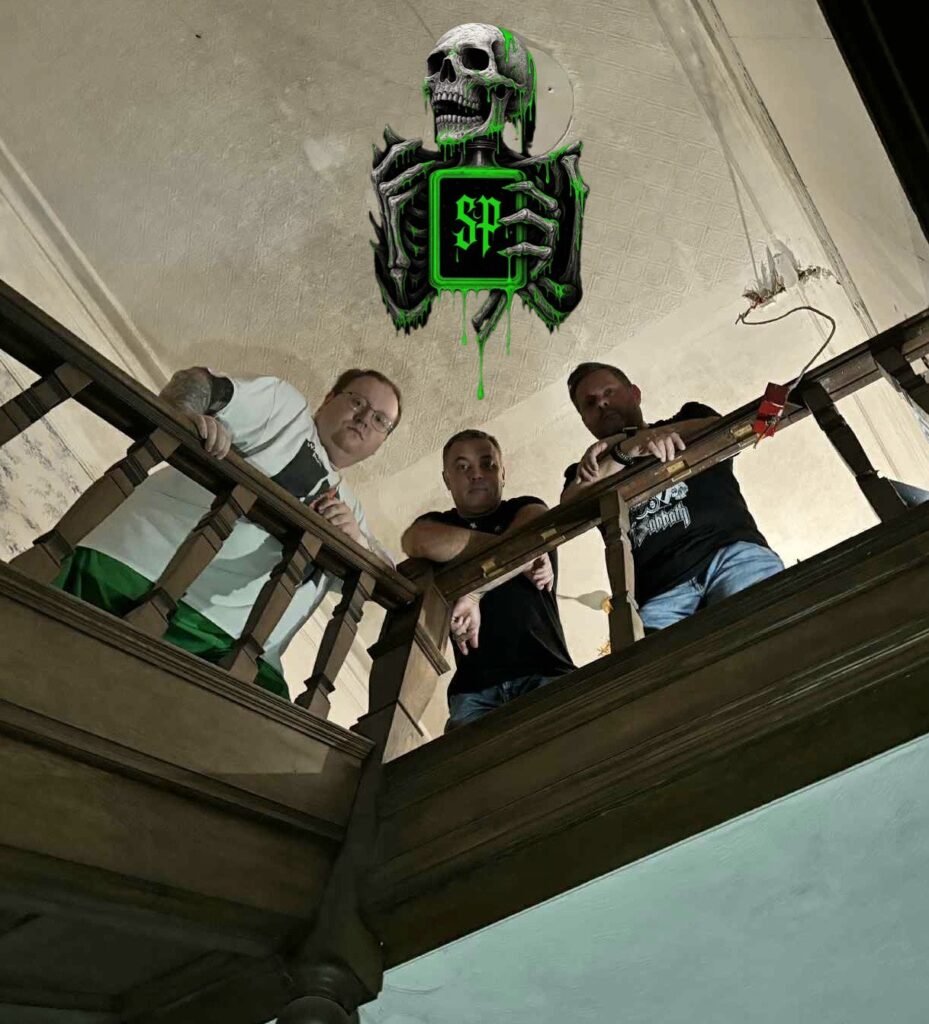


Are there ghost tours in Chester? Yes. Chester Ghost Tours offers guided night-time walks through this historic walled city, with stories drawn from its Roman past, medieval streets and later history. However, the Dead Good Ghost Tour featured in the original version of this article has permanently closed, according to its own website. This updated guide explains the current alternatives rather than sending visitors to a tour they can no longer attend.
Chester has an unusual setting for ghost stories. Its streets sit above the remains of the Roman fortress of Deva; the famous two-level Rows add shadows and hidden corners, while surviving city walls create a route through centuries of history. You can enjoy the architecture by day and hear tales from a local guide after dark. That blend of historical context and atmosphere is the real appeal—not any guarantee of a supernatural encounter.
Looking for haunted history beyond Chester’s organised walks? Our Haunted Places Explorer maps other notable locations with further reading.
Affiliate disclosure: Mystic Realm Blog may earn commissions from selected booking links where clearly marked. Current options in this guide primarily link to official visitor and operator information; we will complete a separate affiliate review when the wider Ghost Travel section has been refreshed.
Quick guide to ghost tours in Chester
- Best current walking tour: Chester Ghost Tours, listed by Visit Chester & Cheshire. It visits old streets and evocative sites with a local storyteller.
- Former Dead Good Ghost Tour: permanently closed; do not book through outdated affiliate or event pages.
- Best daytime preparation: Chester city walls, the Rows, the cathedral precinct and the Roman amphitheatre.
- Best for families: check the ghost-tour operator’s current age and accessibility advice, since outdoor routes and storytelling intensity vary.
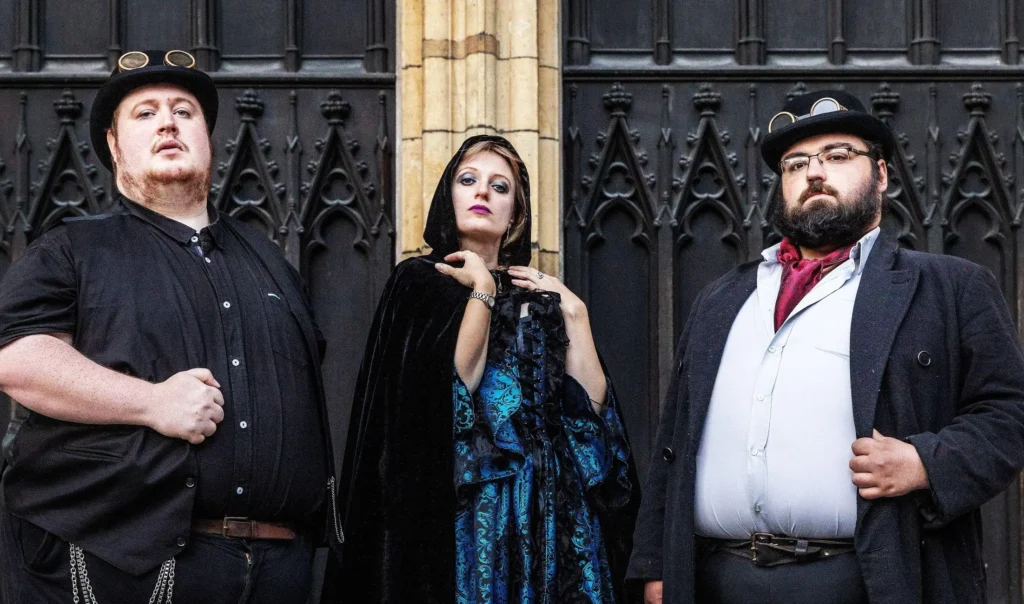
- Best companion article: our exclusive Shadows of York Ghost Walk interview offers a local guide team’s own perspective on how haunted-city stories are presented.
Important update: the Dead Good Ghost Tour has closed
The original Mystic Realm Blog article recommended The Dead Good Ghost Tour, a lively, immersive experience promoted with its gravedigger characters Dig and Dug. Historical listings described a theatrical 90-minute walk beginning near the Pied Bull on Northgate Street, with scripted scares and humour. It was an appealing option for visitors seeking entertainment rather than a conventional historical tour.
The problem is that its official homepage now states: “This tour is now permanently closed.” There is no reason to send readers to an old booking link or list its previous Friday departure as current information. We have therefore removed the obsolete booking promotion from the main recommendation. You can see the official closure announcement directly.
This is a good example of why a historical ghost-tour article needs more than fresh wording. Booking intent depends on accurate live operator information. A visitor who searches “ghost tours in Chester” should discover experiences they can still attend, not discover that a paid ticket or meeting point belongs to a discontinued business.
Chester Ghost Tours: a current option
Chester Ghost Tours is a longstanding local walking-tour operator, described by Visit Chester & Cheshire as having explored the city’s supposedly haunted history for more than 40 years. Tours typically use the old streets, the Rows and other atmospheric locations to discuss stories from Chester’s past. The guide-led format focuses on narrative rather than access to haunted private rooms.
Visit Chester & Cheshire currently lists a 7.30 pm departure from outside Chester Town Hall on Northgate Street, postcode CH1 2HQ. It also publishes a seasonally varying programme, with more dates in the busier summer and autumn months. Since operators can adjust calendars, confirm your exact tour date, starting point, price and accessibility information before travelling.
Use the official regional visitor listing and the operator’s current booking details. If you’re travelling for a special evening, it’s worth checking whether a private tour or seasonal event is offered rather than relying on a guide published several years earlier.
Why does Chester have such a strong ghost-story tradition?
Chester is unusual because 2,000 years of urban life remain visible in a relatively compact area. Roman fortifications, medieval shops, churches and later Georgian and Victorian buildings stand within or near the original walls. Buildings have been repaired and reused many times, which encourages stories about former inhabitants and unexplained incidents.
The ghostly element is a mixture of folklore, reported sensations and deliberate performance. Visitors may hear about figures in historic clothing, sudden cold spots, disembodied footsteps or spectral soldiers. These reports are worth examining as stories attached to place, but they are not confirmed paranormal events. The real history provides the context that makes the tales memorable.
The following stops are worth exploring whether or not your chosen ghost walk actually passes them. A public heritage site does not automatically form part of every operator’s itinerary, so never assume your ticket includes access.
1. Chester’s Rows: medieval galleries and hidden corners
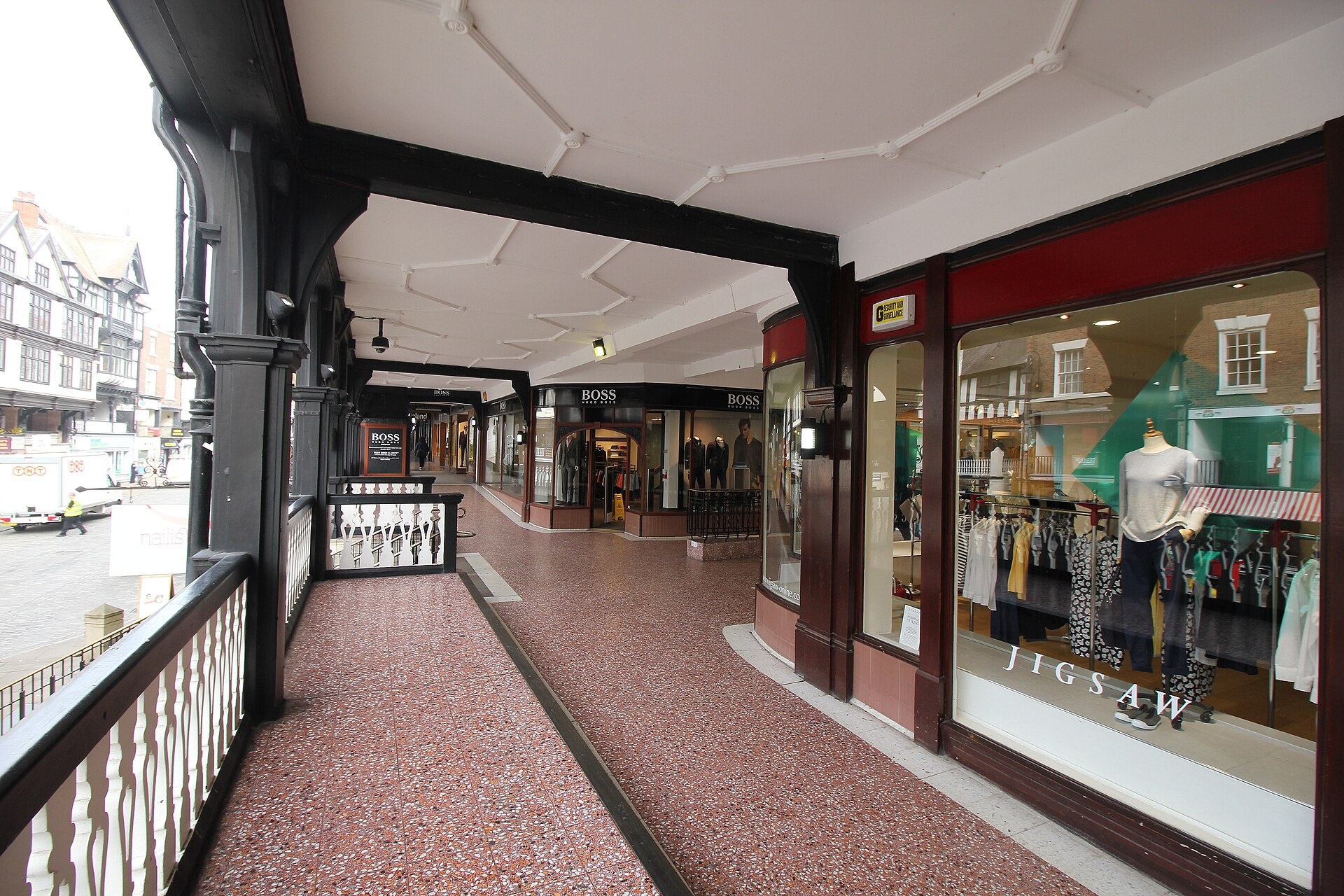
Chester’s two-tier Rows are the defining feature of its old shopping streets. Covered galleries run above street-level shops on Bridge Street, Watergate Street, Eastgate Street and sections of Northgate Street, in a distinctive arrangement dating back at least to the late thirteenth century. Their precise origins remain debated, despite several theories linking them to constrained urban space and the surviving Roman layout.
During daylight, the Rows are busy with cafés, shops and visitors. On an evening walk, their covered upper levels can seem quieter and more mysterious. They are an excellent setting for stories because they make the city feel physically layered. However, their architectural mystery is real; a ghostly figure supposedly glimpsed in a gallery is a later interpretive claim.
Visit Chester’s history of the Rows explains that the galleries probably developed in the late 1200s and traces the different trades that once occupied their sections. It is a useful starting point if you want to understand the city beyond the ghost stories.
2. The city walls and Chester’s Roman past
Chester began as the Roman fortress of Deva Victrix. Its strategic location and subsequent survival made it a major centre through the medieval period and beyond. The city walls are among Britain’s most complete, and their elevated path gives glimpses into the ancient street pattern and surviving historic buildings.
Legends of Roman soldiers are a familiar part of British ghost lore, and Chester’s Roman history makes the idea particularly tempting. But reported marching figures or footsteps are not independently verified evidence of ancient soldiers. Their significance is mainly as stories about a place where a Roman military community really lived.
The wall walk is free in ordinary circumstances, although sections may close for maintenance or safety. A full circuit is approximately two miles and requires using steps and crossing busy areas. During evening ghost tours, your operator may remain on street level rather than taking the entire circuit.
3. Chester Cathedral: a historic sacred space
Chester Cathedral stands on a site associated with many centuries of religious life. The building grew and changed across different periods, preserving elements of medieval architecture, cloisters and later restoration. Like other major churches, it attracts haunting stories involving shadowy figures or voices, often amplified by the atmosphere of ancient stone interiors.
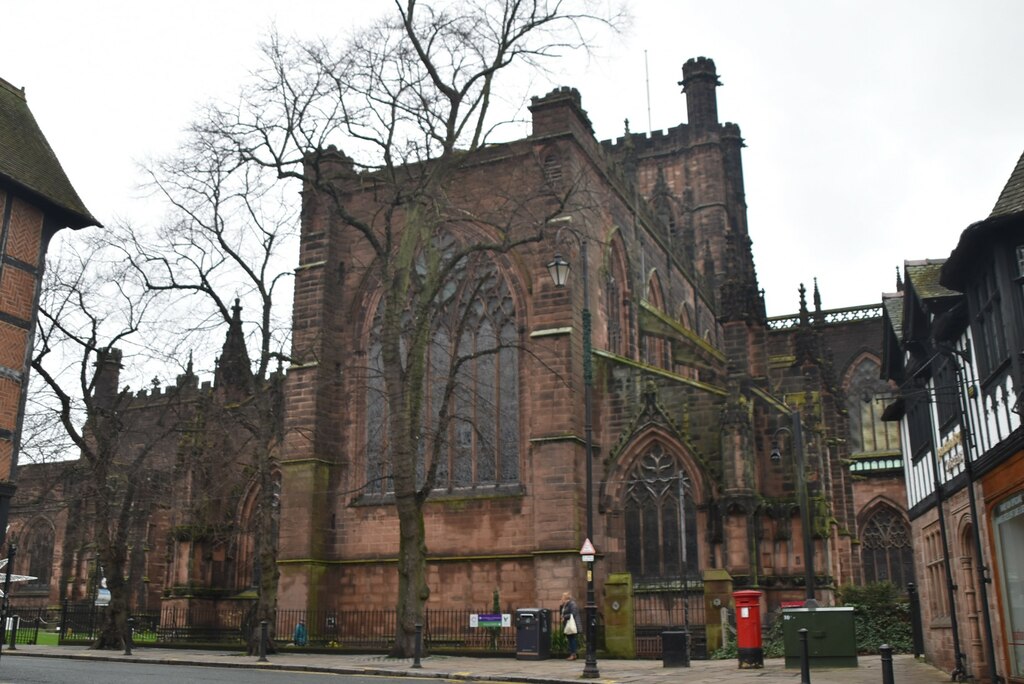
It is first and foremost an active cathedral, not a paranormal attraction. Its regular opening arrangements and worship schedule should be respected. Guided access, special events and photography rules may change, so consult the cathedral’s official website before planning a specific visit.
For a daytime introduction to the city, the cathedral pairs well with the Rows and the nearby Town Hall. That makes it a useful stop before a ghost tour, even if your chosen evening walk does not enter the building.
4. The Roman amphitheatre: real ancient drama
Chester’s Roman amphitheatre was among the largest in Roman Britain. Archaeological remains can be viewed near the centre, providing a tangible reminder of public spectacle, military life and the city’s original settlement. Because amphitheatres are associated with combat and punishment in popular culture, ghost legends often use them as easy shorthand for tragedy.
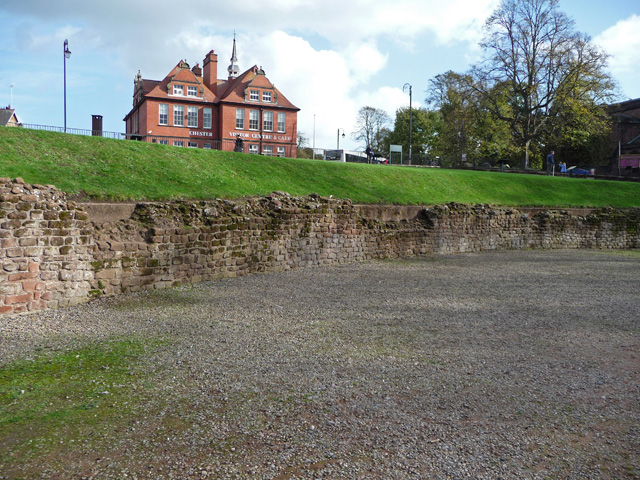
Not every story involving gladiators can be verified for this particular site. The archaeology can tell us about the amphitheatre’s form and use; it cannot confirm every dramatic episode from modern tour scripts. That distinction matters for responsible paranormal travel writing.
The amphitheatre can be appreciated as part of a broader heritage walk. For current visitor details, consult English Heritage’s Chester Roman Amphitheatre page. As with the city walls, a ghost-tour booking does not imply exclusive access to archaeological areas.
5. The Eastgate Clock and the city’s changing skyline
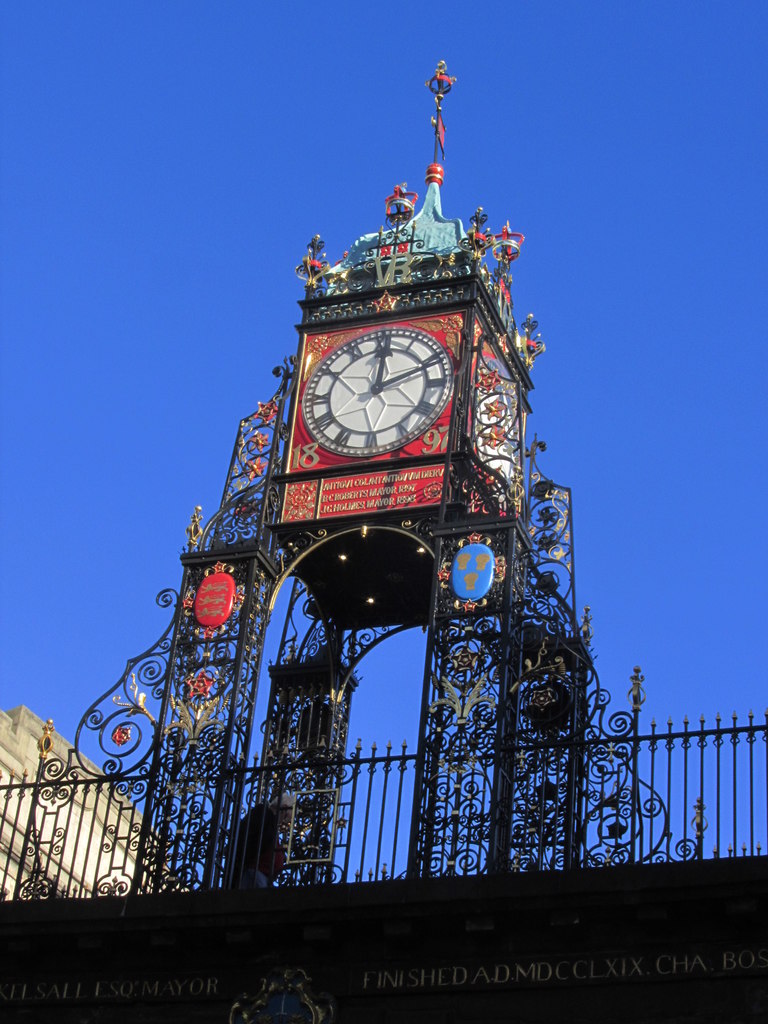
The Eastgate Clock stands above a historic gateway on the line of the Roman and medieval walls. Its distinctive Victorian appearance is one of Chester’s most photographed sights. The surrounding streets offer a natural place for guides to discuss changing local history, even when the clock itself is not associated with one definitive haunting story.
For visitors planning photographs, the area looks different by daylight and after dark, with shopfronts and pedestrian activity creating changing perspectives. Be mindful of cyclists, steps and crowded pavements if stopping for pictures or listening to a guide.
6. Old inns, courtyards and the character of Northgate Street
Ghost-tour storytelling thrives around old inns because they combine private rooms, generations of travellers and the social tradition of sharing unusual experiences. Chester’s historic pubs and courtyards are no exception, but it is important not to label a business “genuinely haunted” merely because an old guide or anonymous review says so.
Northgate Street is particularly useful as a starting area, with historic architecture close to the Town Hall. Ask your guide which stories come from documented local history and which are folklore. A good storyteller should welcome interest in the distinction, even if the performance itself is deliberately chilling.
How to choose the right Chester ghost tour
- For historical storytelling: choose a conventional city-centre ghost walk from a current operator such as Chester Ghost Tours.
- For theatrical scares: seek a specifically advertised performance or Halloween attraction; the former Dead Good Ghost Tour is no longer an option.
- For families: check the minimum recommended age, language, content and route length.
- For accessibility: enquire about cobbles, stairs, slopes, standing time and the operator’s alternative route if needed.
- For photography: ask before using tripods or flash, especially around hospitality venues and private courtyards.
A suggested one-day haunted Chester itinerary
In the morning, walk part of the city walls and explore the Roman amphitheatre. Spend some time at Chester Cathedral when open, then stroll the Rows and old shopping streets. In the afternoon, visit a museum or pause for a meal rather than trying to fit in every heritage attraction. At night, join a properly booked walking tour starting from the Town Hall if that is the meeting point given for your session.
This approach gives the stories context: you will understand the city’s medieval galleries and Roman past before hearing how later guides attached supernatural folklore to them. It is also a practical way to avoid rushing through busy heritage streets after dark.
How does Chester compare with York and Liverpool?
Chester’s biggest strength is its compactness and Roman-medieval layers. York is famous for its snickelways, timber-framed streets and longstanding ghost-walk tradition; Liverpool combines Georgian architecture with cemeteries and very different industrial heritage. The places should feel distinct, not like interchangeable citywide “top ten ghosts” articles. Cambridge offers a different university-centred setting, explored in our Cambridge ghost tours guide, including how to choose a shared or private walk.
If Chester makes you curious about the storytelling side of the business, our original Shadows of York Ghost Walk interview lets a local operator speak in its own words. You can also compare our Haunted York destination guide and Haunted Liverpool guide.
Frequently asked questions
Are there still ghost walks running in Chester?
Yes. Chester Ghost Tours is currently listed by the official regional visitor guide. Exact departures and booking details vary, so confirm your preferred date directly.
Is the Dead Good Ghost Tour still operating?
No. Its official website states it is permanently closed, so old booking pages should not be treated as valid.
Where do Chester Ghost Tours meet?
The regional visitor listing gives Chester Town Hall on Northgate Street, postcode CH1 2HQ, typically at 7.30 pm. Always follow the meeting point printed on your ticket.
How long is a Chester ghost tour?
Walking tours are commonly around 90 minutes, but route and operator schedules vary. Wear comfortable shoes and prepare for weather exposure.
Can children join Chester ghost walks?
Many tours are family-friendly, but themes and scare levels differ. Ask the organiser about their specific age recommendations.
Are Chester’s ghost stories true?
Some settings and historical events are well documented, while alleged apparitions and strange experiences remain unverified. Enjoy them as folklore unless independent evidence exists.
Final verdict: historic Chester is worth the walk
Chester’s powerful appeal is its layered streets and visible history. A well-researched ghost walk can make those places memorable without relying on invented claims. The sensible choice is to book a current, verified operator and treat the discontinued Dead Good Ghost Tour as part of the city’s past entertainment scene, not an active recommendation.
For another walk focused on urban folklore, compare the current operator details in our Bath Ghost Tour guide; it explains the difference between public evening walks and private bookings. You can also compare Cardiff’s dark-history walks, which place city-centre folklore alongside Castle history and changing tour schedules.