

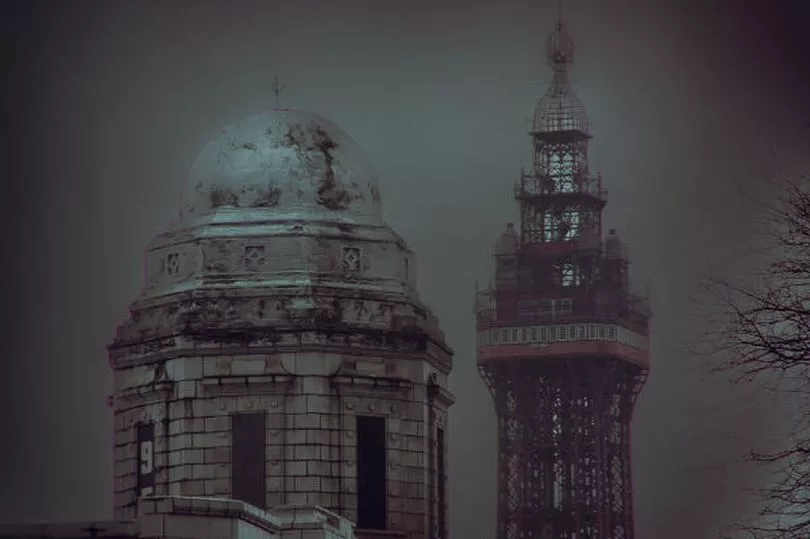
What are the most haunted places in Blackpool? Blackpool’s Grand Theatre, Pleasure Beach Ghost Train, Tower Ballroom and Winter Gardens are among its best-known settings for supernatural tales. The town also has historic piers, a cemetery and nearby Lytham Hall, all of which can be explored through a mixture of heritage visits and local ghost-story tours. The legends are part of Blackpool’s folklore; they are not scientific evidence that these places contain spirits.
Planning more eerie visits around Britain? Our guide to finding haunted places and organised ghost tours offers useful research tips before you travel.
Planning more spooky days out after Blackpool? Browse our Haunted Places Explorer for other historic sites and related articles.
Blackpool is famous for lights, entertainment, trams and its huge seaside attractions. That image can obscure the darker stories attached to the resort’s old theatres and performance venues. A good haunted Blackpool guide needs to distinguish three things: documented local history, alleged ghost sightings and deliberately scary attractions designed for fun. This expanded list provides all three and explains what visitors can reasonably expect at each location.
Affiliate disclosure: Mystic Realm Blog may earn a commission through qualifying bookings. We’ll conduct a separate GetYourGuide review later; meanwhile, official venue and operator pages are the recommended source for current information.
Quick picks: Blackpool’s darker side
- Best theatre ghost tradition: the Grand Theatre and the tale of Charlie.
- Best spooky amusement ride: Pleasure Beach’s original Ghost Train, with the legend of a former worker called Cloggy.
- Best grand historic setting: the Tower Ballroom and Winter Gardens.
- Best deliberately frightening attraction: Blackpool Tower Dungeon, using actors and effects rather than paranormal investigation.
- Best local guided storytelling: a scheduled Blackpool ghost walk, when dates are available.
- Best quieter historic day trip: Lytham Hall, outside central Blackpool.
1. Blackpool Grand Theatre: Charlie and the empty auditorium
The Grand Theatre opened in 1894 and was designed by the celebrated architect Frank Matcham. Its richly decorated Victorian interior has hosted generations of performers and audiences. Old theatres are effective settings for stories about figures glimpsed in empty seats, footsteps on a silent stage and sounds after the audience has gone home.
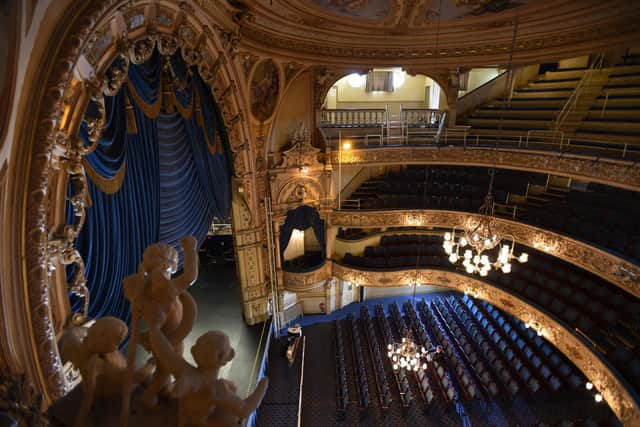
The venue itself publishes stories about a figure known as Charlie, who is said to haunt the upper circle. The legend connects him with unrequited love and a tragic fall, followed by reports of taps on the shoulder, moving seats and unexplained sounds. Those are elements of local theatre folklore, not proof that an actual person died in the precise way the legend describes.
The theatre’s Haunted Lancashire article records the tradition, while its talks and tours page lists heritage visits and occasional seasonal events. Check the calendar rather than promising a permanent ghost hunt, and respect that the building is a working performance venue.
2. Blackpool Pleasure Beach Ghost Train: Cloggy’s legend
Blackpool Pleasure Beach has a special place in the history of frightening amusements. Its Ghost Train opened in 1930 and is celebrated as the world’s first ride given that name. The attraction uses deliberately designed effects, monsters, darkness and sudden surprises to provide an entertaining scare.
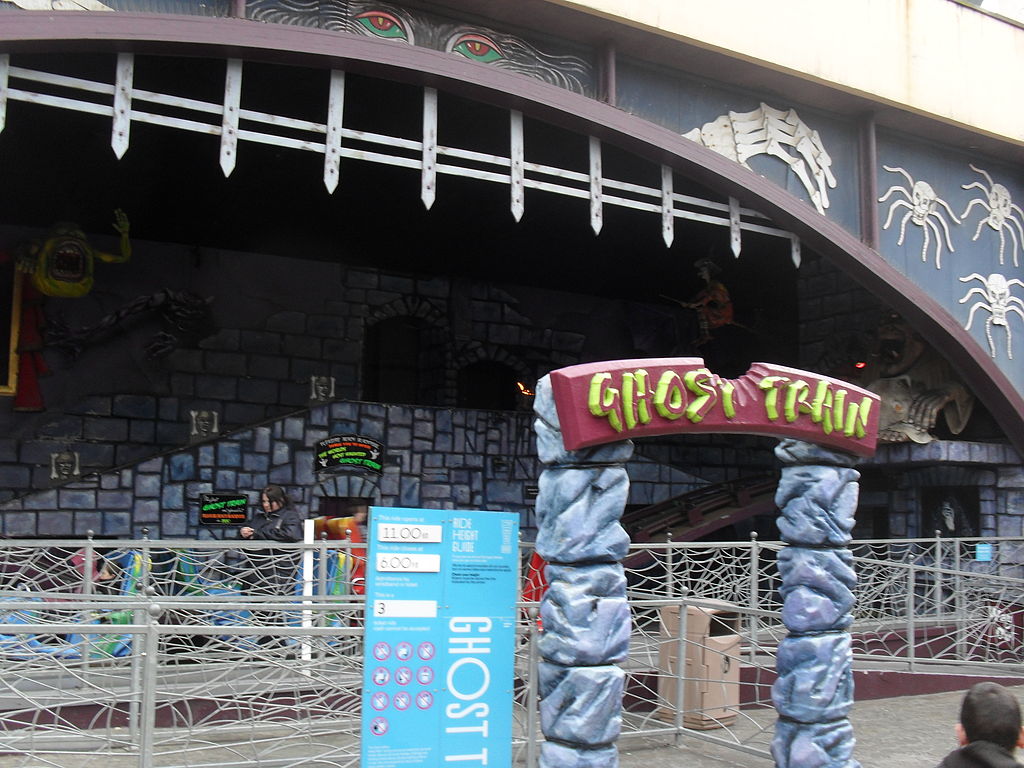
The ride also has a more traditional haunting story. According to the resort’s own marketing, a former worker nicknamed “Cloggy” is said to haunt the attraction. Visitors should distinguish the rumoured worker’s ghost from the dozens of mechanical and lighting effects intentionally installed inside the ride. A sinister sound or moving figure is far more likely to be part of the show than evidence of a genuine encounter.
The official Pleasure Beach ride directory lists the Ghost Train among its dark rides. Access requires the appropriate park or ride ticket, and operating days can be seasonal. Never assume a winter date has the same schedule as an August weekend.
3. Blackpool Tower Ballroom: elegance and ghostly whispers
The Tower Ballroom is one of the seaside resort’s great historic interiors. Its soaring ceiling, polished dance floor and celebrated Wurlitzer organ have made it a destination for dancers and sightseers. Stories of faint music, figures on the balcony and unexplained sensations are often attached to this kind of grand entertainment space.
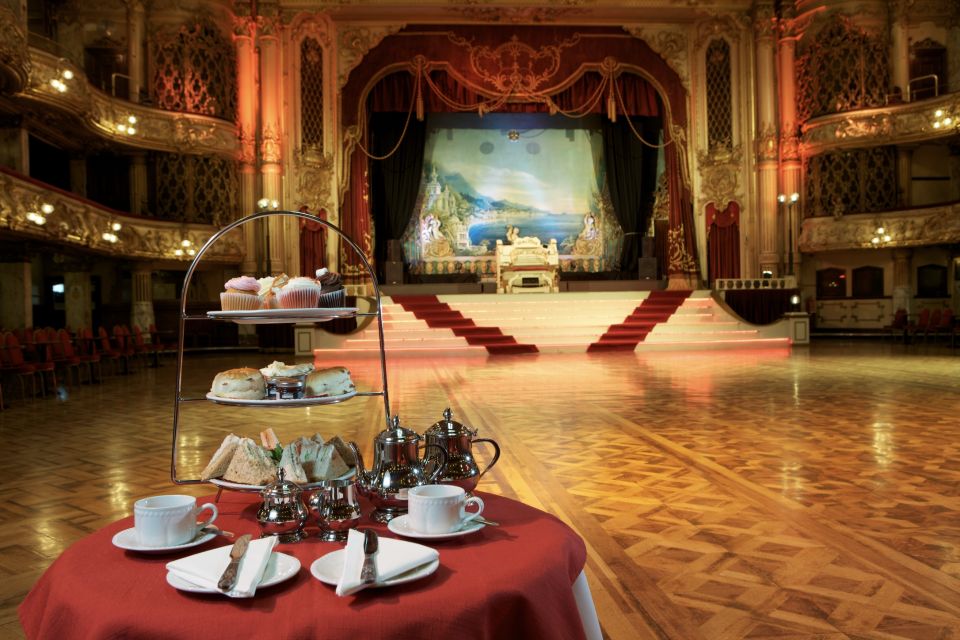
The building’s verified history is enough to captivate visitors: it opened in 1899 as part of the Tower complex and has continued to host live entertainment and dances. Claims of spectral musicians should be presented as folklore unless a particular incident can be traced to a reliable source.
The Ballroom is part of the wider Blackpool Tower attraction complex, but not every pass includes every experience or event. Check the official Blackpool Tower website for admission arrangements, accessible visiting and current performance schedules.
4. Winter Gardens: performance history behind the ghost stories
The Winter Gardens has hosted entertainment, political conferences and landmark dances for generations. Its Victorian and later interiors include theatres, ballrooms and exhibition spaces. The official history records the growth of the complex, including the Empress Ballroom opening in 1896 and the current Opera House opening in 1939.
Because the building contains so many interconnected spaces and decades of performance history, ghost stories abound. Claims of footsteps in empty corridors or figures in backstage areas may be told by staff and visitors, but their interpretation requires caution. Building acoustics, movement and powerful expectations can all affect apparent experiences.
For authentic history, the Winter Gardens heritage timeline is a strong starting point. Some heritage visits are offered on specified days; the building also hosts normal entertainment. An event ticket does not automatically grant access to closed backstage rooms.
5. North Pier: Victorian resort life and local legends
North Pier opened in 1863 and is the oldest of Blackpool’s three principal piers. Its evolution reflects the resort’s long history as a place for seaside holidays, promenading and performances. Older piers naturally attract stories of mysterious figures moving through deserted entertainment spaces and sounds heard after closing.
The challenge is separating a particular documented report from a generic ghost story that could be applied to almost any Victorian pier. Its real heritage, the surrounding sea and the changing light create the atmosphere without needing invented paranormal claims.
Pier access, attractions and opening days depend on weather and seasonal operations. Strong winds and sea conditions can affect closures, so check before travelling and never enter restricted maintenance areas.
6. Central Pier and the changing seafront
Central Pier opened in the nineteenth century and developed as a lively family entertainment destination. Today’s attractions, rides and games should not be confused with historical ghost-hunting opportunities. The pier illustrates how seaside leisure landscapes have been rebuilt and reinvented across generations.
Ghost stories sometimes attach themselves to older resort structures without a reliable documented source. A responsible visitor guide can still include the pier as part of a twilight seafront walk, but should make clear that its significance is primarily leisure history rather than a verified haunting case.
7. Layton Cemetery: real lives beyond resort entertainment
Layton Cemetery offers a different kind of Blackpool history. Unlike the piers and amusements, a cemetery encourages visitors to think about the town’s residents, workers and families. Local history guides sometimes run daytime storytelling walks that explore the people commemorated there.
Blackpool Ghost Walks & Haunted History has advertised a guided cemetery visit at Layton on selected dates. That is an example of a specialist scheduled walk, not evidence that the cemetery is open for unsupervised nighttime paranormal investigations.
Treat headstones and graves respectfully, keep to paths and avoid photographing private mourning activities. A well-researched story about a person buried here can be more affecting than a claim of an unidentified shadow.
8. The Blackpool Tower Dungeon: theatrical dark history
The Blackpool Tower Dungeon is a commercial, actor-led experience designed to entertain with episodes inspired by Lancashire’s grim past. It uses staged scenes, lighting, sound effects and humour. That makes it a good choice for visitors who want a guaranteed unsettling experience rather than the uncertainty of a ghost walk.
The official Tower Dungeon visitor guide describes an experience of roughly 90 minutes and encourages advance booking. Some performances may be unsuitable for small children or visitors affected by enclosed spaces, strong sounds or darkness, so review the current access guidance.
The Dungeon is not proof that the events depicted occurred in the exact way they are staged, and it is not a controlled investigation of ghost activity. It belongs in a spooky Blackpool itinerary as theatrical entertainment rather than a historical haunted house.
9. Marton Mere and Stanley Park: the quieter landscapes
The wetlands around Marton Mere and the landscaped grounds of Stanley Park offer a contrast to the busy seafront. Their reeds, water, trees and changing light can feel atmospheric in the early morning or twilight. Some local ghost-lore lists include one or both places, but it would be misleading to claim that a specific apparition is reliably documented there without a traceable account.
Marton Mere is valuable primarily for wildlife and the environment; Stanley Park for its interwar design, lake and civic heritage. Check permitted access, protect wildlife and avoid night-time wandering in unlit areas simply to capture a ghost-themed photograph.
10. Lytham Hall: the Clifton family and haunting tales
Lytham Hall is outside central Blackpool, in nearby Lytham, but it is worth including as an optional excursion. The site has links to a medieval priory and the Clifton family, with the present Palladian house commissioned in the eighteenth century. The hall’s own official site explains the survival of an earlier Jacobean house beneath the later architectural changes.
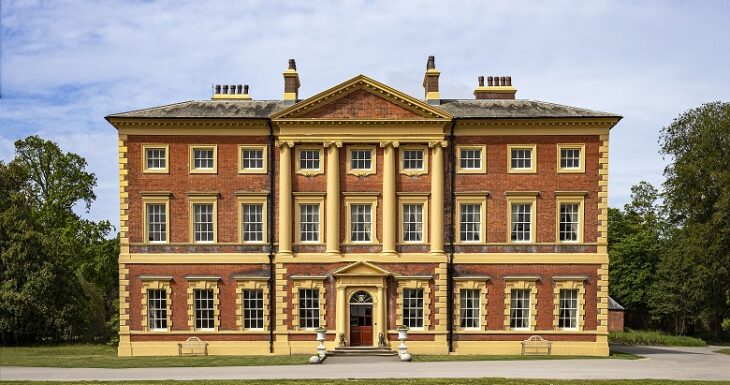
Local ghost tales include stories about a figure connected with the Clifton family and a horse said to appear in the grounds. The Grand Theatre has discussed these as Lancashire ghost legends, not historical certainties. They are worth enjoying as traditions while remembering the genuine household and estate history.
The official Lytham Hall site currently notes a temporary pause in house tours from 2–24 November 2026 while Christmas decorations are prepared. The parkland, café and other facilities may remain open. This is exactly why checking up-to-date visitor arrangements matters before making a journey specifically to see the interior.
Are there guided Blackpool ghost walks?
Yes, but schedules vary. Blackpool Ghost Walks & Haunted History advertises guided storytelling walks around historic locations, as well as occasional cemetery-themed experiences. In October 2026 it promoted seasonal evenings meeting at North Pier. Those specific dates are now in the past; check the organiser’s current website rather than assuming a daily tour exists in November.
Another operator, Hidden History Tours, has provided special Blackpool ghost walks in association with local heritage events. Such one-off tours can be excellent but should not be described as ongoing weekly departures. For a useful experience, consider the guide’s emphasis—history, folklore, comedy or performances—and confirm the actual meeting point before buying.
One-day haunted Blackpool itinerary
Start with the Grand Theatre and the Winter Gardens exteriors, ideally adding a booked heritage tour if your dates allow. Continue to Blackpool Tower and its Ballroom, then the piers and promenade. If the Pleasure Beach is open, arrange a Ghost Train ride. In the evening, join a scheduled ghost walk or choose the Tower Dungeon for a controlled theatrical scare.
For a second day, visit Lytham Hall when its house and grounds are open, or spend time at Stanley Park and Marton Mere if you prefer a quieter itinerary. Don’t attempt to fit every destination into a single hurried day; seasonal schedules and travel between the seafront and nearby towns make that impractical.
How should you interpret a reported haunting?
A shadow glimpsed backstage, a chill in an empty theatre or an odd sound on a pier may feel uncanny. But dark spaces, drafts, acoustics, electrical equipment and memories can all play a role. Before attributing a sensation to a ghost, ask what was directly observed and whether simpler explanations were examined.
For readers who want to compare different types of paranormal experiences, our Haunted Liverpool guide distinguishes a historical ghost walk from a haunted attraction or investigation. Our Pendle Hill guide explores a very different Lancashire landscape where dark folklore is rooted in documented historical events.
Frequently asked questions
What is the most haunted place in Blackpool?
There is no evidence-based ranking. The Grand Theatre is among the most frequently cited buildings for its Charlie legend, while Pleasure Beach’s Ghost Train is famous for both its entertainment design and the Cloggy story.
Does Blackpool Pleasure Beach have a ghost train?
Yes. Its Ghost Train opened in 1930 and remains listed among the resort’s attractions. Check operational days and ticket requirements.
Is Blackpool Tower Dungeon a real haunted building?
It is an actor-led attraction that uses special effects and historical themes. The experience is theatrical rather than evidence of ghosts.
Can you book a Blackpool ghost walk all year round?
Some operators arrange walks throughout the year, but publicly advertised dates can be seasonal. Check current calendars rather than assuming nightly operation.
Is Lytham Hall in Blackpool?
No. It is in nearby Lytham and works best as a separate excursion. Check house opening dates independently from the grounds.
Final verdict: Blackpool’s eerie side is best explored through its venues
Blackpool’s distinctive character comes from working theatres, historic pleasure attractions and the people who built its seaside culture. For the most grounded ghost-themed visit, combine a Grand Theatre heritage stop with the Pleasure Beach Ghost Train and a scheduled local walk. The stories are part of the fun, but the real entertainment history is what makes these locations worth returning to.