


Quick answer: The Book of Abramelin, also known as The Sacred Magic of Abramelin the Mage, is a European grimoire presented as instructions from Abraham of Worms to his son Lamech. It became especially influential through S. L. MacGregor Mathers’ 1898 English edition. Its central subject is a lengthy devotional preparation culminating in contact with a “Holy Guardian Angel”, followed by material on spirit hierarchies and letter-based magical squares. The familiar six-month operation comes from Mathers’ version; other manuscripts describe a substantially longer period of about eighteen months.
Affiliate disclosure: Some links in this guide are affiliate links. Mystic Realm Blog may receive a commission if you buy through them, at no extra cost to you.
Abramelin is one of the best-known names in Western ceremonial magic, but it is often misrepresented as a single perfectly preserved ancient handbook. The surviving versions differ, its claimed author is difficult to verify, and later occult movements transformed its meaning. This guide examines the manuscripts, the so-called Abramelin operation, the magical squares, the Holy Guardian Angel and what to consider before choosing an edition.
What is The Book of Abramelin?
The text belongs to the historical genre of grimoires: books containing prayers, ritual directions, names, symbols and other material associated with magic. It presents itself as a personal account of a traveller called Abraham of Worms, who tells his son Lamech about the instruction he supposedly received from a teacher named Abramelin in Egypt. The framing gives the teaching a memorable authority and a narrative of discovery.
That narrative should not be treated as a verified travel diary. Scholars work with the surviving manuscripts, their languages, dates and relationships rather than assuming every episode happened exactly as described. The Egyptian setting is part of the text’s literary world, not proof that the present grimoire originated in pharaonic Egypt.
Who were Abraham of Worms, Abramelin and Lamech?
Abraham of Worms is the narrator and alleged author, identified by the text as a Jewish seeker and practitioner. Abramelin is the Egyptian teacher in the story, while Lamech is the son receiving the instruction. Their roles are clear within the book even when independent evidence for the biographical details remains uncertain.
Debates about authorship include proposals of pseudonymity and possible identifications with historical Jewish scholars. These are hypotheses, not universally accepted facts. A manuscript can be religiously and culturally important without its narrated characters being independently documented. The caution applies to many magical books attributed to famous ancient kings, prophets or sages.
How old is the Book of Abramelin?
Many popular accounts call it a fifteenth-century work because the narrative is set in that broad historical world. However, the date of the literary setting is not the same as the date of the surviving composition. Research into manuscripts and vocabulary has complicated the traditional dating, with some scholarship arguing for a late-sixteenth- or early-seventeenth-century composition. Different copies preserve different material.
Joseph H. Peterson’s annotated edition at Esoteric Archives explains the surviving French and German versions and reports later manuscript research narrowing an important textual layer to the period around 1595–1609. This is a more helpful starting point than simply claiming the book has remained unchanged since ancient times.
Why are the English versions so different?
Two broad editorial traditions dominate discussions in English. Mathers translated a French manuscript and published his English edition in 1898. A later Georg Dehn edition, translated into English with Steven Guth, drew on additional German manuscript witnesses and contains material absent from Mathers’ version. The differences affect the structure, length and interpretation of the operation.
The commonly quoted contrast is a six-month preparation in the Mathers tradition versus an eighteen-month process in other manuscript-based versions. The latter also includes additional material sometimes presented as a fourth book. These are not simply changes in modern instructions for the reader; they reflect a complicated textual transmission history.
A responsible review should therefore identify which version it is discussing. Instructions or symbols taken from a popular paperback based on Mathers may differ from those in a translation using German witnesses. Peterson’s introduction and variant notes make that problem clear.
What are the books or sections about?
The narrator’s search for knowledge
The first part of the familiar Mathers edition tells Abraham’s story: travels, teachers, doubts and his eventual instruction from Abramelin. It frames the text as a transmission of serious religious knowledge rather than a casual collection of spells. It also reflects the religious outlook and cultural assumptions of the manuscript tradition.
Preparation and devotion
The next part lays out a prolonged programme of prayer, discipline and preparation intended to establish a relationship with divine guidance. This is the section most associated with the “Abramelin operation”. It should be understood as instructions within a historical religious-magical text, not as an evidence-based method guaranteed to produce a supernatural experience.
Spirit descriptions and letter squares
Later material includes names, groupings, symbolic figures and letter arrangements intended in the text to produce various outcomes. The best-known visual elements are the magic squares, many of which are grids of letters rather than conventional arithmetic puzzles. Their patterns belong to a particular textual tradition and may vary across manuscripts.
What is the Abramelin operation?
The central operation is a sustained sequence of religious and ceremonial practices whose stated purpose is to obtain the knowledge and conversation of one’s Holy Guardian Angel. In later occult interpretations, that term became closely tied to ideas about spiritual purpose, the higher self and personal transformation. These interpretations are not always identical to the way the earlier manuscripts describe the process.
Popular summaries can make the operation sound like a dramatic shortcut to commanding spirits. In the text, the ceremonial claims are framed by extended preparation and appeals to divine authority. Readers should recognise that this is a demanding historical religious programme, not a recommended beginner challenge or a proven way to access supernatural beings.
What does “Holy Guardian Angel” mean?
The expression refers to the guiding spiritual presence sought through the operation. Later ceremonial magicians developed their own interpretations of the term, sometimes describing it as a divine messenger, a higher aspect of consciousness or a central spiritual goal. Because these explanations belong to different writers and periods, it is misleading to insist there is only one definition accepted by everyone.
The existence of such an entity or a method for communicating with it has not been scientifically established. A person may study the symbolism or reflect on questions of purpose and conscience without claiming a supernatural contact occurred. For a broader overview of beliefs about spiritual perception, our psychic abilities guide distinguishes personal experience from evidence.
What are the Abramelin magic squares?
The famous Abramelin squares are arrangements of letters used as graphic figures in the grimoire. Some are meant to be read in patterns or connected with specific alleged effects. They are often reproduced on websites as if every square were identical in every historical copy, but different manuscripts and editions can contain gaps, variations or transcription problems.
It is worth distinguishing the squares from mathematical magic squares made of numbers. The Abramelin examples are primarily letter grids embedded in a ritual context. A modern poster may be visually appealing, but it is not necessarily an authentic facsimile of any particular manuscript. Always look for an identified edition and source when interpreting one.
If you enjoy investigating the history of magical diagrams, our occult symbols guide explains how meanings change with the surrounding culture and text. Related grimoire sigils also appear in the much later reception of the Ars Goetia, although the two books are not identical systems.
Is Abramelin connected to the Kabbalah?
The book uses a Jewish narrative frame and draws on ideas that are frequently discussed alongside Kabbalistic and ceremonial-magical traditions. Later editors and occultists also read it through their own systems of correspondences. The word Kabbalah names a complex body of Jewish mystical interpretation, however, and should not be treated as a generic label for every diagram or incantation in a European grimoire.
Studying these connections responsibly means acknowledging both the manuscript’s particular religious language and the ways later Western occult movements adapted elements of Jewish tradition. Readers interested in those later interpretations can explore our article on the Hermetic Order of the Golden Dawn.
How did Aleister Crowley influence its reputation?
The grimoire became particularly visible in English-speaking ceremonial magic after Mathers’ publication. Aleister Crowley placed importance on the idea of the Holy Guardian Angel and is associated with a well-known attempt to undertake the operation. Later writers connected Abramelin’s language to broader Thelemic and ceremonial-magical systems, helping the book reach readers far beyond its original manuscript setting.
Crowley’s interpretations should be studied as part of the book’s reception history, not as proof that the text’s supernatural claims were confirmed. For his biography and broader influence, see our Aleister Crowley guide.
Is the Book of Abramelin dangerous?
There is no reliable scientific evidence that reading the grimoire summons spirits or causes supernatural harm. Practical risks could arise from trying to reproduce demanding instructions that encourage isolation, inadequate sleep, unsafe fire use or distressing beliefs. Some ceremonial passages also assume religious commitments and living circumstances that a modern reader may not share.
For beginners, the safest approach is historical study rather than literal imitation. Avoid any practice that disrupts physical health, relationships, work or access to support. If someone demands payment to remove a supposed spirit or insists that ordinary problems are proof of a ritual attack, be cautious. Our hexes and curses guide addresses the dangers of supernatural fear and exploitation.
Which edition of the Book of Abramelin should you read?
If you want to understand why the work was influential in nineteenth- and twentieth-century occultism, Mathers’ edition is historically important. It is also incomplete or different in significant respects from other manuscript-based versions. If you want broader textual coverage and manuscript comparison, look for a Dehn/Guth edition or a modern scholarly introduction that explains the German witnesses.
Before ordering, check the translator, editorial notes, table of contents and whether the volume follows six months or eighteen months. Avoid judging solely by a dramatic cover illustration; two books with the same title can represent very different source material. This is especially important with out-of-copyright texts offered in cheaply repackaged editions.
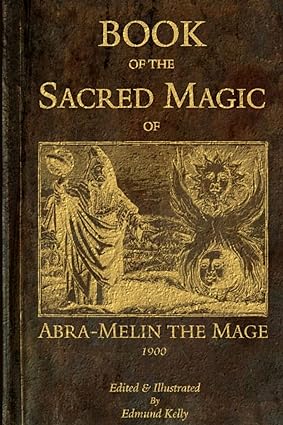
The original article linked to an Abramelin book listing; check the exact edition and availability at the retailer. For additional introductions to historical and modern esoteric writing, see our magick books for beginners comparison.
Can you explore Abramelin without attempting its rituals?
Yes. Read the narrative, compare Mathers with later editions, study the manuscript history and examine how magic squares were copied. Consider what the text’s structure reveals about religious authority and discipline. You do not need to perform a solitary multi-month operation to appreciate its impact on occult literature or the development of modern ceremonial magic.
A useful reading exercise is to compare two editions’ introductions and list where they differ. Does one describe three books or four? How long is the preparation? Does the editor identify the original language and manuscript? What assumptions does the translator bring to the text? These questions produce insights that dramatic occult marketing rarely provides.
The Book of Abramelin: frequently asked questions
Is the Book of Abramelin a real historical book?
Yes. It survives in manuscript traditions and has been published in several editions. Its existence as a book does not demonstrate that the rituals or supernatural beings described within it are real.
Who wrote the Book of Abramelin?
The narrative attributes it to Abraham of Worms, but the historical identity of the author is debated. The name in the manuscript is not independently sufficient to verify a fifteenth-century biography.
Does the Abramelin ritual take six or eighteen months?
The widely circulated Mathers English edition describes a six-month operation, while other manuscript-based editions describe about eighteen months. The difference reflects the source versions, not a universally agreed ritual standard.
What are Abramelin magic squares used for?
The text associates letter-based grids with various ritual aims. Their claimed effects are part of the grimoire’s traditional beliefs, not experimentally demonstrated powers. Historical versions can differ in the letters and arrangements.
Is Abramelin related to the Ars Goetia?
Both are influential European grimoire traditions, but they have different textual structures and histories. Abramelin emphasises a long devotional operation, while Ars Goetia is especially known for its catalogue of 72 spirits.
Did Aleister Crowley complete the Abramelin operation?
Crowley is associated with an attempt and with later interpretations of Holy Guardian Angel work. Whether a practitioner completed a historical ritual or experienced the results claimed by the book should not be treated as verifiable proof of supernatural success.
Final verdict: an important grimoire best read with historical context
The Book of Abramelin deserves its reputation as an influential text in Western ceremonial magic. Its manuscript differences, distinctive letter squares and complicated later reception make it a rewarding historical subject. The key is to know which edition you are reading and to separate the narrated claims from independent evidence. If you enjoyed this guide, explore the Ars Goetia, Hermeticism and our magick books guide.