



Quick verdict: The best magick book for beginners depends on the tradition you want to study. Buckland’s Complete Book of Witchcraft is a structured introduction to Wiccan-style practice; Modern Magick by Donald Michael Kraig is a progressive introduction to ceremonial magic. For breadth, consider Llewellyn’s Complete Book of Ceremonial Magick. Everything You Want to Know About Magick is an accessible but currently out-of-print introductory option, while The Kybalion is useful for understanding modern Hermetic thought—not a faithful ancient Egyptian textbook.
Affiliate disclosure: Some links in this article are affiliate links. Mystic Realm Blog may earn a commission if you purchase through them, at no extra cost to you. Availability, formats and delivery charges can change; verify the specific edition at the retailer.
A good first book should explain its own tradition, give clear definitions and be honest about the difference between historical sources, spiritual beliefs and scientific evidence. You do not need to believe every supernatural claim to find occult history and symbolism interesting. This guide compares five books already featured on Mystic Realm Blog, including who they suit, what they cover, their limitations and how to select an edition without wasting money.
Prefer Bookshop.org? Browse our UK or US regional shops for editions and availability. The individual-book links below are separate, and catalogues can differ between countries.
Best magick books at a glance
| Book | Best for | Watch out for |
|---|---|---|
| Buckland’s Complete Book of Witchcraft | Wicca and beginner exercises | Written from a particular religious tradition |
| Modern Magick | Structured ceremonial-magic study | Long and more demanding |
| Llewellyn’s Complete Book of Ceremonial Magick | Broad reference and later study | Dense multi-author volume |
| Everything You Want to Know About Magick | Accessible exploration of several paths | Publisher lists it as out of print |
| The Kybalion | Modern Hermetic and New Thought ideas | Not an ancient source for the seven principles |
How these books were selected
We looked at author and publisher information, the books’ published subject matter, intended readers and how they connect with our existing witchcraft and esoteric guides. These are editorial comparisons rather than hands-on tests of every printing. We have not invented personal reading experiences, ratings or claims of magical results. A beginner guide is judged by clarity and relevance, while a reference work is judged by breadth and how it identifies its sources.
One reader’s ideal first book may be another’s unsuitable purchase. A Wiccan workbook, an extensive ceremonial-magic anthology and a twentieth-century philosophical tract have different aims. The five options below are useful to compare, but they are not interchangeable. If you’re new to the subject, our Witchcraft for Beginners article explains some of the basic distinctions.
1. Everything You Want to Know About Magick — best accessible overview
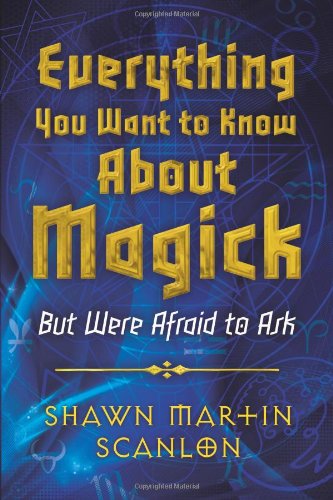
Shawn Martin Scanlon’s Everything You Want to Know About Magick is written for readers who want to explore the language of Western occultism without immediately specialising in one complex ritual system. Scanlon has experience in several ceremonial traditions, which informs the book’s broad approach. It can help a newcomer recognise terms that recur in occult discussions before deciding what to study in depth.
Its main limitation today is availability: the publisher lists this title as out of print. A used or older copy may be an option, but check the edition and price. It would be misleading to present it as an easy new-release purchase. If you prefer a clearly updated beginner book that is in print, compare the other titles below before spending extra on a scarce copy.
Best for: Curious readers wanting approachable terminology and a tour of modern magical ideas. Limitations: Out-of-print status and the need to distinguish author experiences from established evidence.
2. Modern Magick by Donald Michael Kraig — best structured ceremonial course
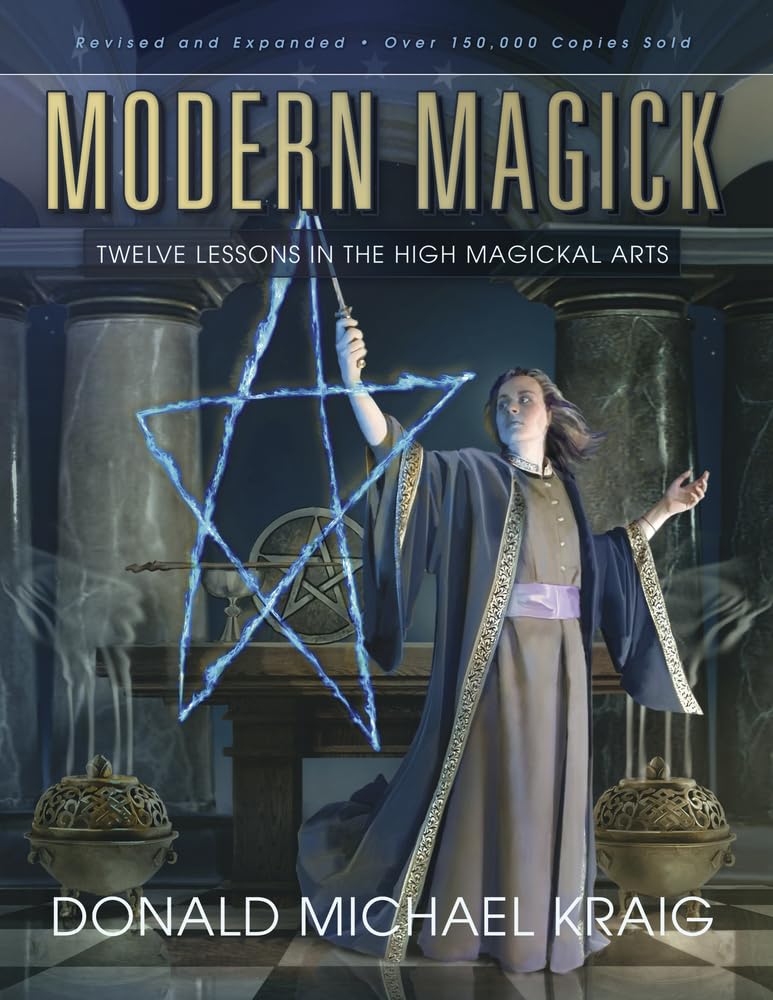
Modern Magick: Twelve Lessons in the High Magickal Arts is one of the better-known structured introductions to twentieth-century Western ceremonial practice. Rather than jumping between unrelated rituals, it presents a series of lessons that build a vocabulary of symbols, methods and concepts. Readers interested in the Golden Dawn, Hermeticism or formal ritual traditions may appreciate that progression.
This is not necessarily the lightest first book: some chapters assume substantial time and an interest in a particular worldview. Exercises and metaphysical explanations should be understood within their occult tradition, not as scientifically established techniques. Llewellyn’s publisher information identifies the revised and expanded edition and its author. For related context, see our Lesser Banishing Ritual of the Pentagram guide.
Best for: A motivated beginner who wants a course-like introduction to ceremonial magick. Limitations: Length, specialised vocabulary and exercises that require critical judgement.
A previous Bookshop.org listing is also retained as an alternative. Confirm which country the store serves and whether shipping is suitable.
3. Llewellyn’s Complete Book of Ceremonial Magick — best reference
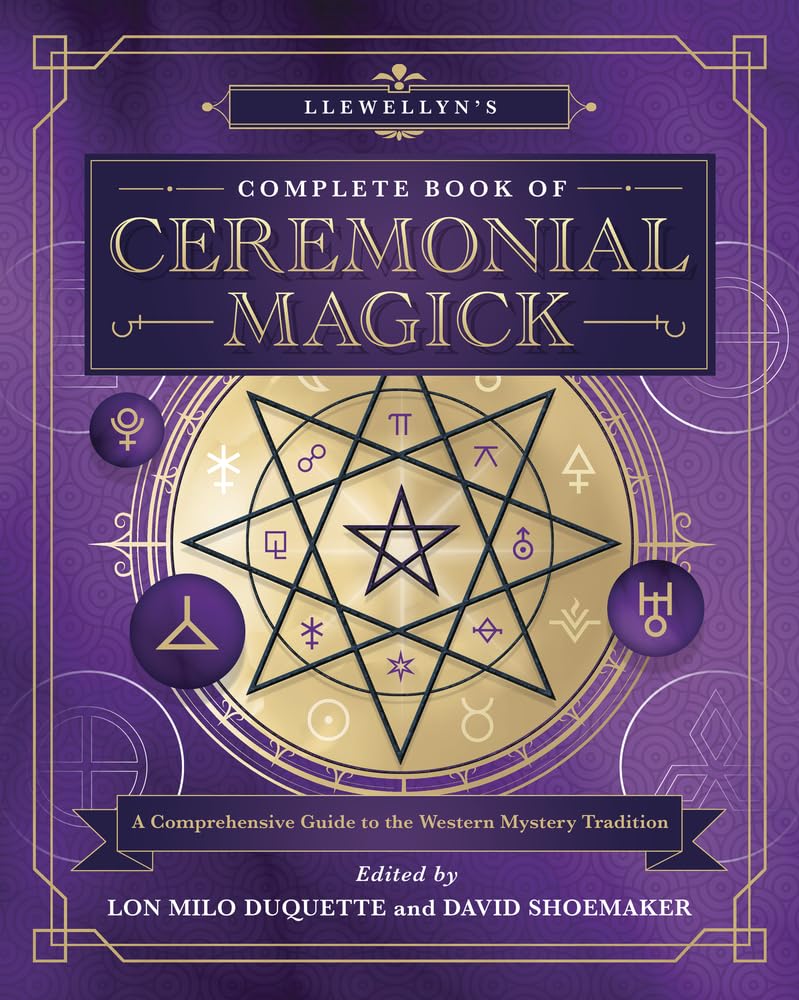
Llewellyn’s Complete Book of Ceremonial Magick, edited by Lon Milo DuQuette and David Shoemaker, is a multi-author reference spanning subjects such as alchemy, planetary magic, Qabalah, Thelema, the Golden Dawn and historical grimoires. Unlike a step-by-step beginner course, its main strength is the range of perspectives presented under one cover.
Its contributors bring different interests and interpretations. That breadth is valuable once you have an idea which subjects you want to explore, but a complete beginner may find it dense. The publisher’s contents list identifies chapters on Enochian material and the Abramelin tradition among other topics. Our Book of Abramelin guide provides historical background for one of those themes.
Best for: Readers building a reference shelf rather than wanting one simple first exercise. Limitations: Large format, specialist topics and authors who do not all use the same definitions.
4. The Kybalion — best for modern Hermetic philosophy
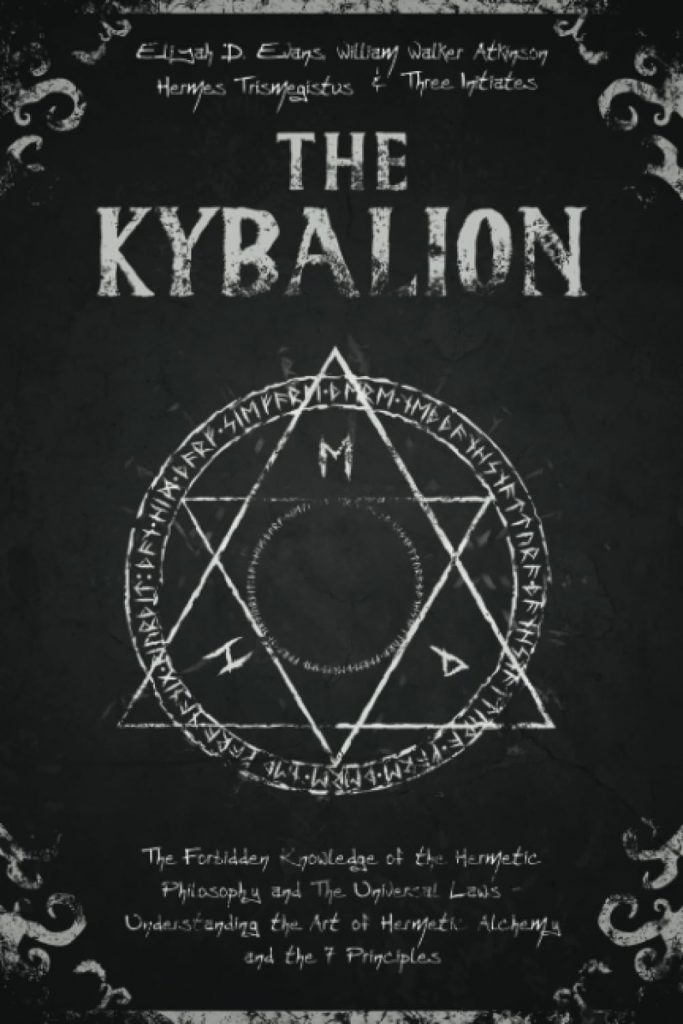
The Kybalion first appeared in 1908 under the pseudonym Three Initiates. It presents seven principles including Mentalism, Correspondence, Vibration, Polarity, Rhythm, Cause and Effect, and Gender. The book has had considerable influence on modern esoteric self-help and interpretations of Hermeticism.
Its most important caveat is historical. The familiar seven principles are not a verbatim list from ancient Egyptian temples or the Roman-period Corpus Hermeticum. The book belongs to a much later intellectual environment. Reading it can be worthwhile if you want to understand modern Hermetic spirituality, but it should be compared with ancient sources rather than used in their place. Our Hermes Trismegistus guide explains that distinction.
The publisher’s centenary-edition page confirms the attribution to Three Initiates. Earlier versions of this Mystic Realm Blog guide incorrectly credited a modern editor as the author; the revised article uses the original pseudonymous attribution.
Best for: Readers investigating modern Hermetic and New Thought philosophy. Limitations: Not a primary ancient text or verified description of scientific “laws”.
A centenary-edition listing from the earlier article is also retained. Check the introduction and ISBN when comparing printings.
5. Buckland’s Complete Book of Witchcraft — best for Wiccan beginners
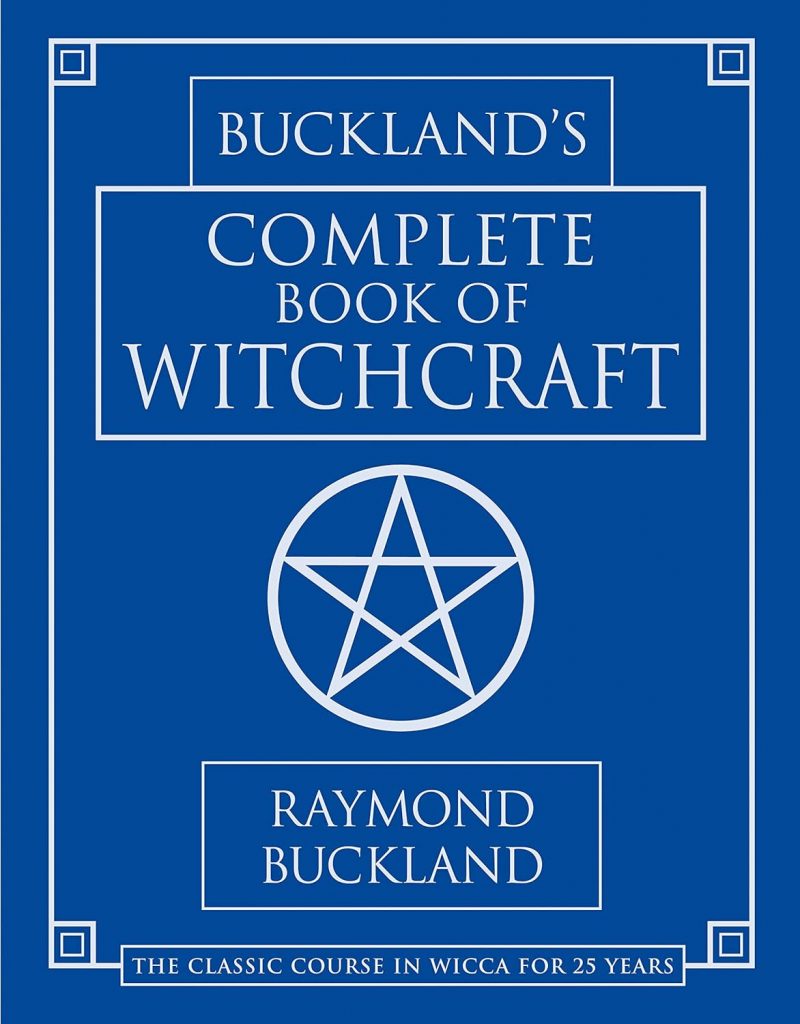
Raymond Buckland’s Complete Book of Witchcraft, sometimes called the “Big Blue Book”, is a structured introduction to modern Wiccan witchcraft. It covers history, beliefs, ritual forms, seasonal celebrations, terminology and practical exercises. The workbook-like approach can make the material feel manageable, particularly for someone who wants to study one tradition in sequence.
The important limitation is that Wicca does not represent every form of witchcraft. Buckland offers a particular modern Pagan perspective, not a universally binding account of folk magic or the whole history of witches. It is best read alongside historical and comparative sources, especially if you’re exploring practices outside Wicca. The Museum of Witchcraft and Magic catalogue records editions of the work.
Best for: Beginners specifically interested in Wiccan-style practice. Limitations: A particular religious perspective and the need to check which edition you are buying. Pair it with our Wheel of the Year and Witchcraft for Beginners guides.
You can also review the older Bookshop.org listing; confirm current stock and postage.
How should you choose your first magick book?
Begin by deciding which question you actually want answered. Are you interested in the history of Western magic, a modern religious practice, tarot symbolism, ceremonial ritual or how esoteric ideas have changed over time? A single general title cannot cover those equally well. Choose a book with a clear subject and identifiable author or editor, and compare the table of contents before buying.
Pay attention to how a book presents evidence. A serious discussion of a historical manuscript should identify editions and periods; a modern spiritual guide should explain which claims are beliefs or experiences. Avoid guides that promise guaranteed supernatural results or insist that you need to spend more money to be safe. Buying used or borrowing through a library is a good way to explore a field before building a collection.
Which magick book should you read first?
If you are interested in everyday symbolism, seasonal customs and the vocabulary of modern witchcraft, start with a basic introduction to the path before attempting a specialised ceremonial text. Buckland is particularly relevant to Wiccan studies, but it is not the only perspective on witchcraft. Pair a practical guide with a historical source so you can see which customs are modern and which are genuinely older.
If you’re more curious about formal ritual, Hermetic symbolism and the Golden Dawn, begin with a chapter or two of Kraig’s Modern Magick, then use the Llewellyn collection to explore the broader subject. It is better to understand the terminology and historical background before deciding whether you want to adopt any practice. The Book of Abramelin and the Ars Goetia are interesting historical grimoires, but neither is the most accessible first book for an absolute beginner.
A four-week reading plan for your first esoteric book
Week one: Read the introduction and table of contents before jumping into individual practices. Write down the author’s main tradition, publication date and any historical claims you want to check. Keep a list of unfamiliar terms. For example, distinguish Wicca, ceremonial magic and Hermeticism instead of treating them as different names for exactly the same thing.
Week two: Choose a chapter on history or symbolism and compare its claims with a museum, publisher or academic source. If an author says a ritual is “ancient”, ask for a date and an identifiable manuscript. Our Hermeticism guide is a useful example because modern Kybalion principles are often incorrectly presented as direct teachings from ancient Egypt.
Week three: Reflect on what you have learnt. You might try journaling, drawing a diagram of a symbolic system or comparing two descriptions of the same tradition. Avoid attempting demanding or potentially unsafe ritual instructions because you feel obliged to follow a book from cover to cover. Being a thoughtful reader does not require performing every exercise.
Week four: Review your notes and choose the next topic rather than immediately purchasing another stack of books. If tarot interests you, follow our beginner tarot guide. If seasonal practice appeals to you, explore the Wheel of the Year. If you prefer history, research the manuscript traditions behind Abramelin or Goetia.
How do you compare different editions of the same book?
Start with the title, author or editor, publisher, ISBN, publication year and physical format. A hardcover anniversary printing, revised paperback and public-domain reprint may contain the same core work but differ in introductions, annotations, illustrations and even completeness. A cheap ebook is not automatically a bargain if important diagrams are missing or unreadable.
For a work like The Kybalion, a new introduction can provide much-needed historical context. For Modern Magick, look for the revised and expanded edition if you want the broader lesson structure discussed here. With historical grimoires, differences between manuscript sources can be far more substantial than a change of cover. The edition matters just as much as the title.
How to build a useful occult reading library on a budget
Choose one introductory work and one deeper reference relevant to your interests, rather than buying books that largely repeat the same claims. Use the local library or a reputable second-hand bookseller for out-of-print titles. Check publisher websites for contents pages before ordering. If you’re in the UK, compare postage costs and returns—international affiliate links can occasionally lead to US listings.
Consider a journal as part of your book budget. Record definitions, quoted page references and questions you want to research, but keep the distinction between a writer’s religious belief and a historical fact. In the long term, a smaller collection you understand is more valuable than a shelf of impressive-looking books you haven’t had time to read.
Magick books for beginners: frequently asked questions
Which is the best magick book for an absolute beginner?
For someone drawn to Wicca, Buckland’s Complete Book of Witchcraft offers a structured starting point. For ceremonial-magick interests, Modern Magick offers a course-like sequence. Choose by your tradition rather than assuming one title is best for everyone.
Are the Kybalion’s seven principles ancient Egyptian teachings?
The familiar list is from a 1908 book attributed to Three Initiates. It is an influential modern interpretation, not an ancient list directly preserved in the Corpus Hermeticum.
What is the difference between witchcraft books and ceremonial magick books?
Modern witchcraft guides may focus on seasonal practice, Wicca or folk traditions, while ceremonial-magick manuals often use more formal ritual systems and specialised symbolism. The categories overlap, but their histories differ.
Do these books prove that magick works?
No. They document beliefs, practices and personal interpretations. Their supernatural claims have not been established by reliable scientific evidence, although the texts may be important historically or personally.
Should I buy printed books or ebooks?
Choose the format you can read and annotate comfortably. Printed books may help with diagrams and comparison, while ebooks are portable and sometimes less expensive. Verify that any edition includes the illustrations and notes you need.
Final verdict: build a library gradually
For a structured beginning, Buckland and Kraig are strong choices for different interests. The Llewellyn anthology is more useful as a reference, Scanlon is an approachable but harder-to-find title, and The Kybalion explains influential modern Hermetic ideas with significant historical caveats. Start with one book, check the edition and follow the parts that genuinely interest you. Continue with our guides to witchcraft, Hermeticism and occult symbols.







[…] Check out the post on Top 5 Magick Books for Beginners […]
[…] Check out Top 5 Magick Books for Beginners Post Here […]