

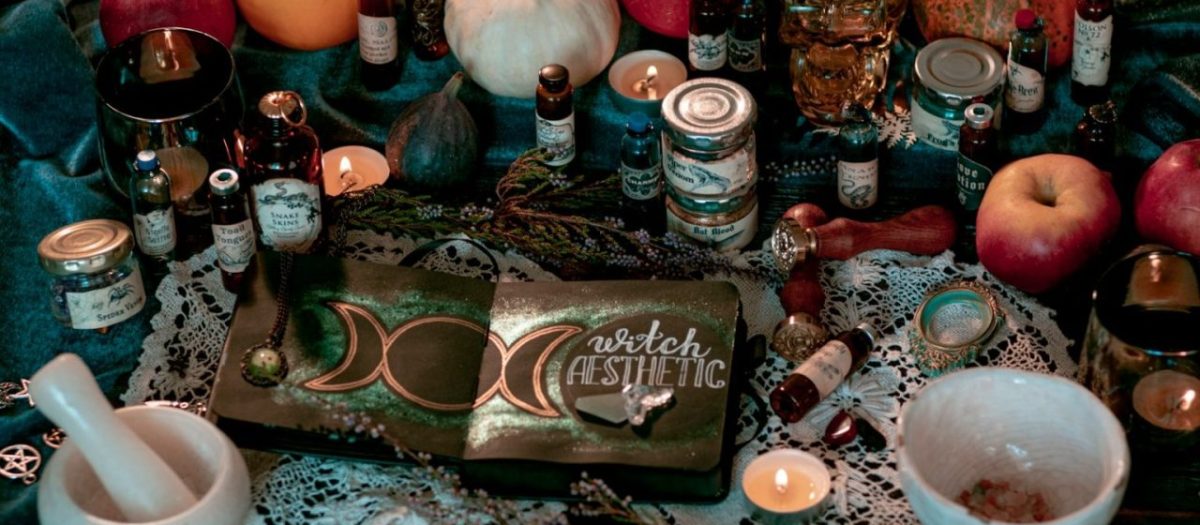
Quick answer: Witchcraft is an umbrella term for a wide range of folk, ritual and spiritual practices. Some people approach it as part of a religion, others as a personal tradition or a way to explore symbolism, the seasons and intention-setting. If you are new to witchcraft, start by learning its history, deciding what interests you and trying simple, safe reflective practices. You do not need an expensive altar or a complete set of tools.
Affiliate disclosure: Some links in this article are affiliate links. Mystic Realm Blog may earn a commission if you purchase through them, at no extra cost to you.
If you have seen lists insisting that every witch needs an athame, a cauldron and dozens of crystals before they can begin, you can ignore the pressure. Tools are meaningful to some practitioners, but there is no universal shopping list. This guide explains the common ones, what they represent and where they fit into a sensible beginner practice. It also links to deeper guides if you want to explore a particular subject.
Not every tradition described as folk magic belongs to modern witchcraft or Wicca. For a respectful comparison of distinct African diasporic histories, read our Voodoo vs Hoodoo guide.
What is witchcraft?
The word witchcraft has meant different things in different periods and places. Historically, accusations of harmful magic could be used against people who were feared, marginalised or simply unlucky. In other contexts, people practised protective charms, blessings, divination and household customs. Today some people identify positively as witches and build rituals around nature, spirituality, personal reflection or established traditions.
Those meanings should not be flattened into one story. The history of witch trials is not the same as the history of contemporary witchcraft, and a historical accusation is not proof that an accused person practised magic. The London Museum’s overview of witches, medicine and magic is a useful place to see how ordinary fears and protective beliefs shaped people’s lives. Our Witches, War and the Spiritual Battle of Britain article explores a later piece of British folklore.
Is witchcraft the same as Wicca or Paganism?
No. Wicca is a modern Pagan religion that developed in the twentieth century and is associated with figures including Gerald Gardner. Wiccans may practise witchcraft, but not everyone who uses witchcraft identifies as Wiccan. Paganism is another broad term covering a variety of modern religious and spiritual paths; it is not a synonym for spellwork.
You may encounter solitary practitioners, covens, ceremonial magicians and people who draw on family or community traditions. Not all follow the same deities, rituals or ethical rules. It is better to ask how a particular tradition understands itself than to assume that every witch uses tarot, worships the same gods or celebrates the same festivals.
What can beginners explore without making supernatural claims?
Some practitioners describe spells as influencing energy or outcomes, while others see them as symbolic actions that focus attention or mark a personal commitment. These are different interpretations. There is no reliable scientific evidence that a candle, crystal or ritual alone causes external events to happen through supernatural means. You can still find value in historical research, creative ritual, journaling and the discipline of making time for reflection.
Think of an intention-setting practice as a reminder to take practical action. Lighting a candle while planning a new study routine, for example, may give you a memorable start. The real-world result still depends on what you do afterwards. If you want a practical guide, our candle spells for beginners article keeps the exercise simple and fire-safe.
The eight common witchcraft tools, explained
These objects appear in books and modern practice, but their importance varies. Some are ceremonial, some are everyday items used symbolically, and others can be left out altogether. Start with what you already own. The optional product references below are examples, not a requirement to buy anything.
1. Cauldron: a symbol of transformation
Cauldrons appear in folklore, cooking history and modern ritual imagery. A practitioner may use a small bowl or vessel to hold written intentions, stones or other symbolic items. A large iron cauldron is not necessary, and using one for burning materials indoors brings smoke and fire risks. A heat-resistant ceramic bowl is often more practical for a beginner’s display.
If you specifically want a decorative iron vessel, here is an example cast-iron cauldron. Check dimensions and heat-safety instructions, and do not assume that a decorative product is safe for flames or hot contents.
2. Athame: a ceremonial blade, not an everyday necessity
An athame is a ritual knife associated with some forms of modern ceremonial witchcraft. It is often used symbolically to mark directions or boundaries rather than to cut physical objects. Its elemental association can differ by tradition; there is no single universally accepted system. Beginners can point with a finger or use a wooden wand instead.
If you are exploring traditional tool symbolism, compare a wooden ceremonial athame example. Avoid carrying blades in public, and check local rules before buying or using sharp ritual implements.
3. Tarot cards: symbols and questions
Tarot is a system of illustrated cards that many modern practitioners use for divination or self-reflection. It is not exclusive to witchcraft and it is not necessary for every witch. A beginner can draw one card, describe its imagery and write down a question it raises rather than treating the card as a prediction that must come true.
Our tarot reading for beginners guide explains the 78-card structure and simple spreads. If you prefer a decorative option, a gold-foil tarot deck is one example, but choose artwork you can actually interpret.
4. Crystals: decorative objects with traditional associations
Amethyst, quartz and obsidian feature in many modern spiritual collections. Practitioners may assign meanings such as calm, clarity or protection to different stones. Those associations are cultural or personal beliefs, not proven medical properties. The appearance of a stone, its durability and where it was sourced are more reliable factors to consider when shopping.
You can read more in our A–Z guide to crystals. A starter crystal set is optional; individual stones or even a meaningful pebble from a walk can be enough for a personal display.
5. Book of Shadows or journal: the most useful first tool
A Book of Shadows is a personal notebook where someone may record rituals, correspondences, festivals, questions and experiences. Different traditions use it differently. For a beginner, the practical value is straightforward: written notes help you remember what you tried, spot mistakes and question assumptions instead of relying on memory.
A plain notebook works perfectly. You might record the date, the idea you were exploring, what you did, what happened and what ordinary explanations you considered. A decorative Book of Shadows-style journal is an aesthetic choice, not an essential purchase.
6. Herbs and incense: learn the plant before the symbolism
Rosemary, lavender and other plants feature in traditions involving scent, remembrance and household protection. Their meanings vary with time and place. Herbs can also cause allergies, interact with medicines or be dangerous to pets. Do not ingest a plant, apply an essential oil or burn unfamiliar material because an online spell says it is safe.
Explore the symbolism in our magical herbs guide. Optional examples include a mixed dried-herb kit or incense assortment, but you never need to burn herbs to practise. Ventilation, fire safety and allergies matter more than aesthetic appeal.

7. Candles: simple focus, serious fire safety
A candle can mark the beginning and end of a reflective exercise. Some traditions give colours particular meanings; there is no universal chart and no need to spend money on specialised candles. A plain candle or an LED candle is enough to create a quiet moment and remind you of the intention you set.
Keep open flames on a stable heat-resistant surface, away from paper, fabric, pets and children, and never leave them unattended. If you prefer candles, a beeswax candle set is an option. For instructions without exaggerated promises, see six candle magick practices.
8. Pendulums: movement and interpretation
A pendulum is a small weight suspended from a cord or chain. Some divination systems interpret its movement as an answer. However, subtle unconscious muscle movements—the ideomotor effect—can make a suspended object swing without the person intending it. That makes a pendulum unsuitable for objectively verifying spirit communication or predicting important outcomes.
For personal reflection, an ordinary pendant can work as well as a specialist product. Here is one crystal pendulum example. If you are interested in comparable divination claims, our dowsing rods guide explains the limitations and useful controls.
How do you set up a simple beginner altar?
An altar is a designated space for reflection or spiritual practice. It does not need to be permanent or elaborate. A shelf or small table with a notebook, an object that represents the season and a battery-powered candle is enough. Keep anything fragile out of reach of children and pets, avoid placing candles near curtains or foliage, and choose a space that does not obstruct daily life.
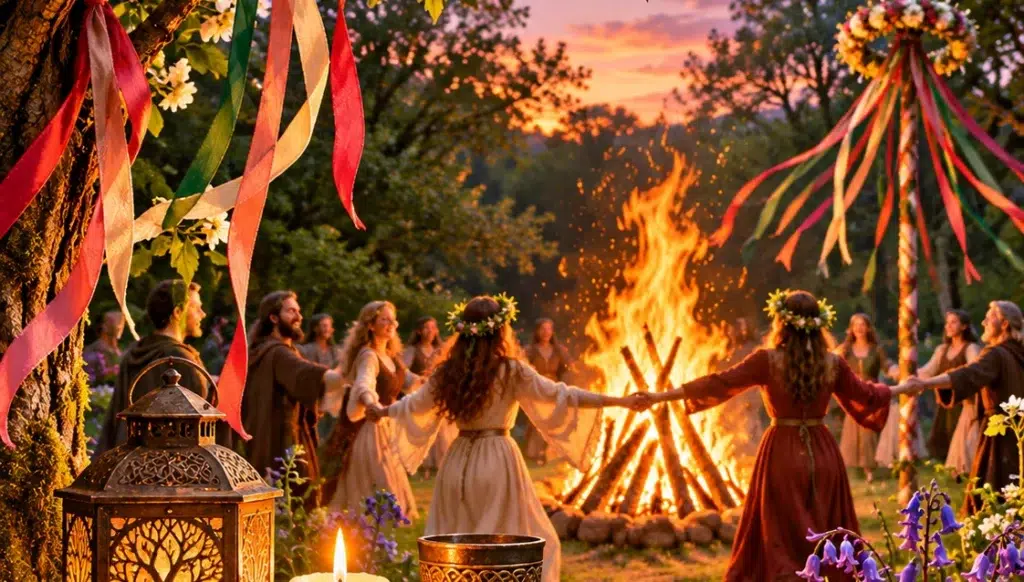
You could add a seasonal item as the year changes: a spring flower, autumn leaf or photograph of a place that matters to you. Some modern Pagan traditions follow the Wheel of the Year, which connects eight festivals with the seasons. You can study these dates and customs without belonging to a specific religion or creating an altar at all.
How to try your first witchcraft-inspired practice
The following is a low-cost reflection exercise, not a claim that a spell will change events. Choose something within your own control—such as improving a habit, making a difficult conversation more constructive or setting aside study time. Use a journal and, if you like, an LED candle. Give yourself ten quiet minutes and make sure your phone will not distract you.
- Write one clear sentence beginning “I want to make progress on…” and choose a goal that can be acted on.
- List one real-world obstacle and one small step you can take in the next 24 hours.
- Sit quietly, read the intention back and notice any emotions or doubts it brings up.
- Close the exercise by recording the practical action you will take. Revisit the entry after a week.
- If you use a real candle, attend it throughout and extinguish it fully before leaving the room.
The point is to combine symbolism with a concrete plan. If nothing mystical happens, that does not mean you failed. You have still practised focusing attention, making choices and keeping a record. A ritual should never replace professional medical care, needed financial decisions or personal safety measures.
A seven-day beginner learning plan
Day 1 – Research: Read about historical witchcraft and the difference between folk practices and modern paths. Day 2 – Observe: Begin a journal of the questions and traditions that interest you. Day 3 – Symbols: Pick one motif and research its different cultural meanings rather than accepting a single social-media explanation.
Day 4 – Reflection: Try the ten-minute practice above. Day 5 – Nature: Take a walk and observe seasonal changes; do not collect protected plants or disturb wildlife. Day 6 – Comparison: Read two accounts of the same tradition and note where they differ. Day 7 – Review: Decide what you want to learn next, and what evidence or historical context is missing.
If you’re drawn to ceremonial magick, explore the history and symbolism behind the Lesser Banishing Ritual of the Pentagram. If you prefer modern eclectic practices, start with accessible books; our beginner magick books guide offers further reading, including Buckland’s Complete Book of Witchcraft.
Common mistakes when learning witchcraft
- Buying a large collection of tools before deciding what you want to practise.
- Treating every internet “correspondence chart” as an ancient or universal rule.
- Assuming a coincidence, unusual dream or strong emotion proves a supernatural event.
- Using unknown herbs, unattended flames or sharp tools in unsafe ways.
- Borrowing rituals from a living culture without understanding their context or boundaries.
- Thinking that one practitioner or book can speak for every witchcraft tradition.
The most useful beginner habit is to ask good questions: Where did this practice come from? Who practises it today? Is a claimed history documented? What is a personal belief, and what can be independently checked? These questions make the subject more interesting, not less magical for people who value its symbolism.
Witchcraft for beginners: frequently asked questions
Can anyone learn about witchcraft?
Anyone can study witchcraft history and explore suitable symbolic practices. Joining a specific religious group or participating in a closed tradition may involve rules, invitations or training, so respect the boundaries set by its practitioners.
Do I have to be Wiccan to practise witchcraft?
No. Wicca is one modern Pagan religious path; witchcraft is a much broader term. Some witches are Wiccan, some belong to other religions and others are secular or follow no particular religious identity.
What supplies should I buy first?
A notebook is the most useful starting purchase, and you may already have one. A deck, candle or other object is only worth buying once you know why you would use it. The objects should fit your practice, budget and safety needs—not someone else’s checklist.
Do spells really work?
People interpret spells in different ways, including as spiritual rituals, symbolism and personal intention-setting. Reliable scientific evidence has not established supernatural spell effects. You can still assess whether a reflective routine helps you organise thoughts or take practical steps.
What’s the best first book for learning witchcraft?
Look for a book that names its tradition, explains where practices come from and distinguishes historical sources from modern interpretation. Compare more than one writer; our recommended magick books are a starting point, not a substitute for critical reading.
Final thoughts: start with understanding, not equipment
Learning witchcraft does not have to start with a shopping basket. Read widely, respect the diversity of traditions and develop a practice that is safe, thoughtful and meaningful to you. The eight tools discussed here may be interesting, but none is a prerequisite. If you want a structured next step, follow the eight Sabbats, explore tarot, or choose a single reflective exercise from our candle guide.