



What happened at 30 East Drive in Pontefract? The house at 30 East Drive, West Yorkshire, became famous after the Pritchard family reported a series of extraordinary disturbances beginning in 1966. Stories of moving furniture, unexplained water, loud knocks and a hooded figure later became associated with the “Black Monk of Pontefract” or “Fred the Poltergeist”. The family, their address and the later media coverage are real; the claim that supernatural forces caused the events remains disputed and unproved.
Unlike many famously haunted places, 30 East Drive is not a medieval castle or abandoned abbey. It is an ordinary mid-twentieth-century semi-detached house on the Chequerfield Estate. Its contrast with the frightening stories is precisely what made the case so memorable. Today it is a managed private investigation venue with strict rules rather than a conventional museum or guesthouse.
Because 30 East Drive has restricted private access, always arrange a legitimate booking. For more historic locations and their visitor information, browse our Haunted Places Explorer.
Affiliate disclosure: Mystic Realm Blog may earn commission from some links. The official booking and historical sources below are included to help visitors understand current access; we will review affiliate opportunities separately.
30 East Drive: key facts
- Location: 30 East Drive, Pontefract, West Yorkshire, WF8 2AN.
- Original reports: beginning in 1966, with later episodes described during the late 1960s and early 1970s.
- Family: Joe and Jean Pritchard and their children Philip and Diane.
- Best-known legend: a poltergeist nicknamed Fred, sometimes identified in retellings as the Black Monk.
- Media connection: the 2012 film When the Lights Went Out, inspired by the case.
- Current access: privately booked evening-to-next-day visits, not routine public daytime tours.
- Evidence status: serious reported experiences, but no accepted scientific confirmation of a supernatural cause.
Why did an ordinary Pontefract house become famous?
The family moved into the Chequerfield house in the summer of 1966. According to accounts preserved by the property’s current operator and later investigators, strange incidents began during an August bank holiday when teenage Philip and his grandmother were in the house while other relatives were away. They reported chalk-like dust apparently appearing in mid-air and unexplained pools of water on the floor.

The stories expanded to include loud knocks, lights turning on and off, household objects moving, and damaged photographs. Some accounts describe the activity fading and then returning with greater intensity. Details differ among oral histories, newspaper reporting and later documentaries, so a careful account should not convert every dramatic retelling into a documented fact.
The Yorkshire Post revisited the case in 2012 and recorded the family’s description of frightening events, including claims involving daughter Diane. The original participants’ recollections are central to the case, but interpretation remains separate from testimony. What they believed happened is not automatically proof of what caused it.
Who were the Pritchards?
Joe and Jean Pritchard were the parents, with teenage children Philip and Diane. Their experiences became the focus of interest from neighbours, religious figures, paranormal researchers and the press. Retellings sometimes spell Philip’s name “Phillip” or vary the exact date of episodes. Such inconsistencies are reminders that the story has travelled through many sources.
Accounts often describe Diane as particularly affected during the later phase of the events. One of the most disturbing claims concerns her being physically dragged or attacked by an unseen force. This is best attributed clearly to witness testimony, because no independently verifiable recording establishes the alleged cause. It is appropriate to recognise how frightening the family described these experiences as being without pretending we can retrospectively solve them.
Much of the material now circulating online descends from interviews, paranormal books and film promotion. The same claims repeated across websites are not multiple independent sources. A strong investigation begins by distinguishing original witness accounts from later reconstructions.
What is a poltergeist, and why was ‘Fred’ blamed?
The word “poltergeist” comes from German terms meaning roughly “noisy spirit”. In popular paranormal literature it describes alleged disturbances such as knocks, moving objects or sudden damage, sometimes with no visible figure. There is no scientifically established diagnostic method for proving that such a phenomenon is caused by a disembodied entity.
The nickname “Fred” became attached to the alleged presence in the Pontefract case. Some versions use “Mr Nobody” or “Black Monk” instead. These labels should not be treated as independent confirmation that the same invisible figure was involved in every incident.
Investigators might consider building movement, plumbing, pranks, deliberate interference, misperception or incomplete recollection when assessing particular reports. These possibilities should not be asserted as proven explanations without evidence either. The point is to avoid deciding that one cause—natural or supernatural—has been established from an incomplete record.
The Black Monk of Pontefract: folklore or historical person?
The best-known version of the story suggests that a hooded monk was executed after committing violent crimes and that his body was buried in a well beneath the house. It is sometimes presented as established medieval history, but that is a major leap beyond the surviving evidence. No verified archaeological excavation or reliable contemporary document has established the burial beneath 30 East Drive as a fact.
Pontefract did have a significant medieval religious and castle history, which makes the legend easier to imagine. Yet the fact that a priory once existed in the town does not demonstrate that the particular monk, execution or well story happened exactly as claimed. Such tales are better labelled as a supernatural explanation added to an already famous series of disturbances.
The venue’s owner refers to a well beneath the property in its booking description. That is an attributed statement by the operator, not evidence of the alleged execution or burial. Readers should resist treating a dramatic ghost story as a substitute for archaeological documentation.
The paranormal investigations and conflicting explanations
30 East Drive became prominent in paranormal literature partly through the interest of Colin Wilson, whose work discussed the case and its witness testimony. Researchers and media producers have since brought different methods and assumptions to the house. Some believed the reported phenomena were evidence of an external entity, while others have emphasised the limitations of uncontrolled eyewitness reports.
A convincing conclusion would require detailed records of when events happened, who was present, how environmental and physical conditions were measured, and whether alternative explanations were ruled out. Very few classic poltergeist cases preserve that level of independent documentation. The strength of the Pontefract story is its cultural importance and unusually specific witness accounts, not proof that spirits have been captured on demand.
The house’s official history provides one perspective on the events, and the Yorkshire Post retrospective offers contemporary reporting about how the family story was remembered.
When the Lights Went Out: the film based on the haunting
The 2012 British film When the Lights Went Out, written and directed by Pat Holden, takes inspiration from the Pritchard case and recreates its atmosphere through fictionalised characters and events. It renewed interest in the address and helped introduce the story to audiences who had never encountered the original reports.

The story’s film connection is unusually personal: the writer-director had family links with people involved in the original case. However, cinematic suspense depends on editing, character changes and dramatic pacing. A film is not a reliable primary source for determining whether specific alleged incidents happened exactly as portrayed.
The property has also appeared in paranormal television and online investigations. As with films, programme presentation should be separated from actual recorded observations. Dramatic music, selective editing and leading questions can make ambiguous evidence seem more conclusive than it is.
Can you visit or stay overnight at 30 East Drive?
Yes, but this is not a hotel or an open-access heritage house. The current official booking information says that visits run from approximately 6pm to midday the following day and must be arranged in advance. It explicitly states that no ordinary day tours are provided.
The owner’s rules are unusually strict. Groups of one to four may book private visits; groups larger than four require a professional or specialist organiser with suitable public liability insurance, with a stated maximum of ten including staff. The booking page sets out its own deposit, cancellation and waiver requirements, and alcohol is prohibited. These terms can change, so rely on the latest booking page rather than an archived price.
The house is furnished in a retro style and has beds but requires visitors to provide their own bedding. The operator emphasises that it is neither a conventional B&B nor a party venue. It also warns visitors about the intensity of the experience. A signed waiver may be required before entry; read the terms carefully and do not assume that signing a waiver removes every legal duty owed by an operator.
It is also a home within a residential neighbourhood. Do not knock on neighbours’ doors, arrive unannounced or photograph residents. A fascinating reputation does not override privacy or ordinary property rights.
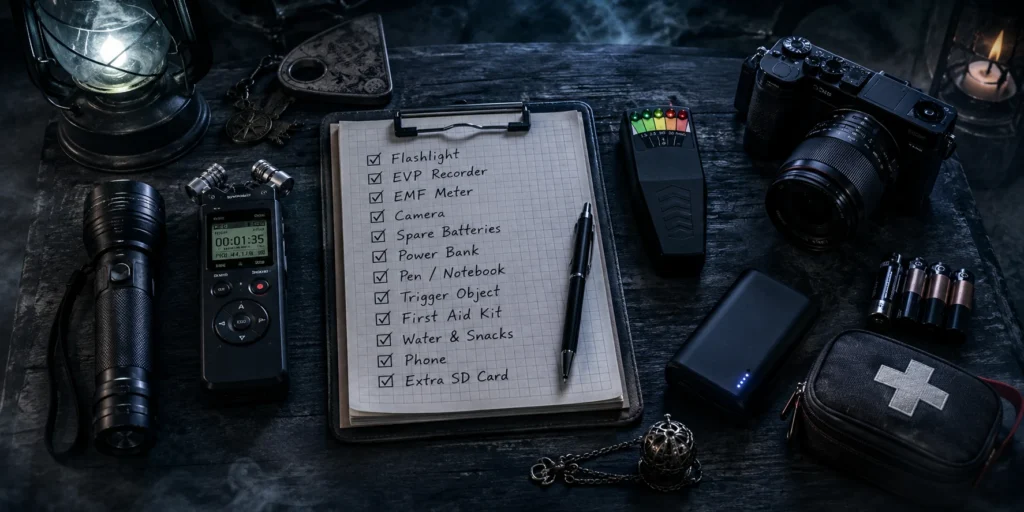
What should you take to a 30 East Drive investigation?
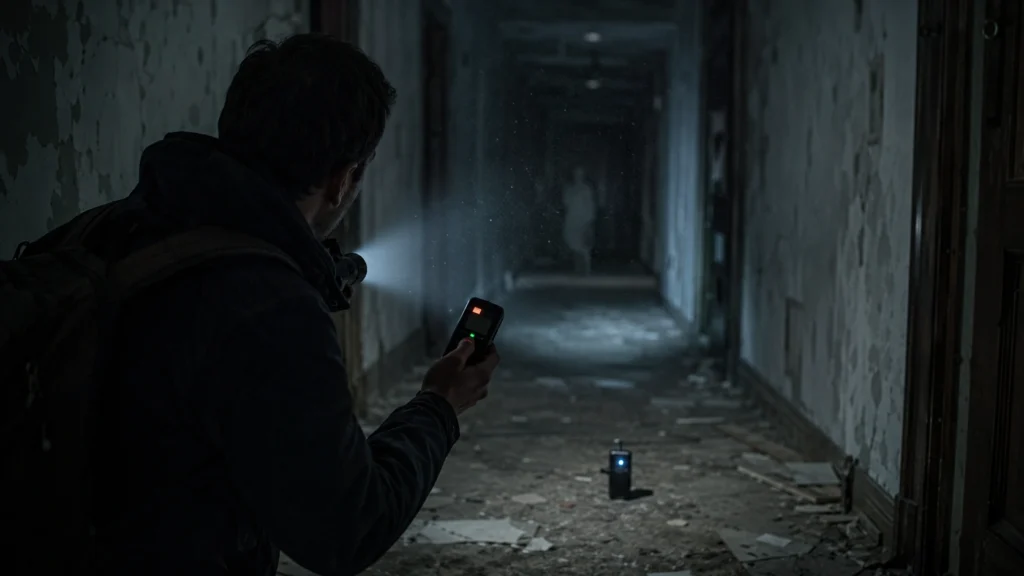
- A charged phone and practical torch, with spare power if allowed.
- Appropriate bedding and personal essentials for any overnight booking.
- Warm layers and comfortable shoes suitable for an older residential interior.
- A notebook for precise time-stamped observations and witness notes.
- An audio recorder or camera only if permitted by the organiser, with a record of environmental conditions.
- An open mind balanced by a willingness to test ordinary explanations before attributing an event to a spirit.
For detailed setup advice, see our ghost hunting equipment checklist. Audio recordings can capture ordinary background noise, and EMF meters respond to electrical sources. Neither automatically identifies an invisible presence.
Pontefract Castle: a wider historical context
The house’s name is inseparable from the town of Pontefract, which has a much older history than its twentieth-century council estate. Pontefract Castle played a major role in English medieval and civil-war history and is associated with the death of Richard II. Its ruins make a worthwhile separate heritage stop while visiting the area.
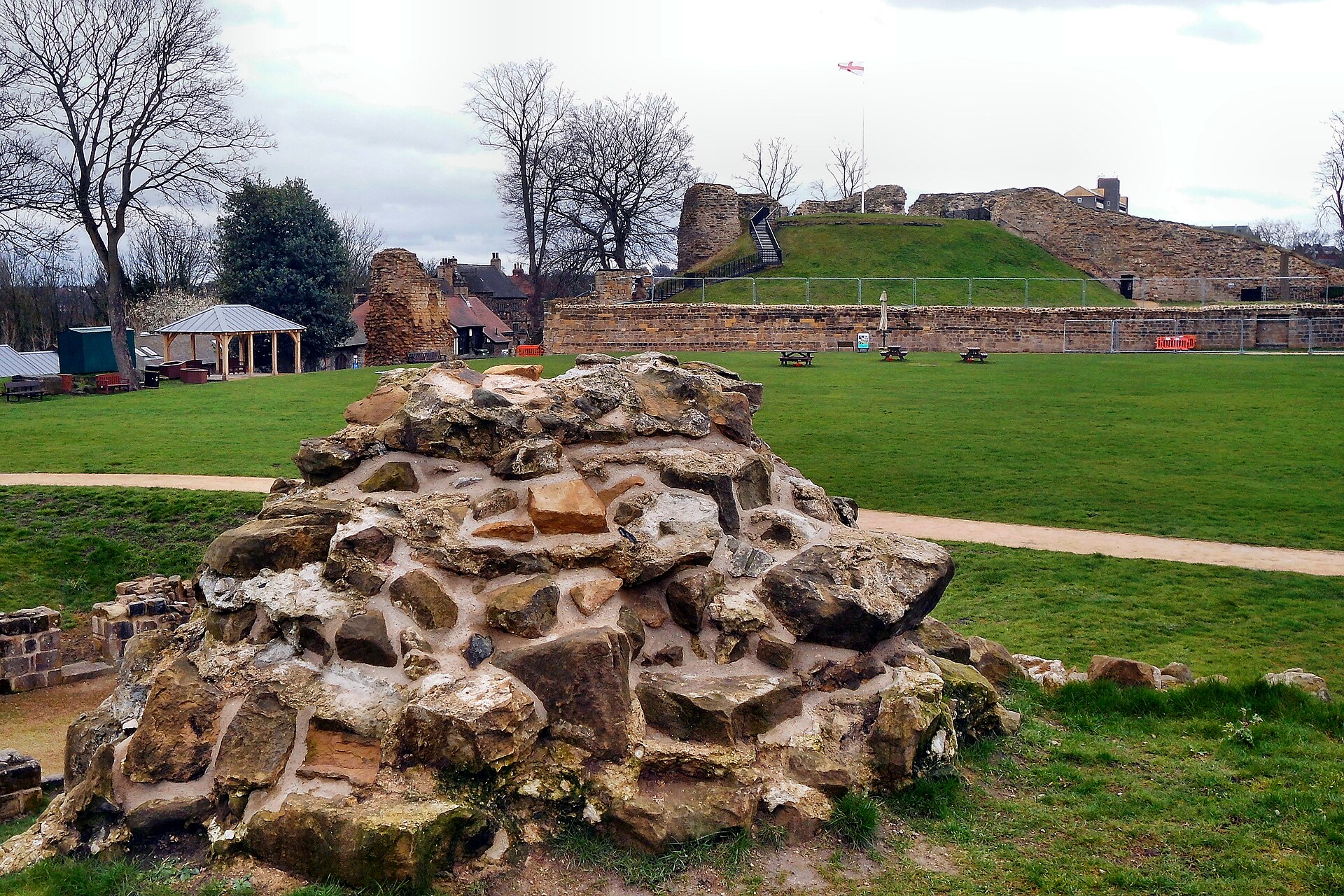
The connection should not be overstated. A town with a castle and former priory is historically interesting, but those facts alone do not authenticate a particular monk haunting a modern house. The castle may be enjoyed as part of a daytime visit while 30 East Drive remains a separately booked private venue.
30 East Drive compared with other British haunting cases
The Pontefract case is often compared with the Enfield Haunting, another British poltergeist narrative involving a family in an ordinary home. Their chronology, witness accounts and degree of media exposure differ, but both demonstrate how a domestic setting can become part of paranormal folklore. For a US contrast, our Amityville Horror house guide separates a documented family tragedy from later disputed haunting claims and film adaptations.
For visitors interested in a very different kind of managed investigation, Shrewsbury Prison offers official ghost tours and specialist events within a former institution. And for a reputedly haunted historic building with centuries-old fabric, see our Ancient Ram Inn guide.
Frequently asked questions
Is 30 East Drive really haunted?
The house has a widely reported paranormal reputation, but the cause of the events attributed to it has not been scientifically established. The reports and later investigations are real historical phenomena in the sense that they were recorded and discussed; their supernatural explanation remains uncertain.
Where is 30 East Drive?
It is a residential property on the Chequerfield Estate in Pontefract, West Yorkshire, postcode WF8 2AN. Visits must be booked through approved arrangements.
Can you just turn up at 30 East Drive?
No. The operator offers advance-booked sessions and says there are no day tours. Respect the local neighbourhood and do not attempt access without a booking.
Is the Black Monk a confirmed historical figure?
No. Claims about an executed monk and a burial well are part of the folklore associated with the property and have not been reliably demonstrated from original historical records.
Is the film When the Lights Went Out accurate?
It is inspired by the experiences described by the Pritchard family, but dramatises and changes elements for storytelling. Treat it as a film rather than a documentary record.
Final verdict
30 East Drive is an unusually important location in British poltergeist folklore precisely because the alleged incidents occurred in an ordinary house. Its story is worth examining with attention to the family, the media record and the development of the Black Monk legend. Visitors who decide to investigate should use the official booking system, read the conditions and avoid treating a memorable experience as automatic proof of a ghost.




I just now wanted to thank you once again for your amazing web page you have built here. It is full of useful tips for those who are truly interested in this particular subject, primarily this very post. You really are all so sweet in addition to thoughtful of others and also reading the blog posts is a good delight with me. And that of a generous reward! Ben and I will certainly have fun making use of your guidelines in what we should do in the near future. Our checklist is a distance long which means your tips are going to be put to good use.
Thank you so much for your kind words! I’m thrilled to hear that you find the website helpful and that you and Ben have exciting plans ahead. If you ever need more tips or guidance, don’t hesitate to reach out. Wishing you both all the best on your adventures!