

The Enfield haunting was a series of alleged poltergeist incidents reported by the Hodgson family in north London from 1977 into 1979. Investigators recorded hundreds of hours of testimony and audio, while sceptics and some investigators argued that at least some incidents were staged. The film The Conjuring 2 is inspired by the case, but its dramatic events and the central role of Ed and Lorraine Warren are not faithful to the historical record.
Affiliate disclosure: Some links in this article are affiliate links. Mystic Realm Blog may earn a commission from qualifying purchases, at no extra cost to you. Product details and availability are set by the retailer.
The Enfield case remains one of Britain’s most debated hauntings because it was recorded unusually extensively for a domestic poltergeist report. This guide separates what witnesses said, what the investigators documented and what horror films invented. For another British poltergeist case associated with an actual visitor experience, see our 30 East Drive and the Black Monk of Pontefract guide.
The Enfield case concerns a private home, so it isn’t a visitor destination. For historic sites open to appropriate visits or research, explore our Haunted Places Explorer.
Stories of knocking, unusual voices and object movement can attract different labels. Compare the poltergeist overview with imp folklore in ghost hunting; calling the Enfield case an imp encounter would be an interpretation, not an established conclusion.
Quick answer: was the Enfield haunting real?
The reports and investigations were real; a supernatural cause has not been established. The Hodgson family and several outside witnesses described disturbing events. Researcher Maurice Grosse and his colleague Guy Lyon Playfair believed important incidents were genuine. Other observers identified tricks or questioned the evidence. Acknowledging that the case generated extensive records is not the same as saying ghosts were proved to exist.
When and where did the Enfield haunting happen?
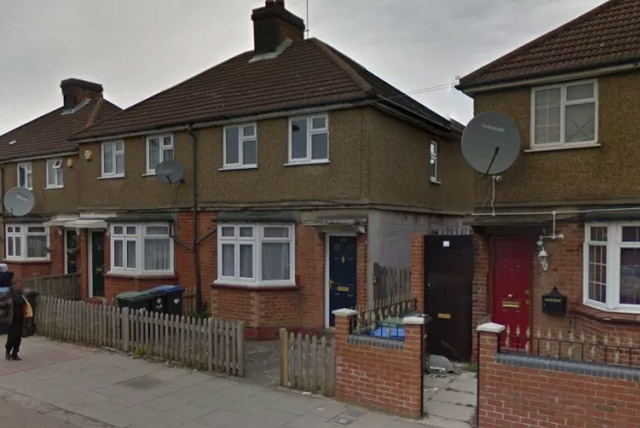
The case centred on the home of Peggy Hodgson and her four children in Enfield, north London. Reports began in late August 1977 and continued, with changing intensity, into 1979. The household described knocking sounds, furniture movement, flying small objects and a deep voice that appeared to come from Janet Hodgson.
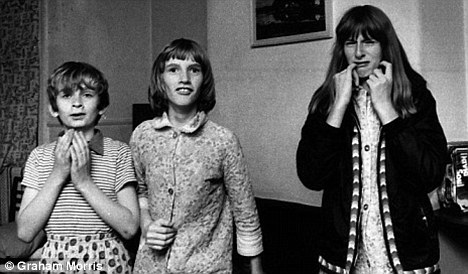
The home was a private residence, not a public ghost-tour attraction. Respect the privacy of residents and neighbours; curiosity about the case does not justify visiting the property uninvited or filming through windows.
The first reports in August and September 1977
Accounts describe the Hodgsons hearing knocking and experiencing apparently unusual movement of furniture. A neighbour became involved, and police attended. One police officer later provided an account of a chair moving without a clear cause. The Society for Psychical Research (SPR) case summary brings together many of the contemporary statements and later analyses.
Newspaper coverage attracted the attention of the SPR. Maurice Grosse began investigating in early September, and Guy Lyon Playfair joined shortly afterwards. The case soon became a national story. Importantly, witnesses did not all see the same phenomena, and not every incident occurred under independently controlled conditions.
What did Maurice Grosse and Guy Lyon Playfair record?
The two investigators made repeated visits, including overnight vigils. According to the SPR account, they accumulated more than 180 hours of audio recordings as well as notes and photographs. Some recordings feature knocking, voices and conversations with members of the household.
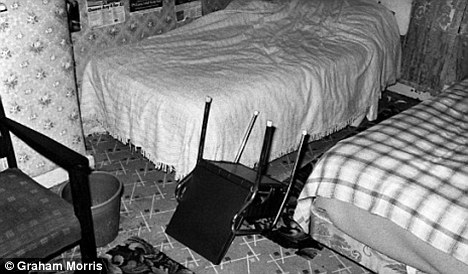
Playfair subsequently wrote This House Is Haunted, a book that sets out the investigators’ understanding of the case. It is an important primary-perspective source, but readers should remember it is written by a participant who considered key events paranormal. If you are interested in his first-hand account, see This House Is Haunted (affiliate link).
What was the mysterious voice attributed to Janet Hodgson?
One of the most memorable claims involved Janet apparently speaking in a harsh, low voice sometimes associated in media retellings with a man named Bill Wilkins. The voice was captured in recordings and described by observers. Sceptics have argued that unusual vocal techniques, imitation or deliberate performance could account for some of it; supporters viewed the duration and other details as challenging those explanations.
No recording alone establishes that a disembodied person was speaking. Voice phenomena require careful consideration of who was present, what could be seen, how recording equipment was positioned and whether an alternative explanation was tested.
Were any of the Enfield incidents faked?
Yes, at least some acts of trickery were acknowledged or alleged. Janet later admitted that a small portion of incidents was staged. Investigators also caught or suspected acts involving children manipulating objects. This does not automatically explain every claim, but it makes any blanket statement that all events were paranormal untenable.
Members of the SPR disagreed over the case. Some regarded the Hodgsons and other witnesses as credible; others argued that the children’s actions and the uncontrolled setting undermined the claims. The organisation’s own historical summary records both supportive and sceptical perspectives.
The Enfield haunting and The Conjuring 2: what changed?
The Conjuring 2, released in 2016 and directed by James Wan, uses the real family’s circumstances as a foundation for a supernatural horror plot. Its imagery, major confrontations and storyline are created for cinema. It is entertainment inspired by a case, not a documentary.
Did Ed and Lorraine Warren investigate Enfield?
The Warrens did visit or become involved briefly in the wider Enfield story, but they were not the principal long-term investigators. That work was carried out mainly by Grosse and Playfair. The film gives the Warrens an outsized role in the plot and resolution, so it should not be used to reconstruct the investigation. For the Warrens’ later film adaptation involving a different family, see our The Conjuring: Last Rites true-story guide, which distinguishes the Smurl and Snedeker cases.
Did Janet really levitate?
Photographs often described as showing Janet levitating exist, but interpretations vary. Critics point out that the images can resemble a child jumping from furniture. They cannot by themselves establish paranormal levitation. The same caution applies to the film’s more dramatic possessions and supernatural attacks.
Was a demon named Valak part of the Enfield investigation?
The film’s demon storyline is part of The Conjuring franchise mythology rather than an established finding of Grosse and Playfair’s records. It is not supported as a historically verified cause of the Hodgson family’s reported experiences.
How should we assess the evidence today?
Enfield is a good example of why haunting reports need more than an interesting account. Multiple witnesses and extensive notes are valuable, but clear controls, contemporaneous documentation and opportunities for independent replication matter too. A photograph without an unambiguous sequence cannot show what happened immediately before and after the shutter was pressed.
The distinction between a poltergeist and other categories of alleged haunting is also useful here: the term generally refers to apparent noises and object movement, not automatically to the spirit of a dead person. Our residual hauntings guide examines a different concept often used in paranormal discussions. For a much older American poltergeist tradition, compare the Bell Witch legend, whose nineteenth-century source history differs greatly from Enfield’s recorded 1970s investigation.
Other British haunting cases worth exploring
If the case interests you, compare it with reports from 30 East Drive, Pontefract, or the older legends surrounding the Ancient Ram Inn. They differ in their sources, time periods and opportunities for visits. Enfield itself should be treated as a historical investigation, not a destination for trespassing. For an American case also strongly shaped by horror films, our Amityville Horror house guide distinguishes the real DeFeo murders from the disputed Lutz claims.
Frequently asked questions
When did the Enfield haunting take place?
Most reports relate to 1977–1979, with the best-known events beginning in late August 1977.
Who investigated the Enfield poltergeist?
Maurice Grosse and Guy Lyon Playfair led much of the sustained investigation associated with the Society for Psychical Research.
Was The Conjuring 2 based on a true story?
It was inspired by a real series of allegations and investigations, but its screenplay changes the events and adds fictional horror elements.
Was the Enfield case ever proved?
No supernatural explanation has been established. There are witness reports and records, together with admitted tricks, disagreements and substantial alternative interpretations.
Can you visit the Enfield haunting house?
It is a private residential property, not a public attraction. Please respect the occupants’ privacy.
Final verdict
Enfield deserves its reputation as a historically important poltergeist investigation, but not as a solved supernatural mystery. The unusual quantity of records makes it fascinating to study, while the disagreement between participants and sceptics means that accuracy matters. Read the SPR material and firsthand accounts separately from the film to get the clearest picture.