

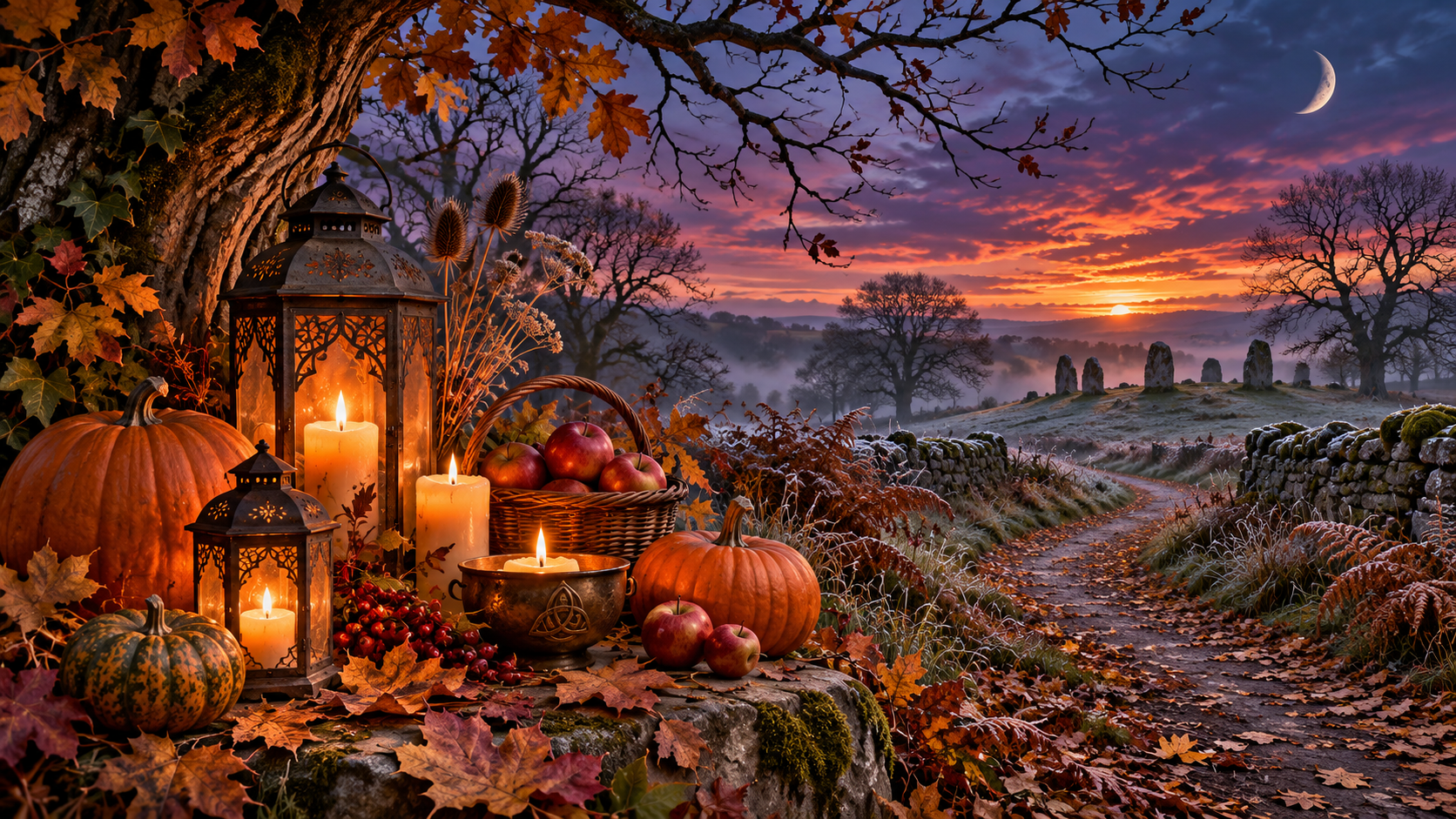
Quick answer: Samhain is a traditional Gaelic seasonal festival associated with the end of the harvest and the beginning of winter, commonly marked from the evening of 31 October into 1 November. It is often pronounced approximately “SOW-in” in English, although pronunciation varies across Irish and Scottish Gaelic. Modern observances may include remembrance, family stories, seasonal meals and reflection on change. Samhain belongs to the modern Wheel of the Year calendar and comes before Yule. This guide explores its history, pronunciation, customs and recipes without assuming every modern ritual is ancient.
Affiliate disclosure: This article contains affiliate shopping links. Mystic Realm Blog may earn a commission from qualifying purchases, at no extra cost to you. Check availability and the exact item before buying.
The Origins of Samhain
Samhain dates back over 2,000 years and is deeply rooted in ancient Celtic traditions. The word “Samhain” translates to “summer’s end” in Old Irish, signifying the close of the harvest and the transition into the darker half of the year.
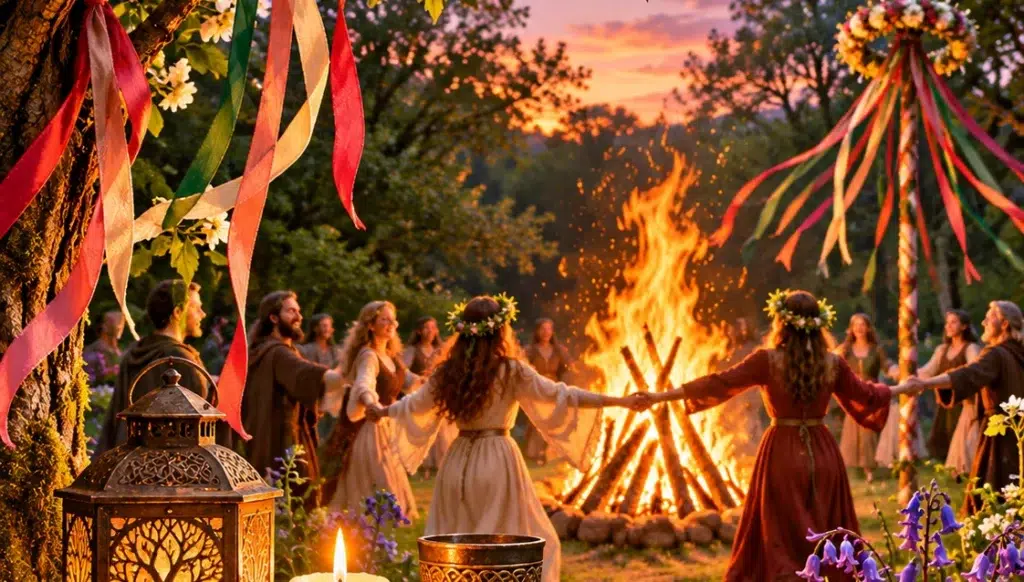
In Celtic society, Samhain was believed to be a liminal time when the veil between the living and the dead was at its thinnest. It was a time to honour ancestors, offer blessings for the future, and prepare for the colder months. As part of the festivities, people would light large bonfires to ward off evil spirits, a custom that survives in modern-day Halloween traditions like pumpkin carving and trick-or-treating.
History and folklore note: Samhain has roots in Gaelic seasonal culture, but claims that all ancient Celts practised a single identical Samhain ritual are too broad. The popular idea of a “thin veil” between worlds is meaningful in modern Pagan accounts and folklore interpretations, yet surviving historical evidence does not support every detail often repeated online. Distinguish older documented customs from later storytelling and individual belief when exploring the festival.
How to Pronounce Samhain
One of the most common questions asked about this festival is, “how do you pronounce Samhain?” Despite its spelling, Samhain is pronounced “sow-wen,” with “sow” rhyming with cow. The mispronunciation “sam-hane” is prevalent in popular culture, but understanding the correct pronunciation gives a deeper connection to the festival’s history. You can see a more interesting and more in depth explanation on IrishMyths.com here by I.E. Kneverday.
When Is Samhain Celebrated?
Samhain is usually associated with the evening of 31 October and 1 November in the modern calendar. For 2026, that means the evening of Saturday 31 October into Sunday 1 November. Some people observe a wider period or follow a tradition-specific calendar. The festival is connected with the change into the winter half of the year; Halloween and Samhain overlap historically and culturally, but they are not identical in every practice.
For more on the Wheel of the Year see post Here
Samhain Traditions and Practices
Honouring the Dead
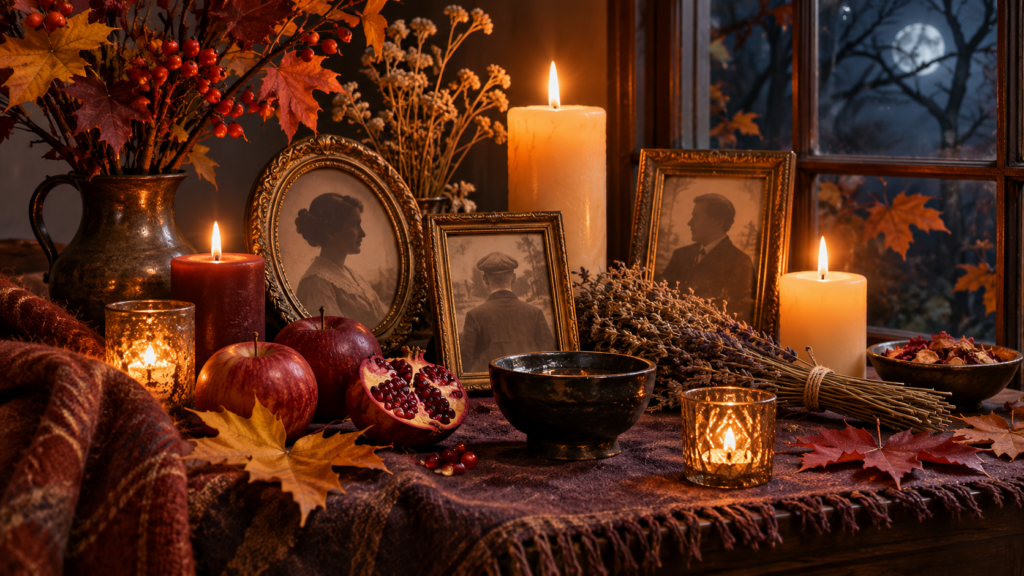
Samhain is often referred to as the “Day of the Dead” in Celtic traditions, much like Día de los Muertos in Mexican culture. The Celts believed that during this time, spirits of the deceased could return to the land of the living. Families would set out food and drink as offerings for wandering spirits and ancestors. Today, many people create ancestor altars or perform rituals of remembrance as a way of honouring their loved ones who have passed.
Divination and Magic
Samhain is a powerful time for divination and magic. With the veil between worlds at its thinnest, many practitioners use this opportunity to perform tarot readings, scrying, or other forms of fortune-telling. It’s believed that during Samhain, the insights gained from these practices are more profound, offering a glimpse into the future or a deeper understanding of one’s path.
If you’re new to divination, you can start by lighting a black candle for protection and a white candle for clarity. Meditate on your question and pull a tarot card or gaze into a reflective surface (a mirror, crystal ball, or even water) to receive messages.
Bonfires and Feasting
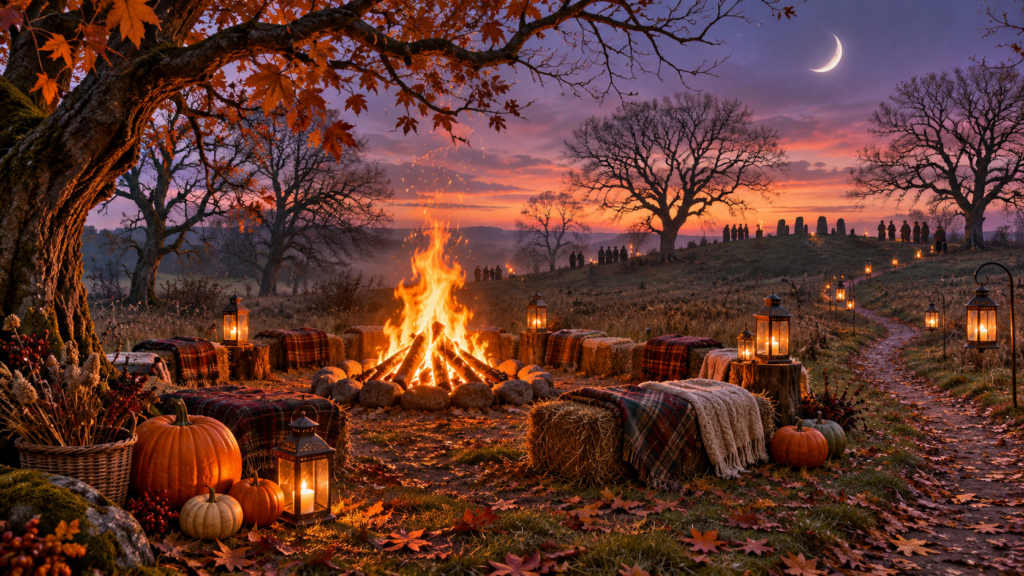
In ancient times, bonfires were lit to ward off malevolent spirits and provide warmth for the community. Participants would throw bones of slaughtered livestock into the fire as offerings, hence the term “bone fire.” In modern times, bonfires remain a central part of Samhain celebrations, often accompanied by storytelling, dancing, and feasting.
For those celebrating at home, consider having a small fire pit gathering with friends and family, or simply light candles to represent the ancient bonfires.
Modern Samhain Celebrations
While Samhain has deep Pagan roots, many modern witches, Pagans, and spiritual practitioners celebrate the festival in their own unique ways. Some combine Samhain traditions with Halloween activities, while others focus purely on the spiritual aspects of the holiday.
Here are a few modern ways to observe Samhain thoughtfully. These vary by family and tradition, and are not presented as a single ancient ritual:
- Create an Ancestor Altar: Set up a small space in your home with photos, heirlooms, or objects that remind you of your ancestors. Light candles in their honour and offer food or drink that they enjoyed in life.
- Perform a Samhain Ritual: Whether you’re a solitary practitioner or part of a coven, take time to perform a ritual for guidance or protection. Write down things you wish to release negative habits, fears, or regrets and burn them as a symbolic gesture of letting go.
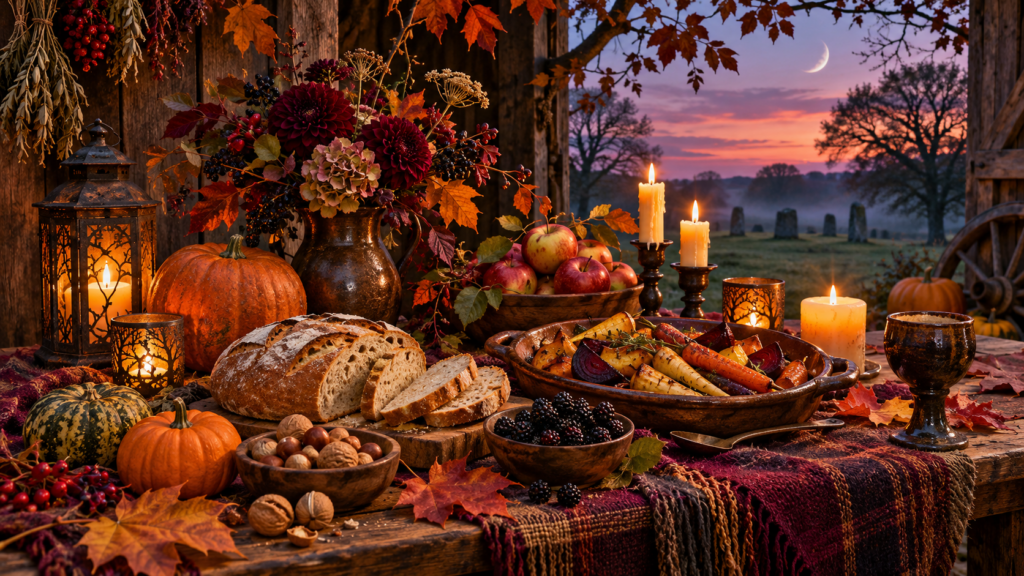
- Host a Samhain Feast: Invite friends and family for a traditional meal that includes foods like apples, nuts, and root vegetables. Include an empty chair at the table to symbolise the presence of your ancestors.
Samhain Blessings
Sending Samhain blessings to loved ones is a beautiful way to share the spirit of the season. Samhain is not just about honouring the dead, but also about celebrating the living and the cyclical nature of life. Blessings during this time focus on protection, introspection, and gratitude for both past and future.
Here is a simple Samhain blessing you can use or share:
“May the spirits of those who came before guide and protect you.
As the wheel turns and the days grow short, may you find peace in the darkness,
And strength in the light that follows.
Blessed Samhain!”
If you’re looking to send blessings to others, consider creating or purchasing Samhain cards that capture the essence of the festival. Handwritten notes, emails, or even social media posts can spread the warm and protective energy of Samhain far and wide.
Samhain Recipes
No celebration is complete without food! The traditional foods of Samhain reflect the harvest season and include hearty root vegetables, nuts, apples, and grains. These foods were often used in ancient Samhain feasts to honour the abundance of the harvest and prepare for the scarcity of winter. Below are a few Samhain recipes to bring a taste of the season to your celebration.
1. Colcannon (Irish Mashed Potatoes with Cabbage)
Colcannon is a classic Irish dish traditionally served during Samhain. It represents the harvest and is a comforting, earthy dish perfect for the season.
Ingredients:
- 2 lbs of potatoes, peeled and cubed
- 1/2 head of cabbage, shredded
- 1 bunch of green onions, chopped
- 4 tablespoons of butter
- 1 cup of milk
- Salt and pepper to taste
Instructions:
- Boil the potatoes in salted water until soft, about 15 minutes.
- In a separate pan, sauté the cabbage and green onions in butter until soft.
- Drain the potatoes, then mash with the butter and milk.
- Stir in the cabbage mixture and season with salt and pepper.
2. Barmbrack (Irish Fruit Bread)
This traditional Irish bread is filled with dried fruits and often used in Samhain celebrations. It was common to bake objects into the bread, each symbolising a different fortune for the person who found it.
Ingredients:
- 1 cup strong tea (brewed and cooled)
- 1 1/2 cups mixed dried fruit
- 2 cups flour
- 1/2 cup sugar
- 1 tsp baking powder
- 1 egg, beaten
- 1/4 tsp cinnamon, nutmeg, and allspice
Instructions:
- Soak the dried fruit in the tea overnight.
- Preheat the oven to 350°F (175°C).
- Mix the flour, sugar, baking powder, and spices together.
- Stir in the egg and the soaked fruit (with the tea) until just combined.
- Pour the mixture into a greased loaf pan and bake for 60-70 minutes, or until a toothpick comes out clean.
Samhain FAQs: Is Samhain Halloween? They share dates and some historical influences, but today they are not the same celebration for everyone. Do I have to perform divination? No; personal reflection or a respectful remembrance activity is enough. What is the next Sabbat? On the commonly used Northern Hemisphere Wheel of the Year, Yule comes next at midwinter.
Final Thoughts: Samhain, Remembrance and the Changing Year
Samhain is a time of reflection, celebration, and connection with both the living and the dead. Whether you’re just learning how to pronounce Samhain, seeking Samhain blessings, or whipping up traditional Samhain recipes, this ancient festival offers an opportunity to honour the cyclical nature of life.
Samhain can be an occasion to honour memories, share seasonal stories, enjoy traditional food and acknowledge the turn towards winter. Choose practices appropriate to your beliefs and community. For the seasonal festivals that follow, visit our Wheel of the Year guide and the Yule winter solstice article, rather than treating this celebration as confined to any one calendar year.
Resources
- For Ghost Tours See the page here
- Witchy Supplies see Psychic Tree Here
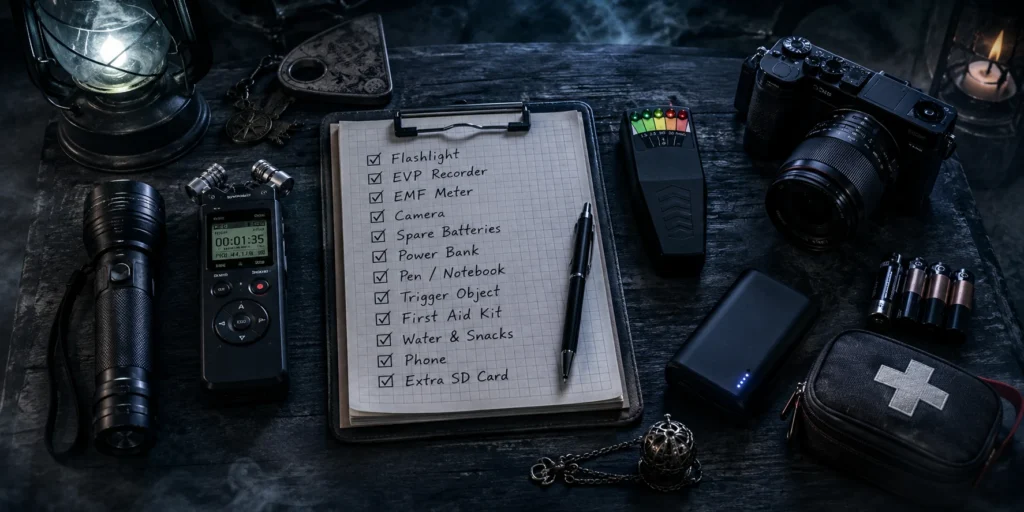
- Don’t Forget to See Equipment you need for ghost hunting this halloween
- See Wheel of the Year Book on Bookshop.org Here
- Protection during Paranormal Investigations by Natasha Here
After Samhain, the next Sabbat is Yule, often celebrated around the winter solstice.