

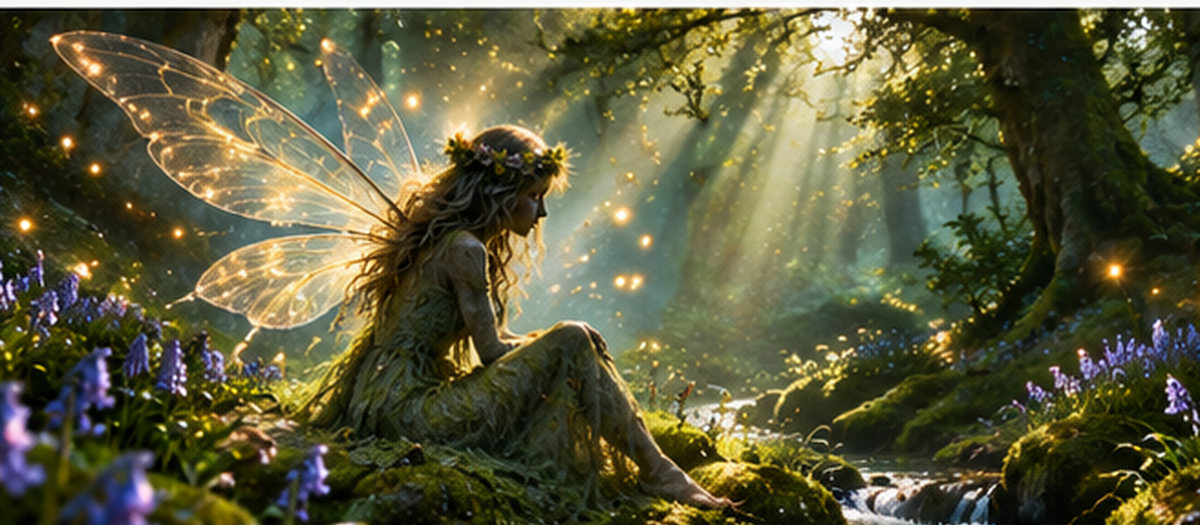
Fairies are supernatural beings found in folklore around Britain, Ireland and many other cultures, but there is no independently verified scientific evidence that they exist as physical creatures. Famous accounts range from stories of Scottish brownies and Irish fairy folk to the 1917 Cottingley fairy photographs, which were later admitted to have been staged.
The traditions remain culturally important even when a sighting or photograph has an ordinary explanation. This guide explains what fairies mean in folklore, why people believed the Cottingley pictures, how fairy rings form and where to explore the associated stories respectfully.
Quick answer: are fairies real?
Fairies are real as a longstanding part of folklore, storytelling and living cultural traditions — not as a scientifically established species. Reports of encounters, strange lights and photographs are not sufficient to demonstrate an undiscovered fairy population. A good investigation considers source material, environmental explanations and whether the story has changed over time.
What is a fairy in traditional folklore?
The word fairy covers a wide range of beings rather than one consistent type of tiny winged person. Older traditions include beings associated with mounds, households, fields, woods and otherworldly places. In some tales, fairy folk help people; in others they cause confusion or demand respect.
Modern illustrations often show small creatures with wings and bright flowers, but many older stories describe powerful or human-sized figures. That distinction matters if you want to understand Scottish and Irish traditions rather than simply their Disney-era appearance.
Different kinds of fairy beings
Pixies
Pixies are especially connected with folklore in Cornwall and Devon. Stories often feature mischief, travellers being led astray and curious events in rural places. Details vary between villages and collectors.
Brownies
Brownies in Scottish and northern British traditions are often represented as household helpers. They might reward kindness or become offended by perceived disrespect. The stories are not uniform across every region.
The aos sí and Irish fairy traditions
Irish fairy folklore includes traditions about the aos sí, associated with the otherworld and certain landscapes, particularly ancient mounds. These are culturally specific beliefs that deserve careful treatment rather than being reduced to a generic winged fantasy creature.
Selkies and other related beings
Selkies, who transform between seal and human form in stories from Scotland and the northern islands, are part of the wider supernatural folklore of the region. They are not necessarily interchangeable with pixies, brownies or Irish fairy folk.
What happened in the Cottingley Fairies photographs?
In 1917, cousins Elsie Wright and Frances Griffiths photographed scenes that appeared to show fairies near a stream at Cottingley, West Yorkshire. More images followed in 1920. The story attracted enormous attention and was promoted by author Arthur Conan Doyle, who considered the photographs meaningful evidence.

The photographs are famous precisely because they appeared convincing to some influential observers. Doyle wrote about them in The Strand, encouraging debate about the supernatural. In the 1980s, the cousins acknowledged that the images had been created using cardboard cut-outs and pins, although Frances continued to express belief that she had seen fairies.
The Science Museum Group’s camera record documents the process, while the University of Leeds archive preserves materials relating to the case.
Did the Cottingley photographs prove fairies exist?
No. Their staged origin is well documented. The case is a useful reminder that a photograph can look extraordinary while showing a physical object deliberately placed in front of a camera. That is not the same as showing evidence of fairies in nature.
If you want to explore the history in person, seek out museums or archives with relevant exhibitions. Cottingley is also a normal residential community, not an open fairy-hunting attraction; avoid trespassing along private garden paths or trying to recreate the original scene without permission.
Are fairy rings evidence of magical beings?
No. Fairy rings are natural patterns caused by fungal growth. Certain fungi spread outward through soil, and mushrooms can appear along the expanding edge in an arc or circle. Changes to grass growth can also form a ring even when the mushrooms are not visible.
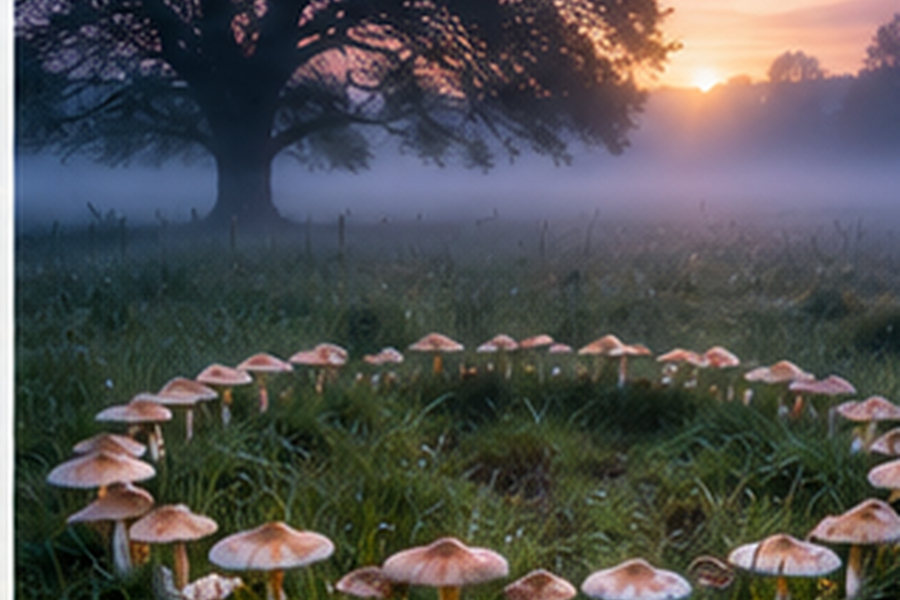
The Royal Horticultural Society explains the biological process, including species such as Marasmius oreades. The Woodland Trust likewise describes how outward-growing fungal networks produce the circular effect.
In folklore, these rings were associated with fairy dancing, supernatural danger or places people should avoid. Those interpretations reveal historic belief, not the physical cause of the mushrooms.
Why do fairy sightings continue?
People may report brief lights, small figures in woodland, unusual sounds or strong sensations associated with familiar stories. Distance, shadows, insects, reflections, expectation and memories of earlier tales can all affect perception. None of these explanations requires the witness to be dishonest.
Fairy traditions also continue as literature, art, personal spirituality and local heritage. A scientifically unsupported supernatural claim can still have cultural value without being presented as fact.
Where can you explore fairy and woodland folklore in Britain?
If you enjoy visiting places associated with old stories, our haunted woods of Britain guide connects natural landscapes with traditional tales. The Burley Witches Village guide explores modern magical associations and New Forest folklore, while Mother Shipton’s Cave combines legendary storytelling with a genuine geological attraction.
These sites are meaningful because of their cultural and historical connections, not because visitors can expect to see a supernatural being. Follow local access rules and protect sensitive wildlife habitats.
Can fairies be investigated scientifically?
A claim about a physical creature would need clear, repeatable evidence: verifiable samples, independent observations and tests that rule out normal causes. Stories, dreams, artistic images or isolated photographs cannot meet that standard on their own.
The Cottingley case shows why photographic context matters. Our orbs in photographs guide explores other misleading visual effects often discussed in paranormal investigations.
Why do fairy traditions differ so much between Britain and Ireland?
Fairy is a broad English label applied to many beings whose stories emerged in different regions and periods. It can describe small household helpers, unsettling figures near rivers, beings associated with burial mounds or members of a hidden community. Reducing all of these to winged miniature people is a modern simplification.
The Irish aos sí are especially associated with a supernatural community connected with the landscape, sometimes with mounds or places regarded as significant. English stories about brownies may emphasise household tasks, while some Cornish stories focus on pixies leading travellers astray. The names and behaviours are not interchangeable; a regional story should be attributed to its own tradition.
Folklore survives because people retell and adapt it. A tale collected in the nineteenth century may differ from a twentieth-century children’s illustration or a modern television programme without one being a simple copy of the other. Good sources help show when a description entered circulation.
The Cottingley Fairies: why were the photographs believed?
The photographs made by Elsie Wright and Frances Griffiths in Yorkshire in 1917 are a particularly useful case study in evidence evaluation. The Science Museum Group preserves details of the camera used for the first two images and explains how the pictures were circulated and promoted.
The images attracted attention not merely because of their fairy figures, but because prominent supporters, including Arthur Conan Doyle, argued that the photographs were genuine. The technical appearance of a photographic image and the authority of a famous supporter helped persuasive storytelling overtake careful testing of the original scene.
Decades later, the women acknowledged that the images had been staged using illustrated cardboard cut-outs. The case does not prove that every fairy tradition is false; it shows that even memorable photographic evidence may have a mundane explanation that is overlooked when people want a particular conclusion.
What exactly causes fairy rings in grass and woodland?
Fairy rings are a real biological phenomenon. The Woodland Trust explains how an underground fungal network can spread outwards, producing mushrooms around the edges of a roughly circular area. The Royal Horticultural Society also describes rings in lawns where fungal growth can change the appearance of the grass.
Not every circular patch of grass is caused by the same fungus, and some fungi form rings without clearly visible mushrooms. The outline may be incomplete or uneven. The link with dancing fairies belongs to folklore and place-based imagination; the biological process is independently observable.
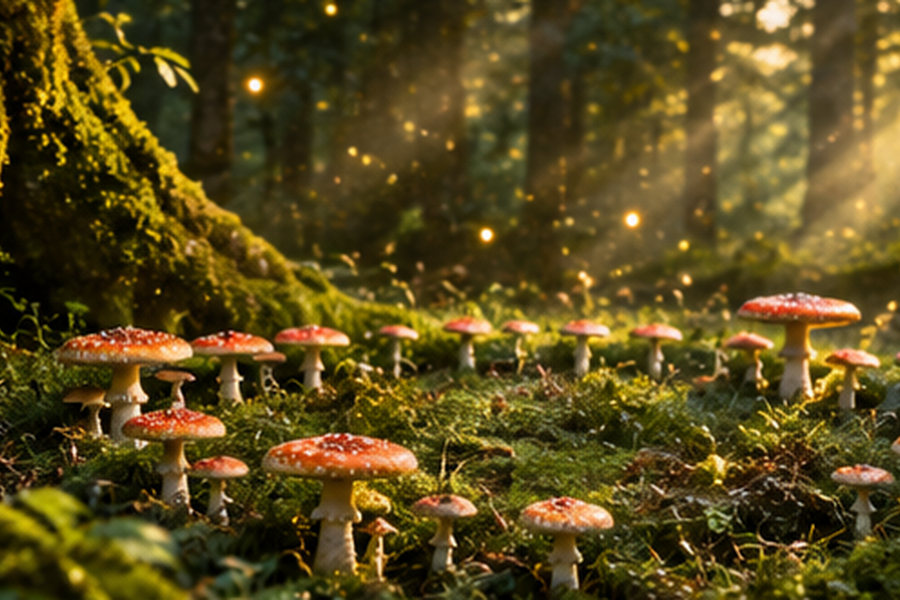
If you encounter a fairy ring, photograph it without disturbing the soil or eating unidentified mushrooms. Several fungi can be harmful if handled or consumed incorrectly, so a pretty arrangement is not a foraging recommendation. This also preserves the site for people and wildlife.
How to research a local fairy story without distorting it
Begin with a specific place, narrator or historical collection rather than a general list of ‘fairy sightings’. Look for who recorded the account, whether it was presented as a remembered experience or as a story, and whether the original language was translated. A published retelling can omit detail or change a creature’s name.
For Irish material, the Dúchas National Folklore Collection provides transcripts and scans of local stories. Compare two or more accounts instead of assuming a single version represents all of Ireland. In England, museum collections and local history groups may help establish when particular claims entered local culture.
When evaluating a photograph or online video, seek the earliest known version, original file, surrounding context and any admission of editing or deliberate staging. Calling an image unexplained is reasonable when the information is missing; saying that it demonstrates an actual fairy goes much further than the evidence warrants.
Are fairy sightings and fairy photographs the same kind of evidence?
An eyewitness report records someone’s account of an experience, whereas a photograph records light reaching a sensor or film. Each has different limitations. Witnesses may misjudge size or distance; images may conceal the surrounding setting, use forced perspective or include edits.
Neither deserves ridicule simply because the subject is folkloric. But a careful guide should avoid presenting accounts, staged examples, natural phenomena and verified historical records as one undifferentiated body of ‘proof’. Different claims require different checks.
For a related comparison, our leprechaun folklore guide demonstrates how individual archival stories can contradict modern stereotypes while remaining valuable cultural records.
Frequently asked questions
Are pixies and fairies the same?
Pixies are a particular regional type of fairy-like being, especially associated with the folklore of Devon and Cornwall.
Were the Cottingley Fairies pictures fake?
Yes. The images were staged with cut-out figures, and the cousins acknowledged this decades later.
Are fairy rings dangerous?
They are naturally occurring fungal patterns. Do not eat unidentified mushrooms; some are poisonous, and a ring does not determine whether a species is safe.
Does science support the existence of fairies?
No reproducible scientific evidence has established fairies as physical organisms or supernatural entities.
Final verdict
Fairies are a rich folklore subject, but their physical existence has not been established. From Cottingley’s famous staged photographs to genuine fungal fairy rings, the difference between tradition and evidence makes the stories more interesting — and helps preserve their local cultural meaning.